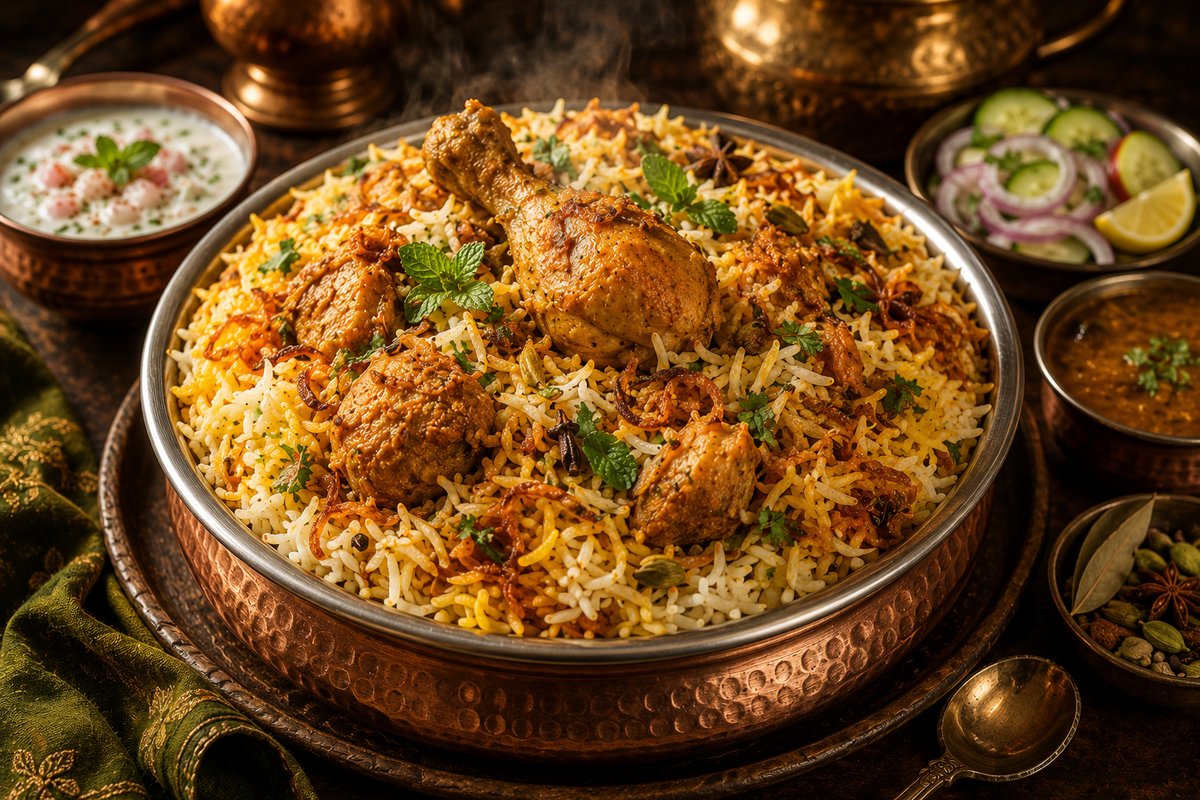
The flat-smelling biryani
Why biryani lacks aroma — layering and infusion
Biryani should fill the kitchen with fragrance when the sealed lid is opened at the table. A biryani lacking aroma has failed to infuse aromatic compounds into the rice during dum cooking — usually because aromatics were added in the wrong form, at the wrong stage, or the dum seal was insufficient to trap aromatic steam.
The Fix — The aromatic layering system
What to add at each layer
- Meat marinade: whole spices bloomed in ghee, fresh ginger-garlic paste, green chillies, fresh coriander
- Between rice layers: warm saffron milk (pinch of saffron in 4 tablespoons of warm milk — infuse 15 min before using), fried onions, ghee, fresh mint
- Top layer: drizzle of saffron milk, ghee, scattered kewra water (1/4 teaspoon), fresh coriander and mint
- Whole spices in parboiling water: bay leaves, cardamom, cloves, cinnamon impart subtle base note to rice during parboiling
- Open the dum seal at the table — the first steam release carries maximum aroma
The Science
Why does saffron milk improve biryani aroma more than saffron water?
Saffron's primary aromatic compound (safranal) and colour compound (crocin) have different solubility profiles. Crocin is water-soluble. Safranal is fat-soluble. Saffron milk dissolves both compounds — the milk's fat dissolves safranal (aroma) while the milk's water dissolves crocin (colour). Saffron water extracts colour but little aroma. Saffron milk extracts both — providing both the characteristic yellow colour and the distinctive honeyed fragrance.
35 second read