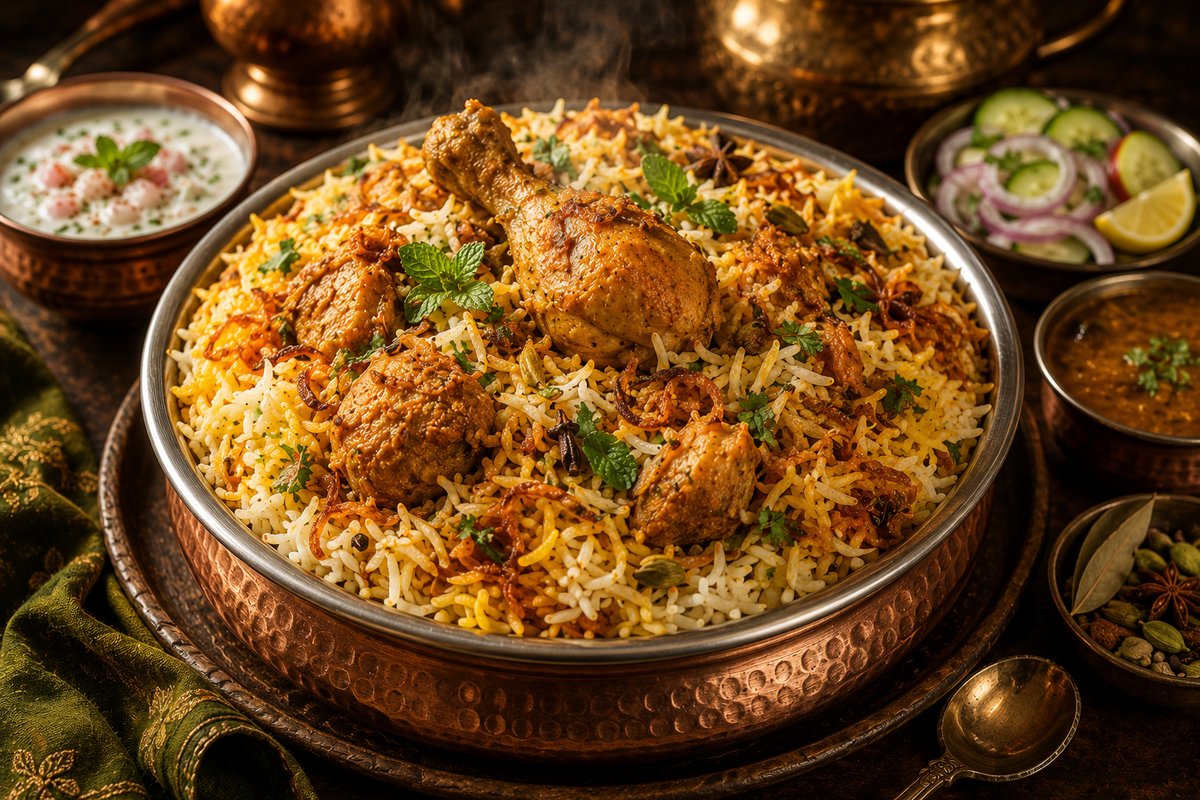
The dry biryani problem
Why biryani dries out — moisture management during dum
Dry biryani — where the rice is cooked but lacks the moistness that makes biryani special, and where the meat is tough rather than succulent — is a moisture management failure. Biryani's moisture comes from three sources: the meat marinade, the fat layer, and the seal that keeps steam inside the pot during dum. Failures in any of these produce dry results.
The Fix
How to ensure moist biryani
- Marinade moisture: marinate meat overnight minimum — yogurt and oil marinade provides the moisture that creates biryani steam
- Fat layer: drizzle 3–4 tablespoons of ghee between rice layers — fat carries moisture through the rice during dum
- Seal tightly: use dough seal (atta dough pressed around the lid) or foil tight under the lid to prevent steam escape
- Low heat for dum: high heat drives moisture out of the pot; medium-low heat retains it
- Caramelised onion layer: birista (fried onions) provides sugar that attracts moisture and adds texture
The Science
Why does overnight marination produce moister biryani?
Yogurt marinade tenderises meat through lactic acid breaking down surface muscle proteins and also acts as a moisture reservoir — the yogurt water binds to meat proteins and releases slowly during dum cooking as steam. Overnight marinated meat releases significantly more steam during dum than freshly marinated meat because the marinade has penetrated more deeply and the lactic acid has opened the muscle protein matrix to hold more moisture.
35 second read