Level 3 — Mastery
Wazwan Feast Cooking — Large Scale Meat
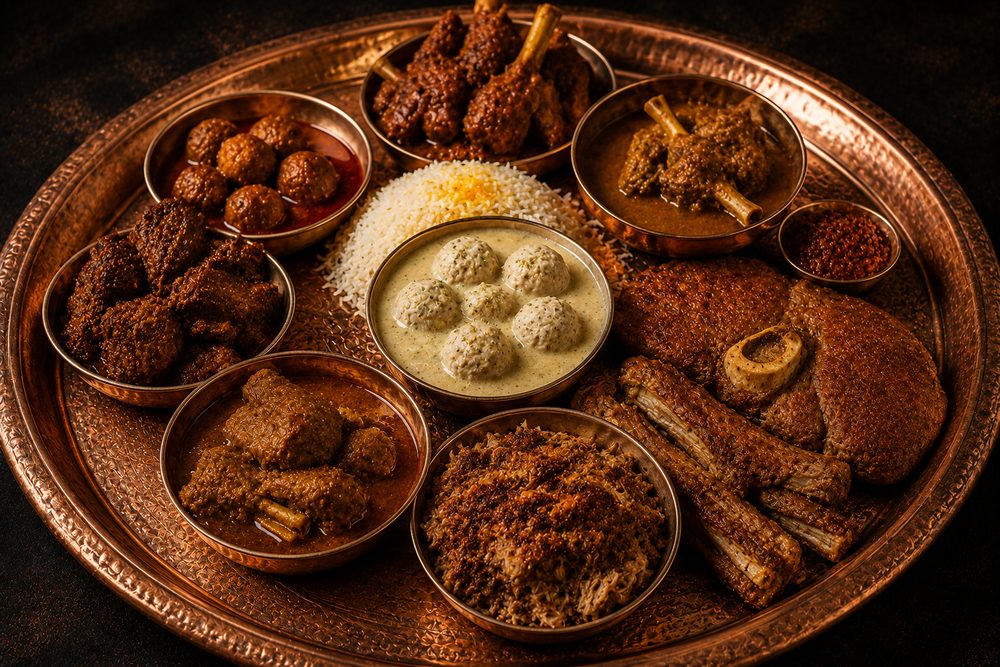
Wazwan is Kashmir's grand feast — traditionally 36 courses, primarily meat-based, cooked overnight by specialist cooks (wazas). It represents the most technically sophisticated meat cooking tradition in India, using every cut of an animal through different techniques: rista (fine ground meatball), gushtaba (cream-enriched meatball), tabak maaz (rib rack in milk and ghee), rogan josh, and yakhni (pure yogurt broth). Each preparation is a masterclass in a specific technique.
Wazwan's technical sophistication comes from Kashmiri cuisine's Persian influence — the use of Kashmiri red chilli (which gives colour without excessive heat), fennel and ginger-based spice profiles, and the tradition of cooking in large copper vessels (degs) using wood fire. The specific Kashmiri spice palette — fennel dominant, dried ginger (sonth), black and green cardamom, no turmeric — is entirely different from the rest of North India.
1
Source Kashmiri-specific ingredients
Kashmiri red chilli (Deghi mirch — colour without heat), dried ginger (sonth), fennel seeds, black cardamom, Kashmiri garam masala (no turmeric). These drive the distinctive Wazwan flavour profile.
🔬 Kashmiri red chilli contains carotenoid pigments but lower capsaicin than standard red chilli — it produces the characteristic deep red colour without intense heat.
2
Master the meatball technique for rista and gushtaba
Mince lamb extremely fine (multiple grinding passes), remove all sinew and fat, mix with specific spices.
🔬 The smoothness of the mince determines the texture of rista and gushtaba. Restaurant quality requires mince so fine it is almost a paste.
3
Use the yogurt-based yakhni method
No tomato, no onion in yakhni — pure yogurt and spice broth, stabilised with starch, cooked slowly.
🔬 Yakhni represents a completely different flavour architecture from the rest of North Indian cooking — the clean, sour, aromatic clarity of yogurt broth with fennel and black cardamom.
4
Cook tabak maaz last — milk and ghee method
Rib rack cooked in seasoned milk and ghee until milk evaporates, then fried in the remaining fat until crispy.
Dietary Variants
Works for every diet
🥬Vegetarian
Wazwan is a meat feast — vegetarian adaptations exist but are not traditional Wazwan
🥩Non-Veg
The quintessential non-vegetarian feast tradition
🌱Vegan
Minimal vegan adaptation possible within traditional Wazwan structure
Recipes Using This Technique
What this unlocks