Level 3 — Mastery
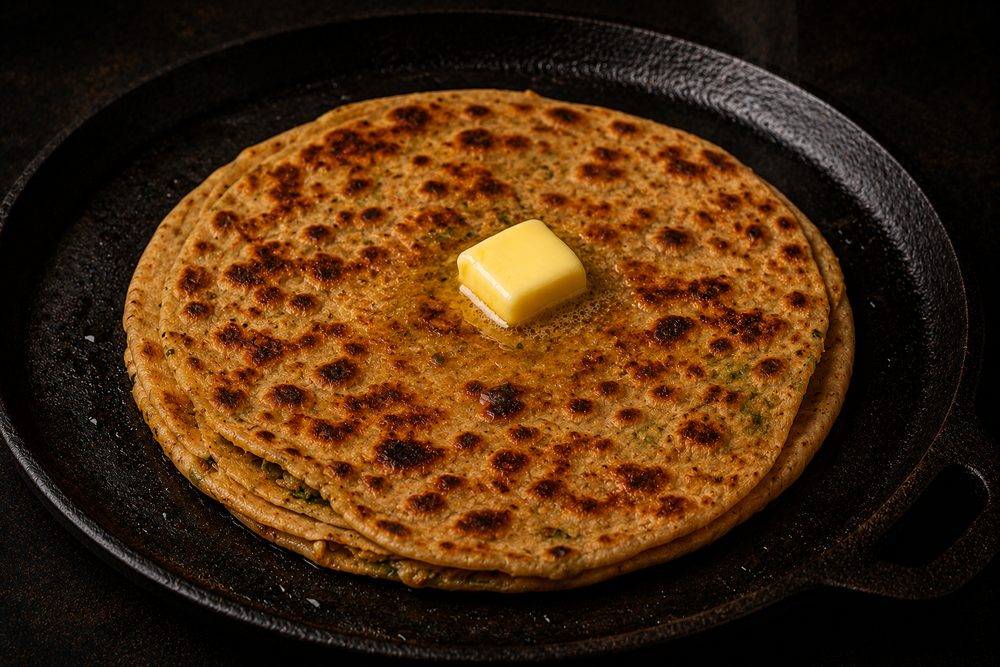
Layered Bread — Laccha Paratha and the Logic of Lamination
Laccha paratha is the most technically demanding Indian flatbread — multiple concentric layers of dough separated by fat, producing a flaky, pull-apart texture that plain paratha never achieves. The technique is identical in principle to puff pastry and croissant: fat prevents adjacent dough layers from fusing, creating distinct layers that separate when steam forms between them during cooking.
The lamination principle: dough layers separated by fat cannot fuse because fat is hydrophobic — it repels water and prevents the gluten networks of adjacent layers from cross-linking. When the paratha is cooked, steam forms between layers and inflates them apart. The result: distinct crispy-outside, soft-inside layers.
1
Make a softer dough than plain paratha
More fat (ghee or oil) in the dough itself — approximately 1 tablespoon per cup of flour. Slightly more water.
🔬 A softer dough rolls more thinly without tearing. Thin layers = more layers per thickness = better lamination.
2
Roll thin, apply fat, fold into layers
Roll to approximately 2-3mm. Apply melted ghee generously. Fold or roll into cylinder or pleated accordion. Rest 5 minutes.
🔬 Fat application: every layer of dough surface must be covered with fat to prevent fusion. The folding creates multiple fat-separated layers in a compact form.
3
Coil into spiral, re-roll gently
Coil the cylinder into a flat spiral. Gently re-roll to approximately 8-10mm thickness.
🔬 Re-rolling compresses the layers together — but the fat between them prevents fusion. The layers remain distinct.
⚠ Over-rolling flattens the layers too much — the spiral structure should still be partially visible as slight concentric rings.
4
Cook on medium-hot tawa with ghee
Cook both sides, adding ghee liberally. Press gently with spatula. After both sides golden, clap between palms to separate layers.
🔬 The clapping step physically separates layers that were compressed during rolling — releasing the flaky structure. This is not aesthetic — it completes the technique.
Dietary Variants
Works for every diet
🥬Vegetarian
Identical — laccha paratha is vegetarian
🥩Non-Veg
Identical technique — serve with meat dishes
🌱Vegan
Replace ghee with coconut oil or neutral oil — technique identical, slightly different flavour
🟡Jain
Identical — plain laccha paratha is Jain-permitted
🔴Sattvic
Identical — plain laccha paratha is sattvic. Skip onion/garlic in any stuffed version.
Recipes Using This Technique
What this unlocks