Level 3 — Mastery
Chettinad Spice Architecture — Multi-Layer Complexity
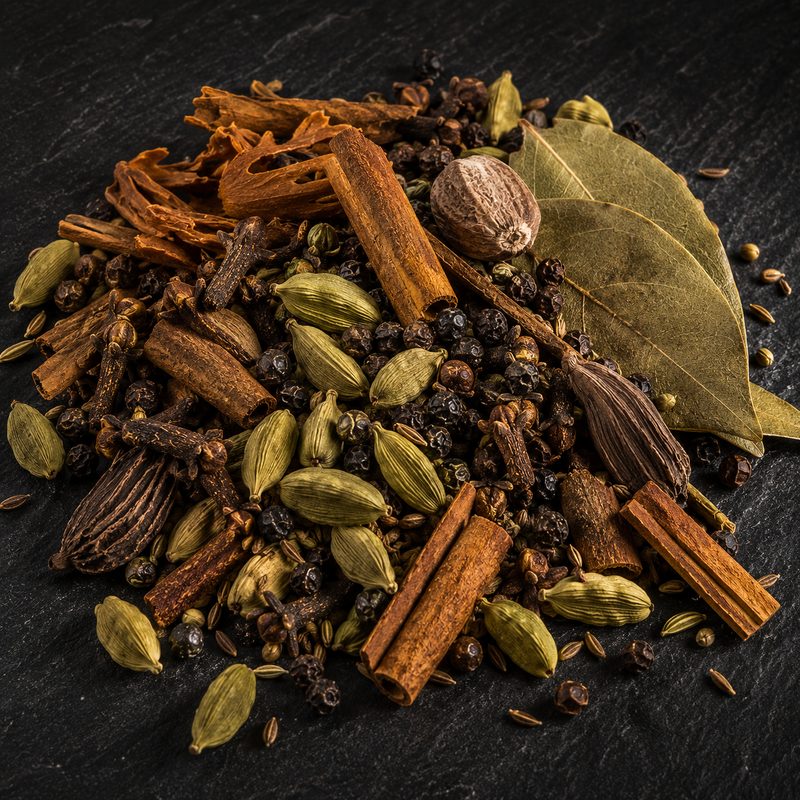
Chettinad cuisine from Tamil Nadu's Chettinad region uses a spice vocabulary that no other Indian cuisine employs — kalpasi (stone flower), marathi mokku (dried flower pods), kalpasi (lichen), vetrilai pattai (bay leaf variant), and combinations of these with standard spices that produce a flavour complexity unlike anything else in Indian cooking. Understanding Chettinad's spice architecture means understanding why complexity in spicing is about sequence and layering, not just quantity.
The Chettinad approach to spicing: multiple spice applications at different stages of cooking, each layer adding distinct aromatic compounds. A Chettinad chicken uses a dry roasted spice powder added early for depth, whole spices in the initial tadka for aromatic bass notes, a fresh ground wet masala added mid-cook for brightness, and finishing herbs for volatile top notes. The four layers together create the characteristic complexity.
1
Source Chettinad-specific spices
Kalpasi (stone flower/lichen), marathi mokku (dried kapok flower pods), kalpasi (different variety), vetrilai pattai, dried red chilli (Guntur). These are available in Tamil grocery stores or online.
🔬 Each unique spice contributes specific aromatic compounds absent from standard Indian spice combinations — kalpasi's moss-earth character, marathi mokku's bitter floral depth.
2
Dry roast and grind fresh — always
All Chettinad spice powders are freshly ground for each dish. Never use pre-ground Chettinad powder for serious cooking.
🔬 The volatile compounds in roasted Chettinad spices are extremely fragile — they degrade rapidly after grinding. Fresh grinding is not optional; it is what makes Chettinad taste like Chettinad.
3
Layer spices in three stages
Stage 1: whole spices in tadka. Stage 2: freshly ground dry powder added with onion-tomato masala. Stage 3: finishing herbs (curry leaves, green chilli) added in final 2 minutes.
🔬 Each stage targets different volatile compound types — heat-stable compounds in early stages, fragile volatile compounds in late stages.
4
Cook on low heat — patience is essential
Chettinad gravies cook slowly on low heat after all spice layers are added. High heat destroys the volatile compounds from the unique Chettinad spices.
🔬 The complex volatile compounds in kalpasi and marathi mokku degrade rapidly at high temperatures. Low heat preserves them.
Dietary Variants
Works for every diet
🥬Vegetarian
Chettinad vegetable preparations: kathirikkai (brinjal), vazhakkai (raw banana), mushroom Chettinad — identical spice architecture
🥩Non-Veg
Classic Chettinad: chicken, mutton, crab
🌱Vegan
Vegetable and legume preparations — use oil not ghee. All Chettinad spices are plant-derived.
🟡Jain
Significant modifications needed — skip onion, garlic, many root vegetables. The spice architecture itself remains applicable.
🔴Sattvic
Significant modifications — skip onion/garlic. The unique Chettinad spices are sattvic-permitted.
Recipes Using This Technique
What this unlocks