Level 3 — Mastery
The Complete Biryani System — Pakki vs Kachchi
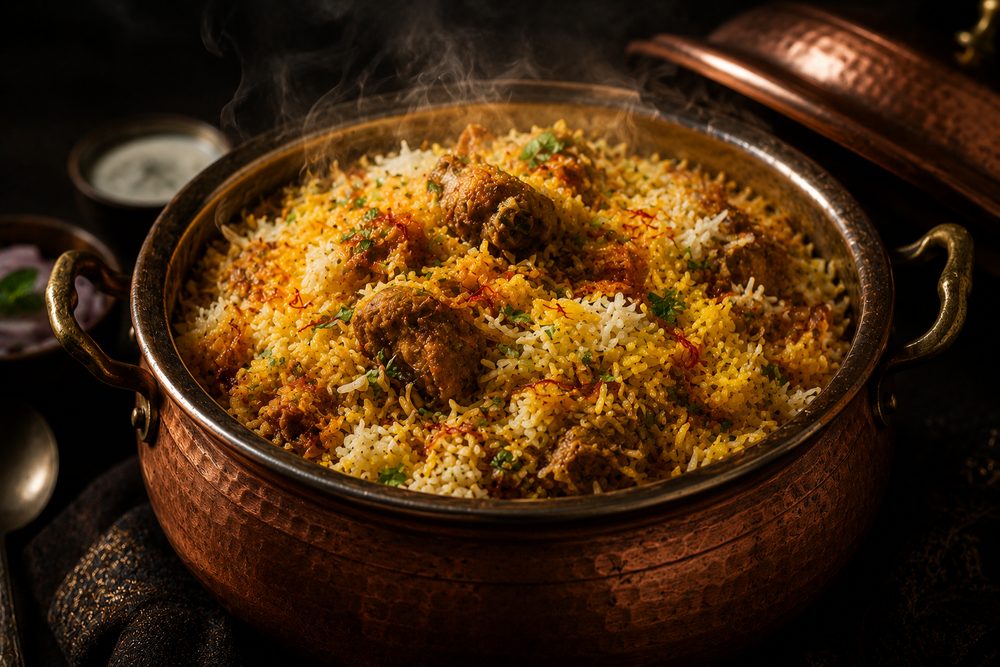
Biryani is not one dish — it is a family of dishes built on two completely different cooking methods. Pakki biryani (cooked separately then layered) and kachchi biryani (raw meat and rice cooked together) require different skills, different timing, and produce different textures. Understanding both systems means you can make any of the 30+ regional biryanis confidently.
The pakki vs kachchi distinction is fundamental: pakki biryani gives you full control over each element — the meat is cooked to perfection, the rice is cooked to perfection, and they are layered and perfumed together in a final dum. Kachchi biryani is the high-risk, high-reward method — the entire dish depends on the raw meat and partial-cooked rice finishing simultaneously under dum.
1
Pakki — pre-cook meat fully
Season and cook meat completely in a bhunoed masala. Taste and adjust. The meat should be 100% cooked before layering.
🔬 In pakki biryani the dum step is not a cooking step — it is a perfuming and integrating step. The meat is already done.
⚠ Do not undercook meat expecting dum to finish it — this is the kachchi method and requires different timing.
2
Pakki — partially cook rice
Boil rice in heavily salted water with whole spices to 70-75% done. Drain immediately.
🔬 70-75% cooked rice: still has a chalky white core visible when pressed. It will finish in the dum. 80%+ cooked rice becomes mushy in dum.
⚠ The rice continues cooking in dum — start with it undercooked.
3
Layer and dum — pakki method
Layer: half rice, all meat with masala, remaining rice. Add saffron milk, fried onion (birista), ghee. Seal and dum 20-25 minutes.
🔬 The dum allows steam and aromatic compounds to circulate through the layers — perfuming the rice with meat masala aromatics.
4
Kachchi — marinate raw meat thoroughly
Marinate meat with yogurt, spices, fried onion, and raw papaya (for tenderising) for minimum 4 hours, ideally overnight.
🔬 Raw papaya enzyme (papain) must partially tenderise the meat before dum — the dum cooking time is too short to tenderise tough cuts without this pre-treatment.
5
Kachchi — layer and dum long
Raw marinated meat at base, partial-cooked rice (50-60% done) on top. Seal. Dum: 45-55 minutes on low heat.
🔬 The raw meat must release its juices upward into the rice as it cooks — this is the distinctive kachchi character. The rice absorbs the raw meat juices and cooks simultaneously.
Dietary Variants
Works for every diet
🥬Vegetarian
Pakki method with vegetables or paneer — vegetables pre-cooked in masala, then layered with rice
🥩Non-Veg
Both methods — kachchi works best with lamb and chicken
🌱Vegan
Pakki method with vegetables — use oil not ghee, vegetable stock not meat
🟡Jain
Pakki method with Jain-permitted vegetables — no root vegetables, no meat
🔴Sattvic
Pakki method with permitted vegetables — no onion/garlic, use hing, skip birista
Recipes Using This Technique
What this unlocks