📖 History 🔥 Failure Clinic 🔬 Science Academy 🌿 Encyclopedia 🗺 Food Atlas 👨‍🍳 Cooking School 🎓 Art of Cooking 🍽 Recipes
Setting Up Your Indian Kitchen
Level 1 — Foundations · Technique

Setting Up Your Indian Kitchen

The 8 essential items, what to skip, and why the right equipment matters.

🥬 Veg🥩 Non-Veg 🌱 Vegan🟡 Jain 🔴 Sattvic
Level 1 — Foundations

Setting Up Your Indian Kitchen

Indian cooking requires specific equipment — not because of tradition but because of function. A heavy kadai distributes heat in a way that thin stainless steel cannot. A pressure cooker makes dal in 12 minutes instead of 60. A tawa produces bread with direct heat transfer that an oven cannot replicate. This page tells you exactly what to buy, what to skip, and why each item matters.

The good news: you need fewer items than you think. The essential Indian kitchen requires 8 items. Everything else is optional or region-specific. Buying the right 8 items is more important than buying 20 average ones.

The Method
Step by step
1
The 8 essentials
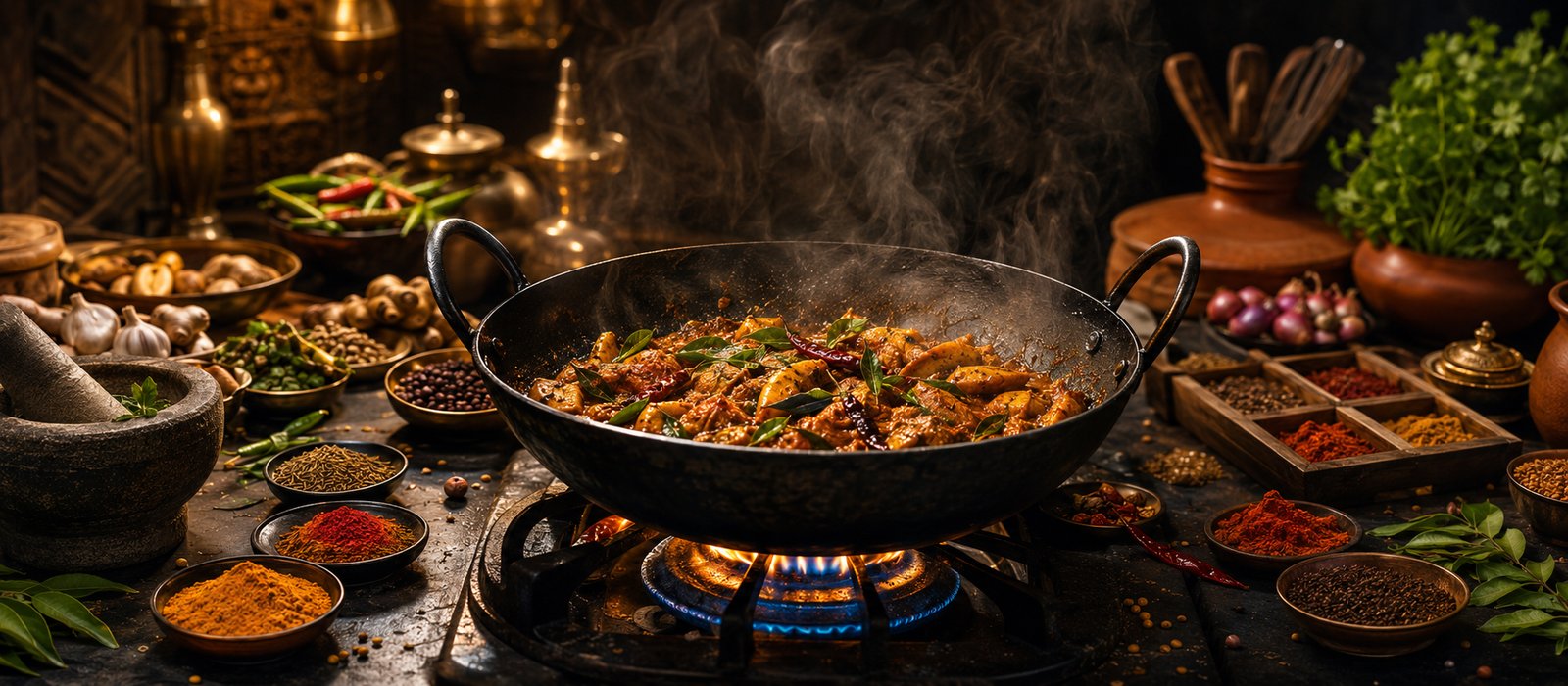
1) Heavy kadai or Dutch oven (24-26cm). 2) Flat tawa (cast iron preferred). 3) Pressure cooker (5-litre). 4) Small tempering pan (for tadka). 5) Sharp knife. 6) Cutting board. 7) Wooden spoon. 8) Ladle.
🔬 Heavy base = even heat = no hot spots = masala doesn't burn. Each item's function determines its specification.
2
Spice storage
12 airtight glass jars minimum. Buy whole spices where possible. Label with purchase date.
🔬 Airtight storage slows oxidation of volatile aromatic compounds. Glass preferred over plastic — doesn't absorb spice odours. Labelling with purchase date helps you track freshness.
3
What to skip initially
Electric spice grinder is useful but optional (use blender initially). Mortar and pestle is nice but optional. Tandoor is not a home appliance.
🔬 Invest in fundamentals first — a heavy kadai will improve your cooking more than a tandoor you use twice a year.

Works for every diet

🥬
Vegetarian
Same equipment
🥩
Non-Veg
Consider a separate cutting board for meat — food safety
🌱
Vegan
Same equipment
🟡
Jain
Consider dedicated Jain-only cookware if strict observance
🔴
Sattvic
Some traditions use dedicated sattvic cookware — personal choice

What this technique unlocks

Level 1
Understanding Heat — now with the right equipment
Level 2
Ready for Level 2 — Bhuno Masala
Learn more
Common Questions
What size kadai should I buy?
24-26cm diameter, 8-10cm deep, heavy base (at least 3mm thick). This handles everything from 2 to 6 portions. Cast iron or carbon steel is ideal. Indian brand options (Hawkins, Prestige) are good quality and affordable.
Which pressure cooker brand is best?
In Australia and NZ: Hawkins or Prestige Indian brands are proven. European brands (Fissler, WMF) work but use different whistle/pressure indicators. The key specification: 5-litre capacity handles most family cooking. Avoid cheap thin-wall pressure cookers — safety and even heat distribution both suffer.
Do I need both cast iron and non-stick tawa?
Start with one — non-stick is more forgiving for beginners. Cast iron produces better bread once seasoned. If buying one: cast iron for longevity and performance. If budget allows both: cast iron tawa + non-stick kadai is a practical combination.
What spice storage solution works best?
12-15 small glass jars (jam jar size) stored in a dark cupboard or spice drawer. Avoid the rotating spice racks on countertops — spices degrade faster in light and heat. Label with purchase date. Replace any spice that has lost its smell when opened raw.
Is a blender essential?
For smooth gravies (butter chicken base, korma): yes. For chunky home curries: no. A hand blender (immersion blender) is the most practical tool — blends directly in the pot without transferring hot liquid. If starting from zero, this is the most useful electrical item after a pressure cooker.