Level 1 — Foundations
Understanding Heat & Your Vessels
Indian cooking uses heat more dynamically than almost any other cuisine — from the fierce blast that makes mustard seeds pop in a tadka to the gentle simmer that develops a korma over 45 minutes. Understanding what your stove and pan are actually doing at each temperature is the foundation that makes every other technique work correctly.
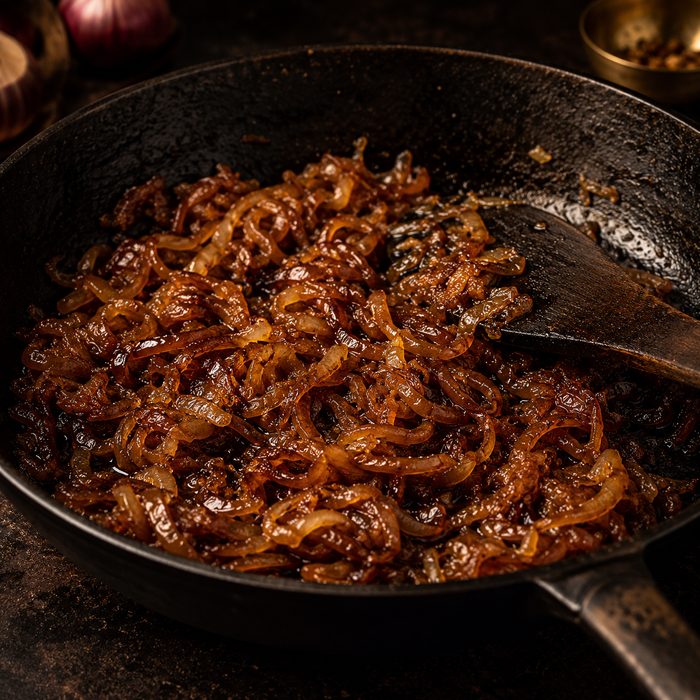
Most cooking failures trace back to heat mismanagement — the burnt tadka, the watery curry, the tough dal. Understanding heat means understanding why: spices release flavour compounds at specific temperatures, onions caramelise through the Maillard reaction above 150°C, and proteins set at different temperatures depending on the dish.
The Method — Step by Step
How to do it correctly
1
Start with a cold pan
Most Indian cooking starts in a cold pan — add oil first, then heat. This distributes heat evenly and prevents hot spots that burn spices.
🔬 The Leidenfrost effect: water in food splatters more violently into very hot oil. A gradually heated pan reduces this.
⚠ Never add spices to smoking oil — they burn immediately at smoke point temperatures above 200°C.
2
Learn your stove's heat levels
Mark or memorise: Low (gentle simmer), Medium-Low (tadka), Medium (onion cooking), Medium-High (bhuno), High (boiling). Indian recipes assume you know these intuitively.
🔬 Different hobs reach different temperatures at 'medium' — gas hobs run hotter than electric at the same setting.
3
Choose the right vessel
Heavy bottom pan (kadai or Dutch oven) for curries — distributes heat evenly. Tawa for flatbreads — conducts heat rapidly for direct contact cooking. Pressure cooker for dal — traps steam to raise boiling point above 100°C.
🔬 Thin pans concentrate heat at the base — causing hot spots that burn masala while leaving edges undercooked.
Dietary Variants
Works for every diet
🥬
Vegetarian
Heat behaves identically — no changes needed
🥩
Non-Vegetarian
Heat behaves identically — no changes needed
🌱
Vegan
Heat behaves identically — no changes needed
🟡
Jain
Heat behaves identically — no changes needed
🔴
Sattvic
Heat behaves identically — no changes needed
Recipes Using This Technique
What you can cook once you master this
Learn more about this technique