Level 1 — Foundations
Cooking Perfect Rice
Rice is the staple food for over a billion Indians — and yet overcooked, sticky, or undercooked rice is one of the most common cooking failures. Perfect rice has each grain separate, fully cooked, and not mushy. Understanding why rice behaves the way it does — the starch gelatinisation that makes it sticky, the protein network that keeps grains separate — makes the difference between consistent results and perpetual frustration.
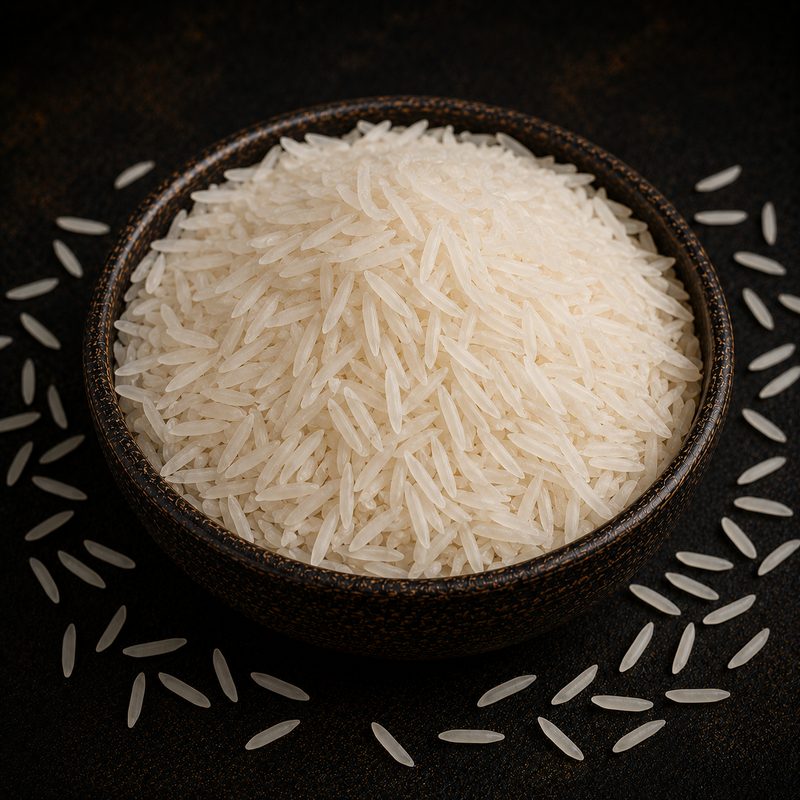
Rice contains two types of starch: amylose (long chains, associated with firm separate grains) and amylopectin (branched chains, associated with sticky clumping). Basmati rice is high in amylose — which is why it cooks to separate fluffy grains. Short-grain rice (used for kheer, idli) is high in amylopectin — which is why it becomes sticky and clingy. Washing rice removes surface starch that would make any rice stickier than necessary.
1
Wash rice until water runs clear
Rinse 3-4 times until the water is no longer cloudy. This removes surface starch.
🔬 Surface starch dissolves immediately in water — washing removes this layer and prevents grains from clumping together during cooking. The 'cloudiness' in the wash water is pure starch.
⚠ Do not skip washing — unwashed basmati produces noticeably stickier rice regardless of cooking method.
2
Soak for 20-30 minutes
Soak washed rice in cold water for 20-30 minutes before cooking.
🔬 Soaking partially hydrates the outer layers of the grain. During cooking, this pre-hydration means the centre and outer layers cook more evenly — reducing the chance of outer mushiness before the centre is done.
3
Use correct water ratio
Basmati absorption method: 1 cup rice to 1.5 cups water. Pressure cooker: 1 cup rice to 1.25 cups water. These ratios assume washed and soaked rice.
🔬 The water ratio is the most critical variable. Too much water: mushy starch — amylopectin fully gelatinises and grains lose structure. Too little: hard centre — starch gelatinisation incomplete.
4
Never lift the lid
Once covered, do not open during cooking. Steam off heat for 5 minutes after cooking before opening.
🔬 Steam pressure inside the covered pot finishes cooking the top layer of rice that direct heat cannot reach. Opening the lid releases this steam — the top layer undercooks.
Dietary Variants
Works for every diet
🥬Vegetarian
Identical — rice is vegetarian
🥩Non-Veg
Identical technique — use meat stock instead of water for richer flavour
🌱Vegan
Identical — use vegetable stock for flavour
🟡Jain
Identical — rice is fully Jain-permitted
🔴Sattvic
Identical — plain rice is sattvic. Add cardamom and saffron for sattvic pilaf
Recipes Using This Technique
What this technique unlocks