Level 1 — Foundations
Essential Spices — The 10 You Need First
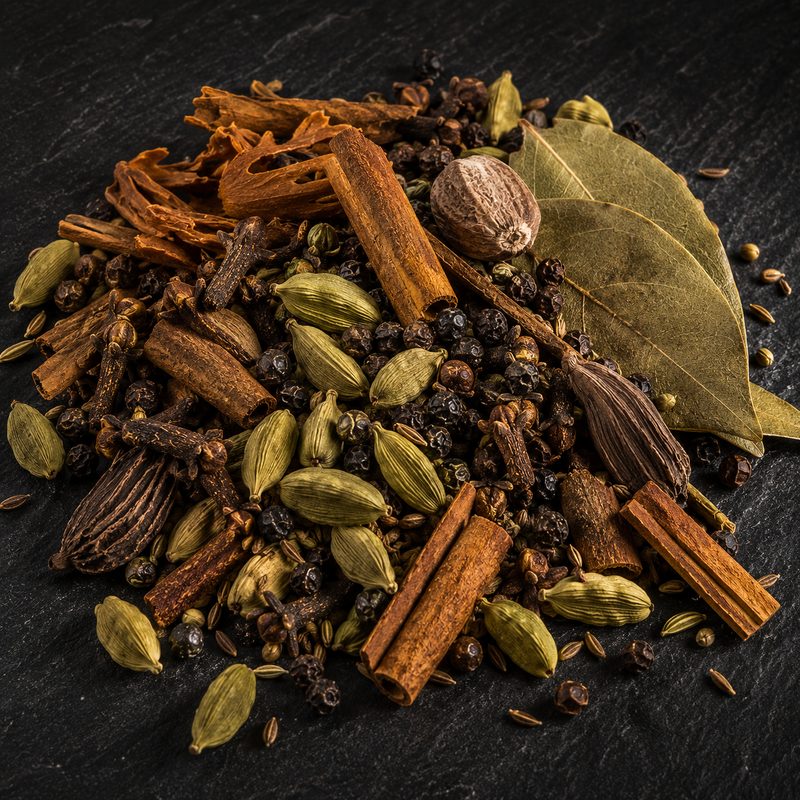
Indian cooking uses over 100 spices but 90% of dishes are built from just 10. Before investing in a spice collection, understand these 10 completely — how they smell raw versus cooked, what they contribute to a dish, and how to store them properly. This knowledge transforms recipe-following into genuine cooking.
Spices work through volatile aromatic compounds that activate at specific temperatures. Cumin's nutty depth comes from pyrazines that develop only above 140°C. Turmeric's colour comes from curcumin but its flavour compounds are different and require fat to dissolve. Understanding the mechanism behind each spice lets you use them intelligently rather than following measurements blindly.
The Method — Step by Step
How to do it correctly
1
Smell each spice raw and cooked
Before cooking, smell each spice raw. Then add to hot oil and smell again in 30 seconds. This teaches you what each spice contributes and when it's correctly cooked versus burnt.
🔬 Volatile aromatic compounds have different boiling points — some release at 120°C, others need 180°C. Learning to smell the difference is faster than using a thermometer.
2
Store correctly
Whole spices last 2-3 years in airtight containers away from light. Ground spices lose 70% of potency after 6 months. Buy whole when possible and grind as needed.
🔬 Oxidation destroys volatile compounds — the same chemistry that makes cut apple turn brown degrades spice flavour. Airtight storage slows this significantly.
3
Buy whole, grind fresh
A small electric grinder (coffee grinder kept only for spices) produces ground spices 5-10x more flavourful than pre-ground. Cumin freshly ground is a different ingredient from 6-month-old pre-ground.
🔬 The difference is volatile compound retention — fresh grinding releases compounds that have already evaporated from pre-ground.
Dietary Variants
Works for every diet
🥬
Vegetarian
All 10 spices are plant-derived — fully vegetarian
🥩
Non-Vegetarian
All 10 spices are plant-derived — identical use
🌱
Vegan
All 10 spices are plant-derived — fully vegan
🟡
Jain
All 10 are Jain-permitted — asafoetida (hing) is especially important as garlic/onion substitute
🔴
Sattvic
All 10 are Sattvic-permitted — asafoetida substitutes for garlic and onion
Recipes Using This Technique
What you can cook once you master this
Learn more about this technique