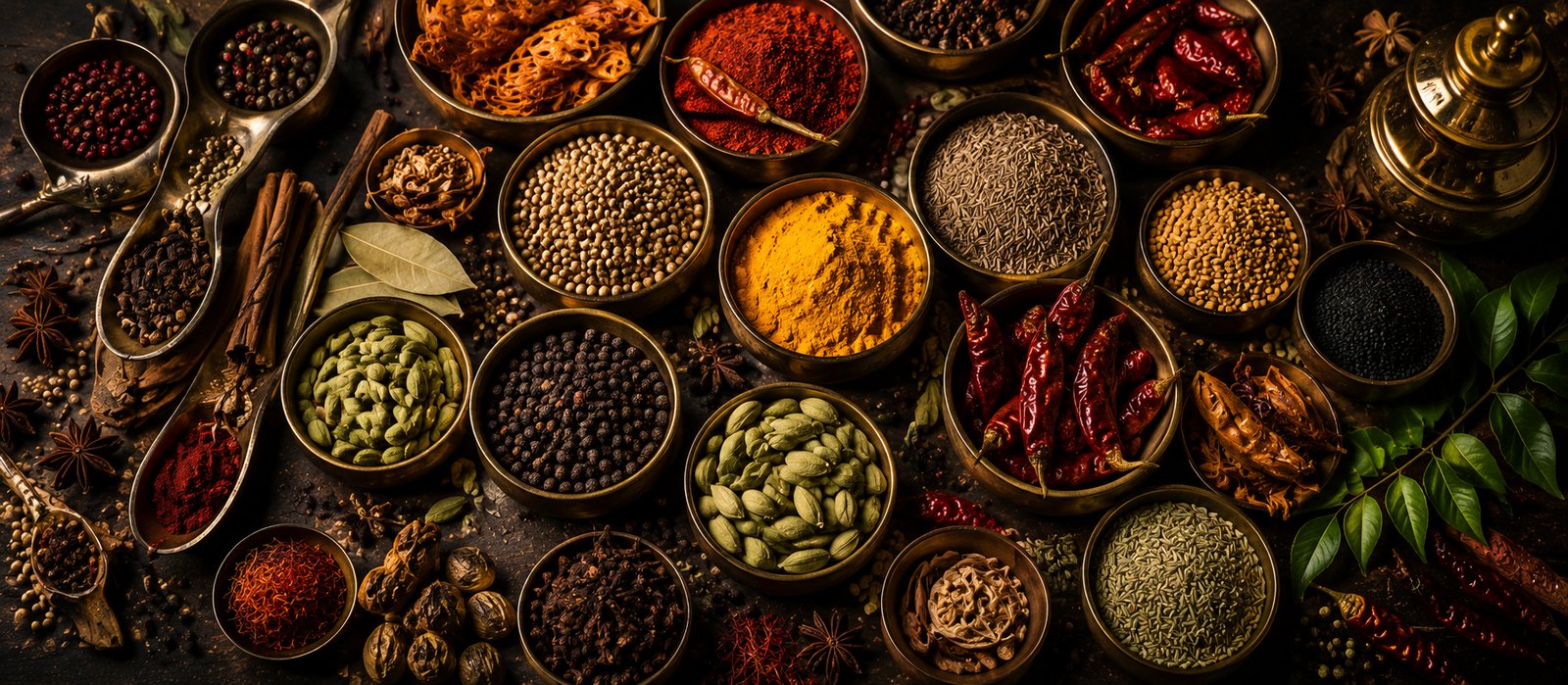
How spices actually work — the complete science
Indian cooking uses more spices than any other cuisine on earth — not because more is better, but because each spice contributes specific chemical compounds to specific flavour registers. Understanding how spices actually work at a molecular level — what compounds they contain, how those compounds are extracted, and what they produce in the finished dish — transforms every cooking decision from habit into intention.
A spice is not a single flavour compound. Cumin alone contains over 100 identifiable aromatic molecules. Coriander contains a completely different set of 100+ molecules. When you add both to a dish, you are adding 200+ distinct compounds, each undergoing different extraction and transformation reactions at different temperatures, in different media (fat vs water vs dry heat). The perceived complexity of a well-spiced Indian dish is not magic — it is the measurable sum of hundreds of simultaneous chemical reactions.
The four spice compound families — what each contributes
- Terpenes and terpenoids: fat-soluble, volatile aromatic compounds. Limonene (coriander's citrus note), zingiberene (ginger's warmth), eucalyptol (cardamom's freshness). Extract best in hot fat. Evaporate rapidly — add late or in tadka for maximum impact.
- Sulfur compounds: pungent, savoury, deeply aromatic. Allicin (garlic), diallyl disulfide (cooked garlic), propanethial S-oxide (raw onion). Water-soluble and fat-soluble. Essential for savoury depth — the umami of spice.
- Phenolics and alkaloids: bitter, astringent, heat-producing. Capsaicin (chilli), piperine (black pepper), eugenol (cloves), curcumin (turmeric). Very stable at cooking temperatures. These are the 'weight' compounds that persist through cooking.
- Aldehydes and esters: fruity, floral, delicate. Cinnamaldehyde (cinnamon), benzaldehyde (stone flower), vanillin (some spices). Heat-sensitive — evaporate at moderate temperatures. Add these spices late for best aroma preservation.