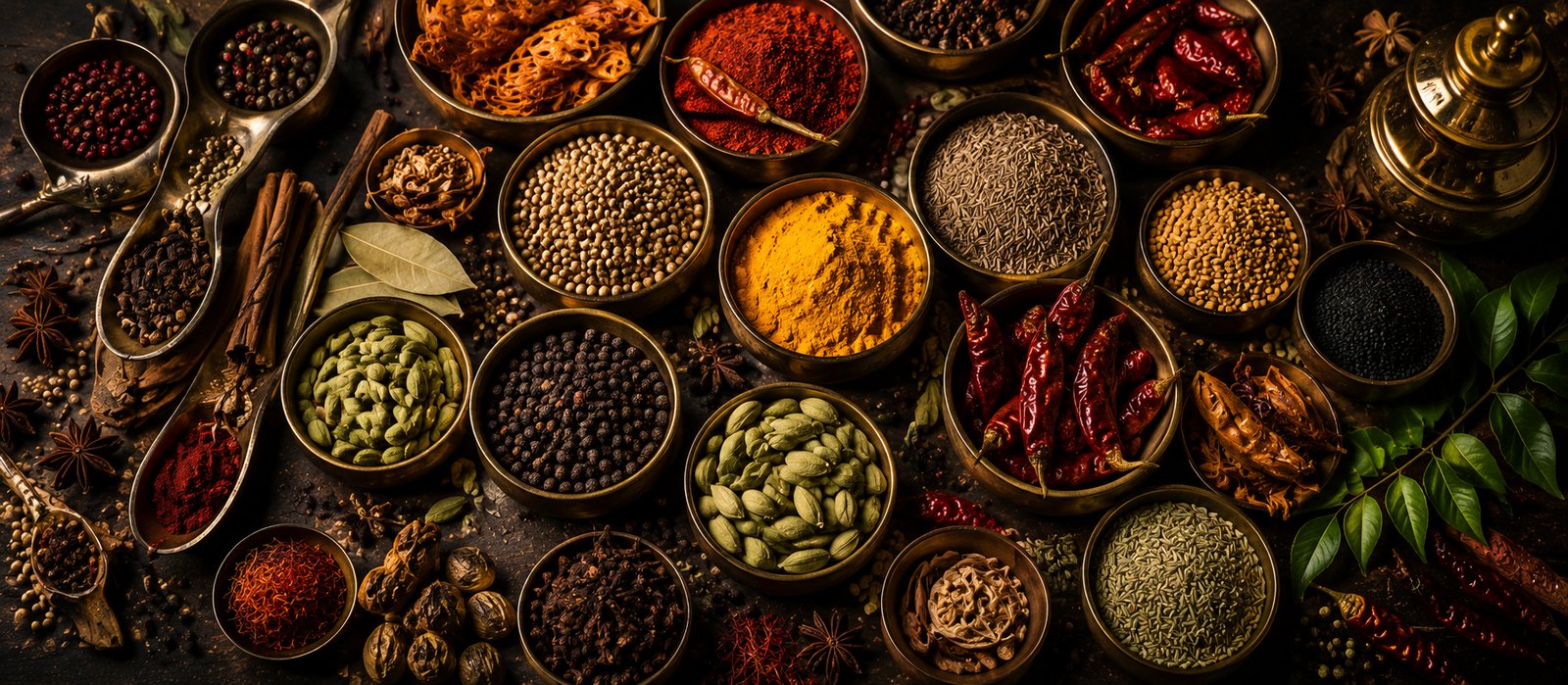
Bark and quill
Cinnamon — bark, quill, and the cassia confusion
Most of what is sold as cinnamon in Indian cooking — and much of the world — is not true cinnamon (Ceylon cinnamon, Cinnamomum verum) but cassia (Cinnamomum cassia or C. aromaticum). They taste different, they contain different compounds in different proportions, and they behave differently in cooking. Understanding the distinction explains why Indian biryani using the standard bark has a different character from Sri Lankan rice dishes using true cinnamon.
The Science
What is cinnamaldehyde and why does it define cinnamon flavour?
Cinnamaldehyde is the primary aromatic compound in both true cinnamon and cassia — responsible for the characteristic warm, sweet, slightly spicy cinnamon character. True Ceylon cinnamon is 60–75% cinnamaldehyde in its essential oil; cassia contains 85–95% cinnamaldehyde — more potent, more assertive, more 'cinnamon' in the way most people know the flavour. Cassia also contains high levels of coumarin (a naturally occurring compound that can be harmful in very large quantities), while true cinnamon contains negligible coumarin. For culinary amounts used in Indian cooking, neither presents any health concern.
35 second read
Cinnamon in Indian Cooking
Forms and functions
- Cinnamon sticks in biryani tadka: the most common use. A small piece (5cm) of cassia bark added to hot ghee at the start releases cinnamaldehyde into the fat. Provides warm, sweet background that balances the savoury meat and spice components.
- In garam masala: ground cinnamon provides the sweet-warm base note that balances the more assertive spices (cloves, black cardamom). Use in small quantity — cinnamaldehyde is more volatile than many masala compounds and can dominate.
- In biryani rice: placed in the dum vessel whole — releases cinnamaldehyde slowly during the sealed steam cooking. Remove before serving.
- Dal and vegetable dishes: less common than in meat dishes, but a small cinnamon piece in dal tadka adds sweet depth that rounds harsh notes.