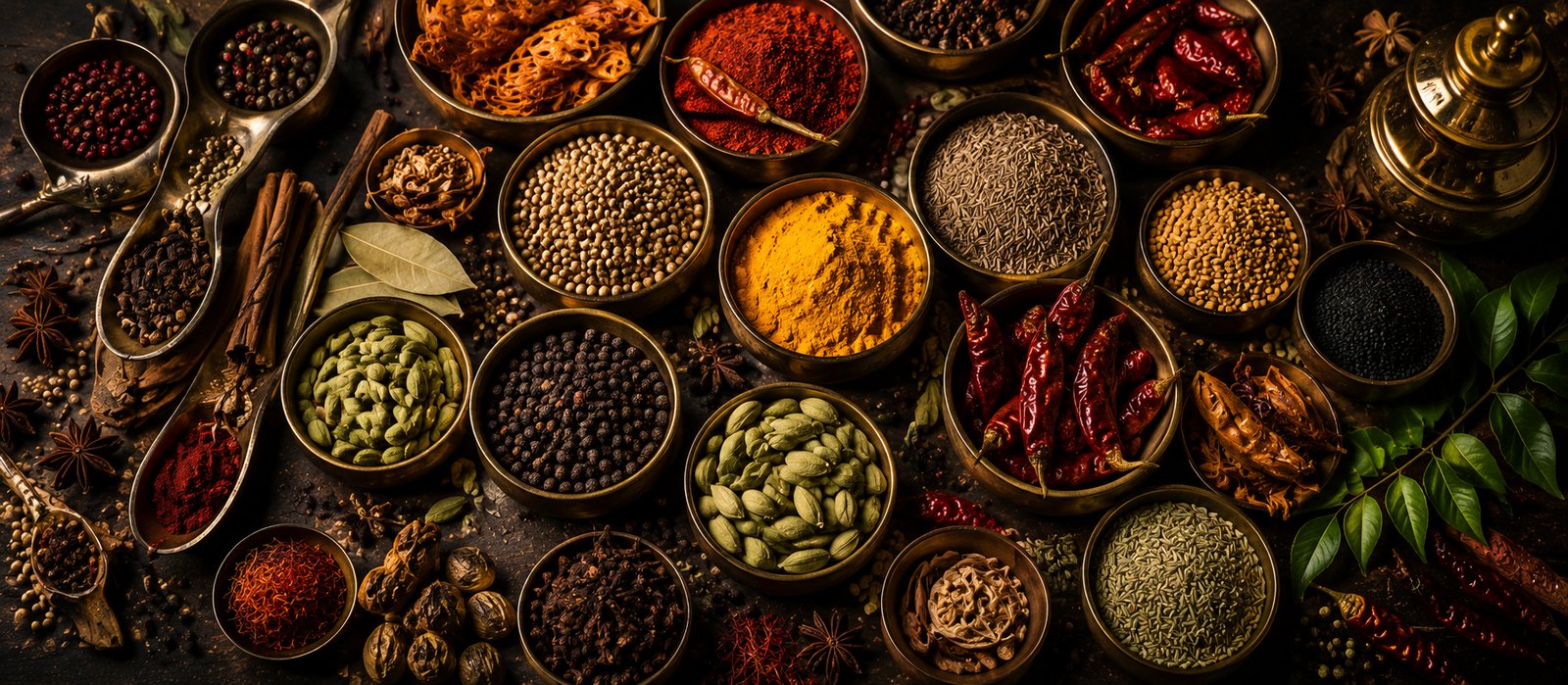
The most potent spice
Cloves — the most potent spice in Indian cooking
Cloves are the most potent spice in Indian cooking by concentration of active compounds. A single clove contains 14–20% essential oil by weight — almost entirely eugenol — making it one of the highest aromatic compound-to-weight ratios of any culinary spice. This potency explains why cloves are always used in tiny quantities and why a single excess clove can dominate and ruin an entire dish.
The Science
Why does eugenol have an anaesthetic effect in the mouth?
Eugenol (4-allyl-2-methoxyphenol) is a phenylpropanoid compound that blocks sodium channels in nerve cell membranes — the same mechanism used by local anaesthetics. This is why biting a clove numbs the mouth area around it. At culinary concentrations, this anaesthetic effect is mild and contributes to the 'warm' sensation of clove in food — it slightly numbs the pain receptors that would otherwise register the compound's heat, producing a complex warm-numbing sensation. Eugenol is still used in dentistry as a natural anaesthetic.
30 second read
Using Cloves Correctly
Quantity, timing, and when to remove them
- Quantity: 2–4 whole cloves per dish serving 4 is the maximum for most dishes. In garam masala blends, cloves should be the smallest component by volume — 1 part cloves to 6–8 parts other spices.
- Timing: added to hot fat at the start of tadka — eugenol extracts rapidly into fat at 180°C. Or added whole to biryani rice. Never added as a finishing spice — the potent eugenol would dominate.
- Removal: always remove whole cloves before serving — biting a whole clove releases an overwhelming burst of eugenol directly into the mouth. In biryani, guests expect to find and set aside whole spices; in curry, remove before plating.
- In garam masala: cloves provide the warm, slightly medicinal base note of garam masala. Use conservatively — excess cloves in garam masala produces bitter, pharmaceutical-tasting results.