The original heat
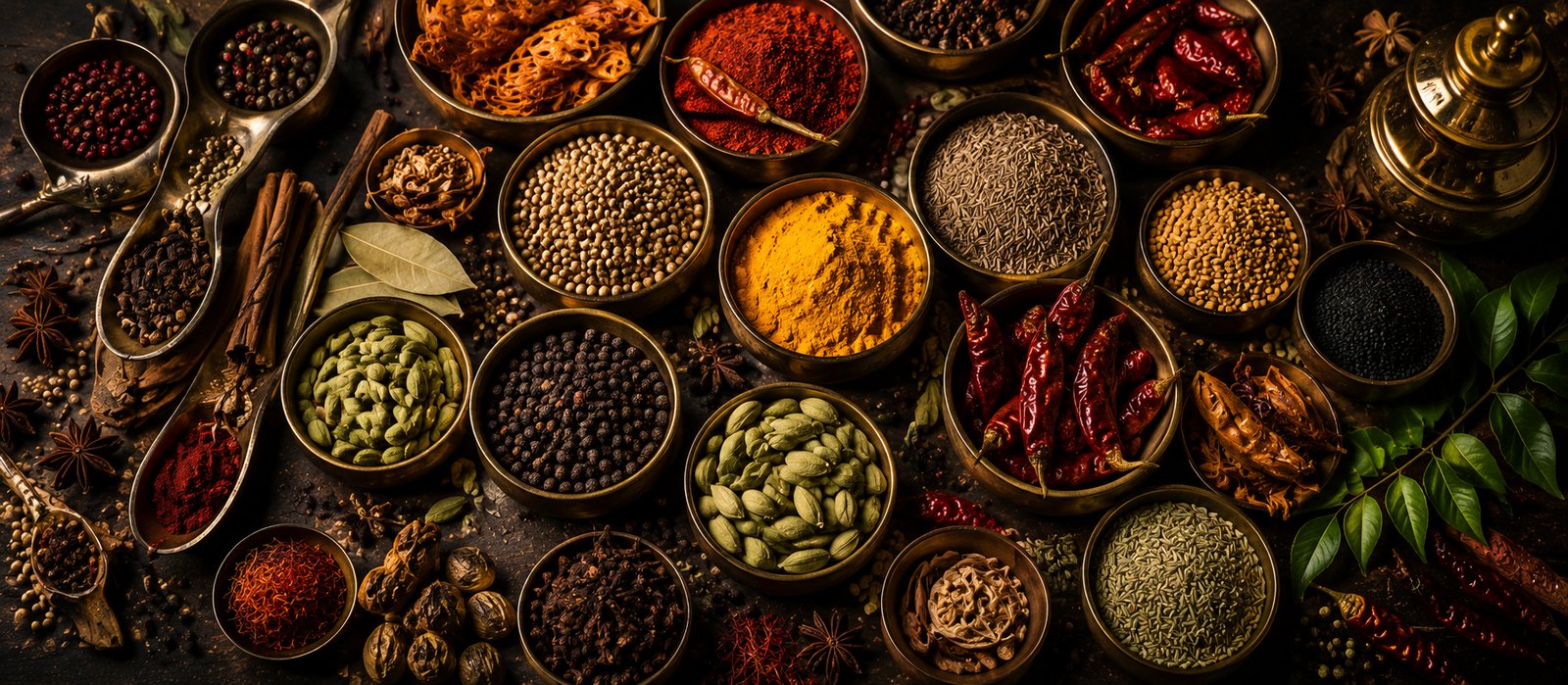
Black pepper — the original Indian heat
Before chilli arrived in India after 1500 CE, black pepper was India's primary heat source — and for thousands of years before that, it was the most valuable traded commodity in the world. Roman emperors paid ransoms in black pepper. Vasco da Gama's sea route to India was motivated by finding a direct source of it. Understanding what makes black pepper unique — and why it produces a different heat from chilli — connects to the fundamentals of how spice heat works.
The Science
Why does black pepper produce a different kind of heat from chilli?
Chilli heat comes from capsaicin activating TRPV1 receptors — the body's heat-sensing pain pathway. This produces an immediate, intense, front-of-mouth burning sensation. Black pepper heat comes from piperine activating a completely different receptor pathway — TRPA1 (ankyrin repeat receptor) — producing a slower, more diffuse, back-of-throat warmth without the same intense pain-nerve activation as capsaicin. Piperine also enhances bioavailability of other compounds — it inhibits intestinal enzymes that break down many molecules, which is why it is used alongside turmeric in traditional preparations and modern supplements.
35 second read
Black Pepper in Indian Cooking
When and how to use it for maximum impact
- Freshly ground on finishing: black pepper's most volatile aromatic compounds (terpenes including limonene and pinene) evaporate rapidly from pre-ground pepper. Grinding immediately before use — especially for finishing dishes and raita — preserves these aromatics.
- In garam masala: ground black pepper provides warmth and back-of-throat heat to garam masala. The ratio: typically 1 part pepper to 2 parts cumin and 2 parts coriander.
- Whole peppercorns in biryani: provide the background warmth throughout the long cooking. Remove before eating — biting a whole peppercorn releases an intense burst of piperine.
- Kerala and Chettinad cooking: black pepper is the primary heat source in many South Indian dishes from these regions — chilli is used but pepper provides the distinctive background warmth that defines the cuisine.