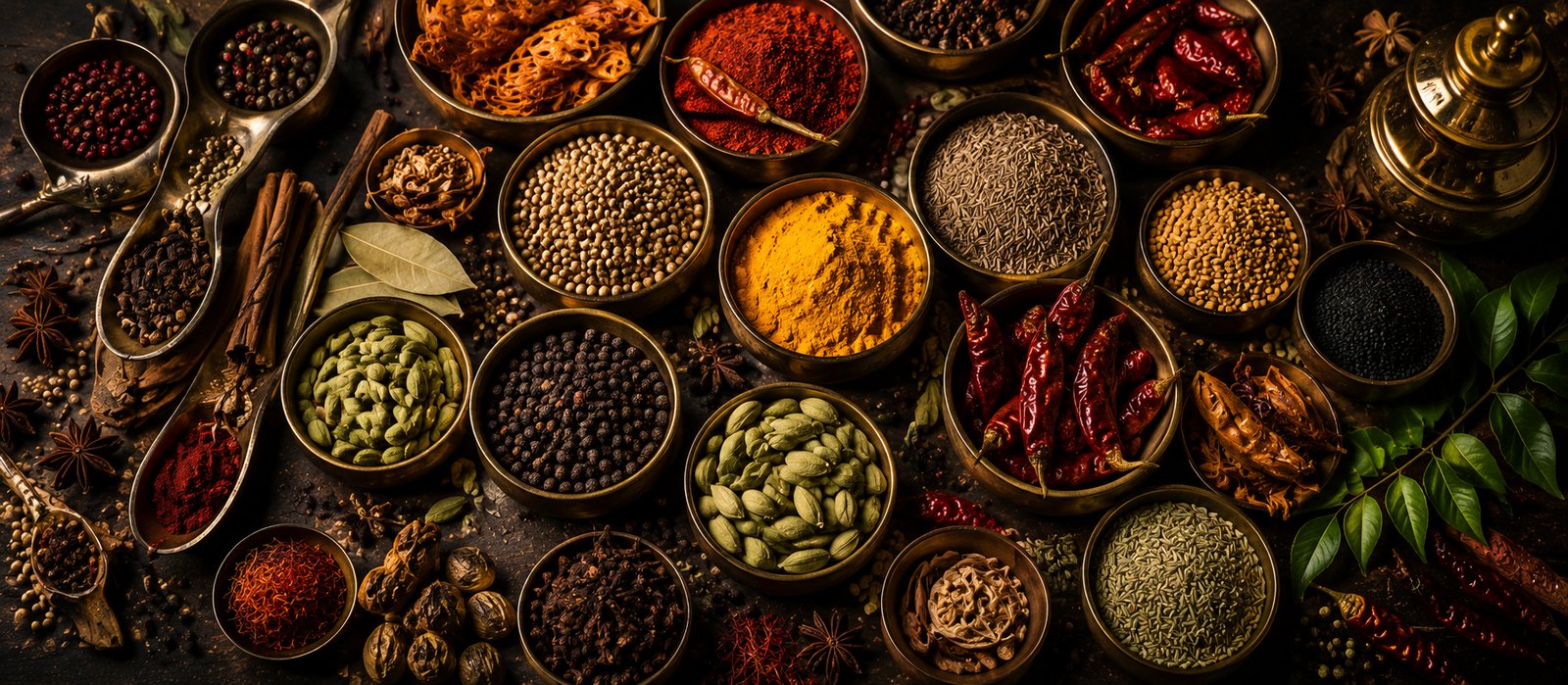
The queen of spices
Cardamom — the queen of spices
Cardamom holds a unique position in Indian spice culture — it is simultaneously a warm spice used in savoury dishes and a flavouring agent in sweets, desserts, chai, and even tobacco products. Its extraordinary complexity comes from an unusually large aromatic compound profile, with eucalyptol providing a cool, menthol-like freshness and alpha-terpinyl acetate providing a warm, floral sweetness — both in the same pod.
The Science
Why does cardamom taste simultaneously warm and cool?
Cardamom's primary aromatic compound, eucalyptol (1,8-cineole), activates the same TRPM8 receptors in the mouth that menthol activates — producing a perception of coolness. Simultaneously, alpha-terpinyl acetate and linalool produce warm, floral notes. Cardamom is one of very few spices that activates both cooling and warming receptor pathways simultaneously — producing the distinctive complex perception of warmth-with-freshness that makes it so versatile in both sweet and savoury applications.
30 second read
Green vs Black Cardamom
Two completely different flavour profiles and applications
- Green cardamom (Elettaria cardamomum): delicate, floral, eucalyptol-forward. Used in chai, sweets, biryanis, garam masala, lassi, halwa. The seeds inside the pod are the source of flavour — the pod provides some flavour but the seeds have the highest concentration of aromatic compounds.
- Black cardamom (Amomum subulatum): a completely different species with a completely different flavour. Smoky, camphor-like, more astringent, significantly less floral. Used in biryani, meat curries, and garam masala. Never used in sweets. The smoky character comes from the traditional drying process over fire.
- Using whole vs ground: whole pods in biryani or slow-cooked dishes release compounds gradually over extended cooking. Ground cardamom loses volatile aromatics within weeks — grind from seeds immediately before use for maximum impact.