🍚 Rice · Level 1
Vegetable Pulao
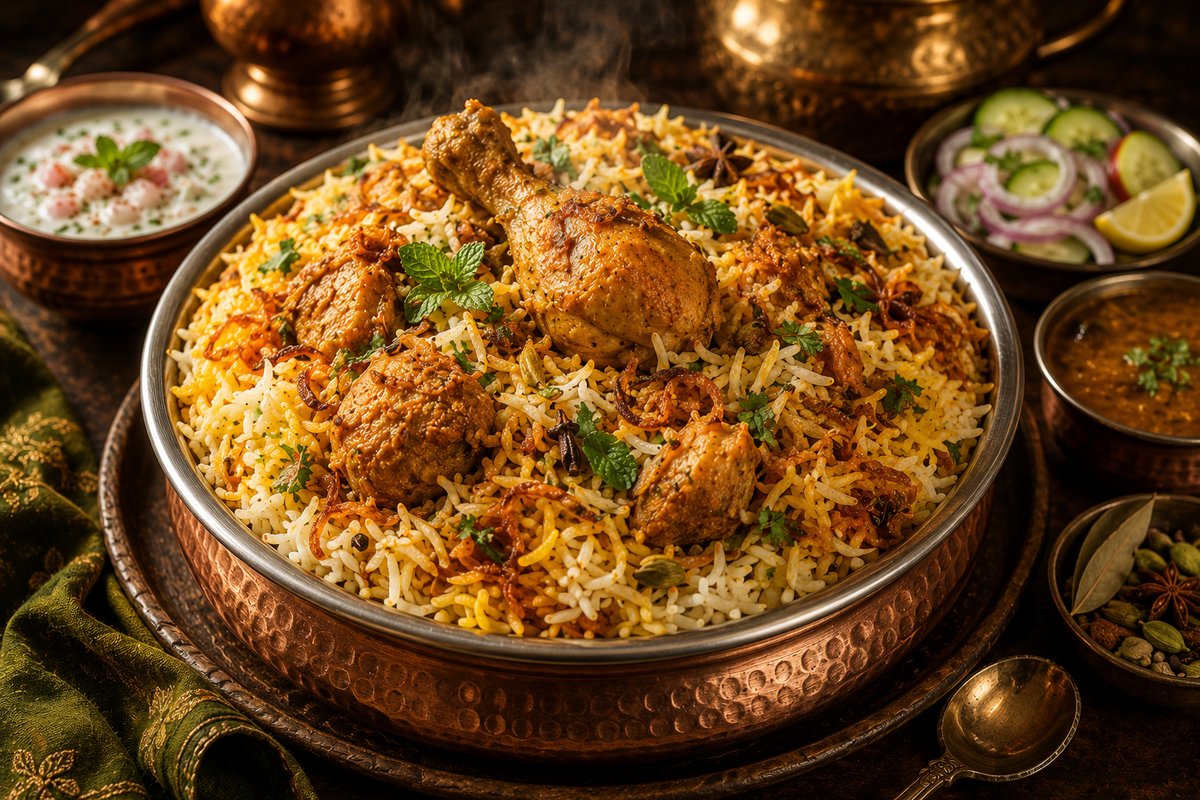
Fragrant basmati cooked with whole spices and vegetables by the absorption method. One pot, 30 minutes, clean flavour. The everyday celebration rice.
Fragrant basmati cooked with whole spices and vegetables by the absorption method. One pot, 30 minutes, clean flavour. The everyday celebration rice.
Pulao is cooked by the absorption method — all ingredients go into one pot, liquid is added in a precise ratio, and the rice absorbs all the liquid. Biryani uses separate preparation and dum layering. Pulao is cleaner, faster and more delicate in flavour. The whole spices cooked directly in the rice release their aromatics into the starch as it cooks — producing a subtly flavoured rice where every grain carries the spice perfume.
Heat ghee in a heavy pot. Add all whole spices — fry 1 minute until fragrant. Add onion and cook 8 minutes until golden. Add ginger-garlic paste, cook 2 minutes. Add vegetables except peas — cook 2 minutes.
Whole spices in hot ghee extract their fat-soluble terpenes within 60–90 seconds. These compounds dissolve into the ghee and remain in the pot throughout cooking. When the rice is added and water comes to a boil, these aromatic compounds partition between the fat phase (ghee) and the steam phase, distributing through every grain as the water is absorbed. This is why pulao has a more delicate, uniform fragrance than adding spices at the end.
Add drained rice to the pot — stir gently to coat with the spiced ghee. Add water and salt. Bring to a boil. Add peas. Reduce to lowest heat. Cover tightly. Cook 15 minutes undisturbed. Remove from heat, rest covered 5 minutes.
The 1.5:1 water-to-rice ratio is calibrated for soaked basmati in a tight-lidded pot at sea level. Soaked rice has already absorbed approximately 20% of its capacity — it needs proportionally less cooking water. The 15-minute covered low-heat cooking allows the water to absorb completely via capillary action — each grain absorbs water from the surrounding liquid until equilibrium is reached and all liquid is absorbed. Lifting the lid releases steam, reduces total moisture, and creates uneven cooking zones.
After resting, open the lid. Fluff gently with a fork — do not stir. Each grain should be separate, elongated and fragrant.
Fluffing with a fork separates the grains by breaking the weak starch bonds that formed between grain surfaces during the final resting phase. Stirring with a spoon would apply lateral shear force that breaks the grains. Fork fluffing lifts grains vertically, separating them without breaking — preserving the elongated basmati grain structure that defines good pulao.