🍚 Rice · Level 1
Matar Pulao
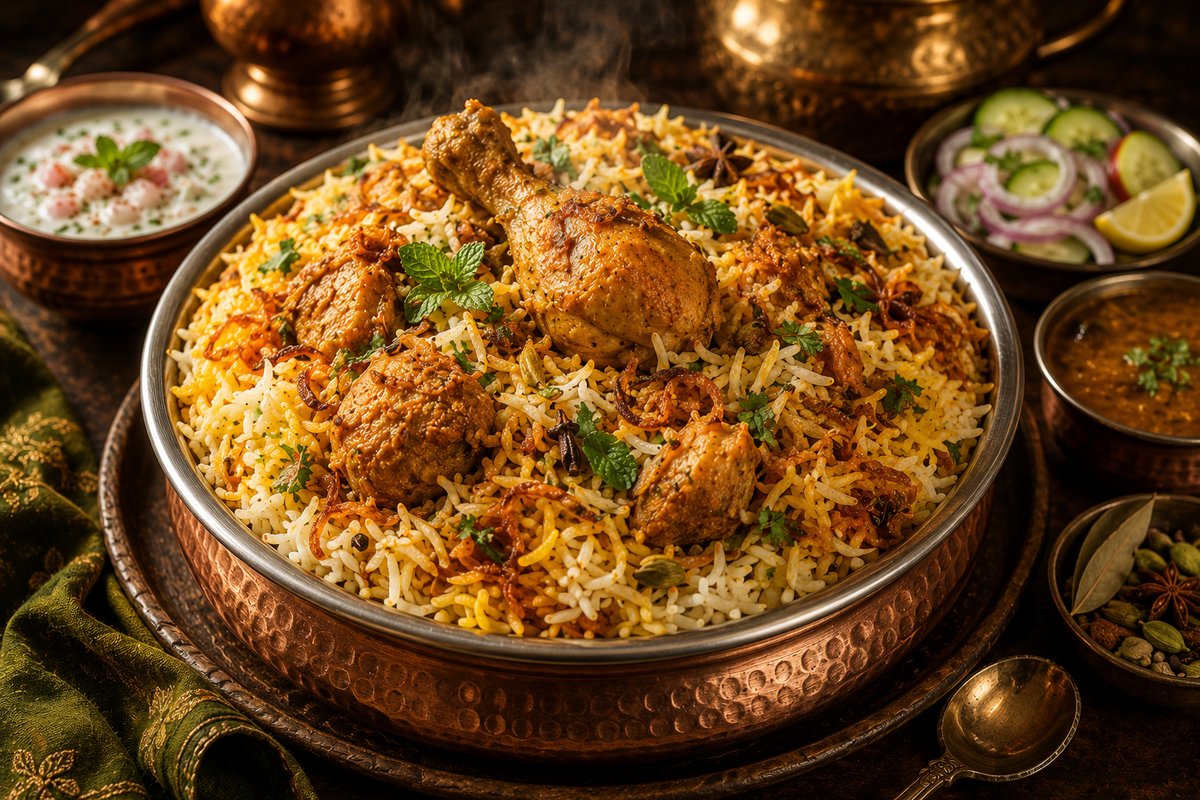
The simplest and most-made Indian rice dish — basmati with cumin-spiced ghee and green peas. 25 minutes from start to table.
The simplest and most-made Indian rice dish — basmati with cumin-spiced ghee and green peas. 25 minutes from start to table.
Matar pulao is the rice most Indian families eat most often. Its simplicity makes it an ideal technique lesson: the correct spice blooming sequence, the absorption ratio, and the sealed cooking method are all on full display without the complexity of biryani. Master matar pulao and the technique scales to every other Indian rice dish.
Heat ghee. Add cumin seeds — wait for the sizzle. Add bay leaf, cardamom, cinnamon. Fry 30 seconds. Add onion, cook 8 minutes until golden.
The sequence — cumin first, then remaining whole spices, then onion — is deliberate. Cumin seeds have a harder outer coat and take slightly longer to release their aromatics. Adding them first for 30 seconds before the more fragile cardamom and cinnamon ensures optimal extraction from each. Adding all whole spices simultaneously risks under-extracting the harder spices while burning the delicate ones.
Add drained rice, toss in spiced ghee for 1 minute. Add water and salt, bring to a full boil. Stir in frozen peas. Reduce to absolute minimum heat, cover tightly, cook 15 minutes. Remove from heat, rest 5 minutes.
Adding peas at the boil rather than at the start ensures they cook for only 15 minutes total rather than 25 — preserving their colour and texture. The absorption cooking seals them in the steam environment where they receive gentle, even heat. The 5-minute resting period after removing from heat allows the residual steam to complete cooking the outermost rice grains that may have been slightly less hydrated.
Uncover, fluff gently with a fork. Each grain should be separate. Serve immediately.
The fluffing separates grain surfaces that bonded via hydrogen bonding between exposed amylose chains. Using a fork applies minimal lateral force — critical for basmati's extra-long grain structure, which snaps more easily than short-grain rice.