🍛 Curry · Level 2
Veg Kolhapur
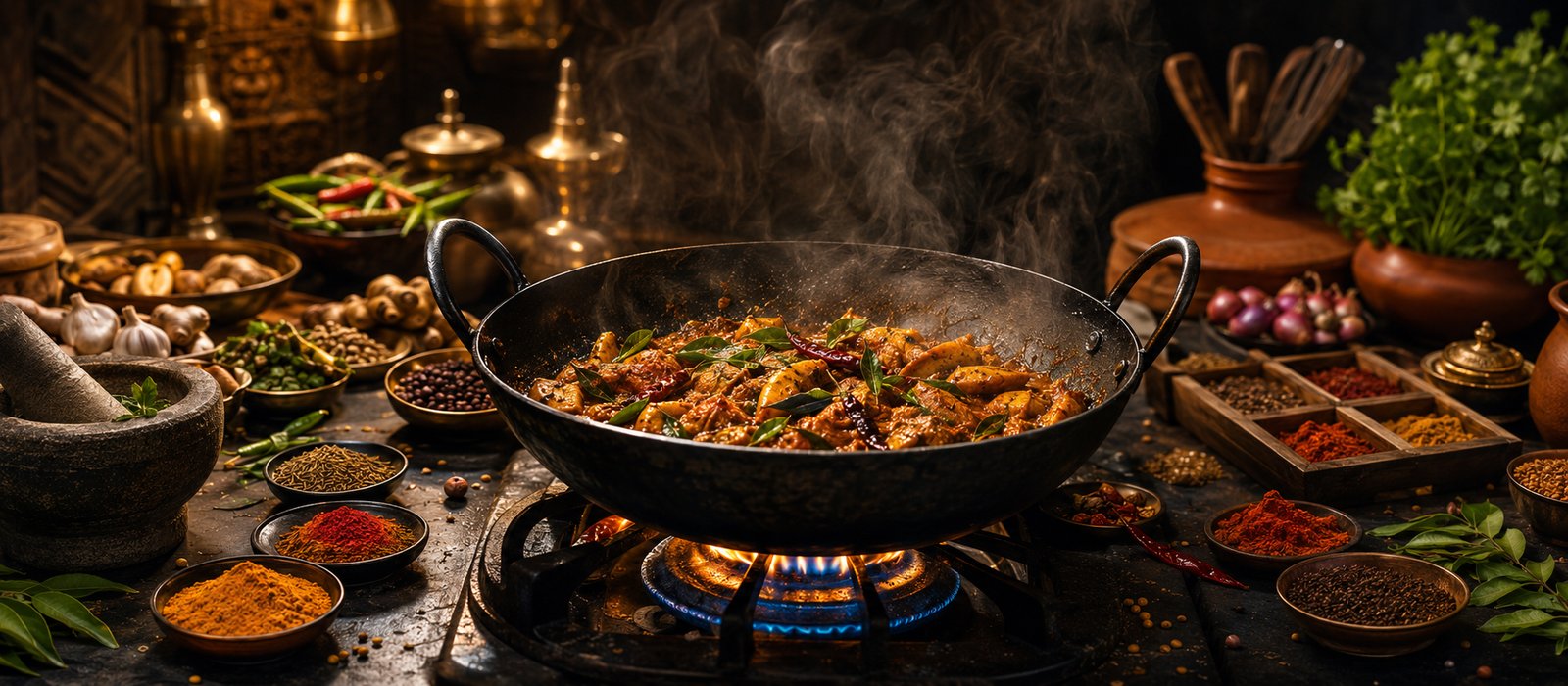
Maharashtra's most assertive curry — mixed vegetables in a Kolhapuri masala of dry coconut, red chilli and spices. Fiery, complex, deeply spiced. Not for the faint-hearted.
Maharashtra's most assertive curry — mixed vegetables in a Kolhapuri masala of dry coconut, red chilli and spices. Fiery, complex, deeply spiced. Not for the faint-hearted.
Kolhapuri cuisine from the Kolhapur region of Maharashtra is characterised by its bold, fiery masala made with dry-roasted coconut and a specific blend of whole spices ground fresh. Unlike most Indian curries that use onion-tomato as the masala base, Kolhapuri masala uses dry-roasted coconut as its body — producing a darker, drier, more intensely spiced result. The heat is genuine — Kolhapuri dishes are not adapted for mild palates, and the heat is part of the identity.
Dry-roast each ingredient separately: coconut until golden-brown, red chillies until darkened, coriander and cumin until aromatic. Cool. Blend all with garlic and water to a smooth, thick dark paste.
Dry-roasting coconut at 180°C causes the Maillard reaction between its natural proteins and sugars — producing pyrazines and caramel compounds that give Kolhapuri masala its characteristic roasted-coconut depth. The dark colour of properly roasted coconut indicates adequate Maillard compound formation — pale coconut in Kolhapuri masala indicates under-roasting and a less complex flavour. Each ingredient roasted separately allows optimal roasting of each without burning the faster-roasting ones.
Heat oil. Cook onion 12 minutes until golden. Add ginger-garlic paste. Add tomatoes, turmeric. Bhuno until oil separates. Add Kolhapuri paste — fry 5 minutes in the masala until dark and fragrant.
Frying the Kolhapuri paste in the bhunoed masala extracts the fat-soluble aromatic compounds from the roasted coconut and spices into the oil phase. The 5-minute frying of the paste at 160°C+ continues the Maillard reactions in the paste compounds — the paste darkens further and develops additional complexity from the second stage of heat exposure. This two-stage roasting (initial dry-roasting + subsequent masala frying) is characteristic of deep-flavoured Indian masalas.
Add 200ml water, par-boiled potato, capsicum, cauliflower and salt. Simmer 10–12 minutes until vegetables are tender and gravy thickens. Finish with fresh coriander.
Par-boiling the potato before adding to the Kolhapuri masala prevents the long simmering time needed for raw potato from overcooking the capsicum and cauliflower. Staggered vegetable doneness times require pre-cooking the densest vegetables or adding them at different stages. The coconut fat from the masala coats the vegetable surfaces during the simmer, carrying the spice compounds into the vegetable exteriors.