🫓 Bread · Level 1
Poori
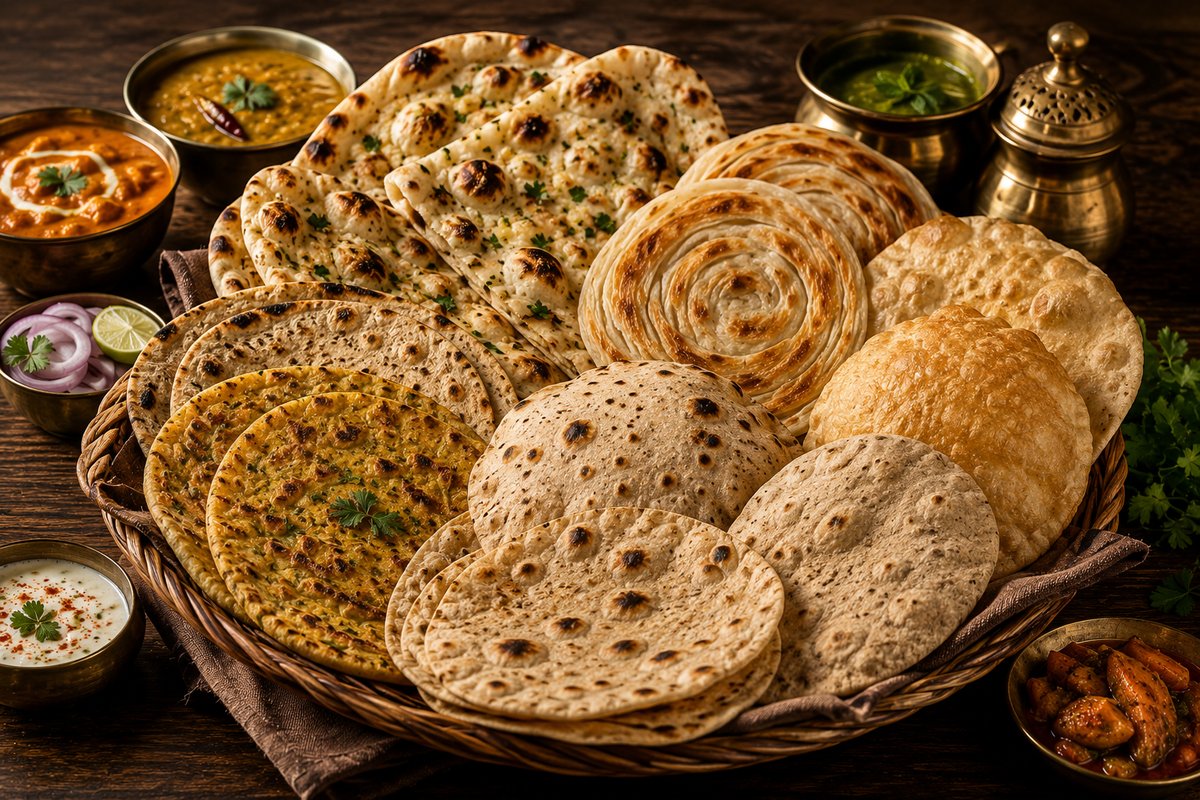
The festive bread — whole wheat dough fried in hot oil until it puffs into a hollow golden sphere. The physics are the same as pani puri but the dough is different.
The festive bread — whole wheat dough fried in hot oil until it puffs into a hollow golden sphere. The physics are the same as pani puri but the dough is different.
Poori puffs because the steam generated inside the dough inflates the gluten network. Two things can prevent this: dough that is too soft (the gluten is too weak to hold the steam) and dough that has been rolled and left too long before frying (the surface dries, creating a skin that prevents puffing). Poori must go directly from the rolling board into the hot oil.
Mix atta, salt, oil. Add water gradually — the dough should be noticeably stiffer than roti dough. Knead 7 minutes. Rest 15 minutes.
The stiffer dough (less water) produces a more rigid gluten network that can withstand the steam pressure without tearing. A soft dough tears rather than inflates — the steam finds weak points and escapes, producing a flat poori. The reduced water content also means less steam is produced, but at a higher pressure — sufficient to inflate the rigid gluten rather than simply escaping.
Roll one small circle (12cm, 2mm thick). Immediately lower into oil at 175–180°C. Using a slotted spoon, gently press the poori under the oil surface for 3–4 seconds. Release — it will puff within 10 seconds. Fry 30 more seconds until golden. Drain.
Pressing the poori under the oil surface achieves two things simultaneously: it ensures the entire surface contacts hot oil at 175°C, generating steam uniformly across the whole disc, and it applies mild resistance that allows steam pressure to build before the surface sets. Without pressing, the steam escapes from one edge before the gluten has set, producing a partially puffed or flat poori. The pressing is the critical triggering step.