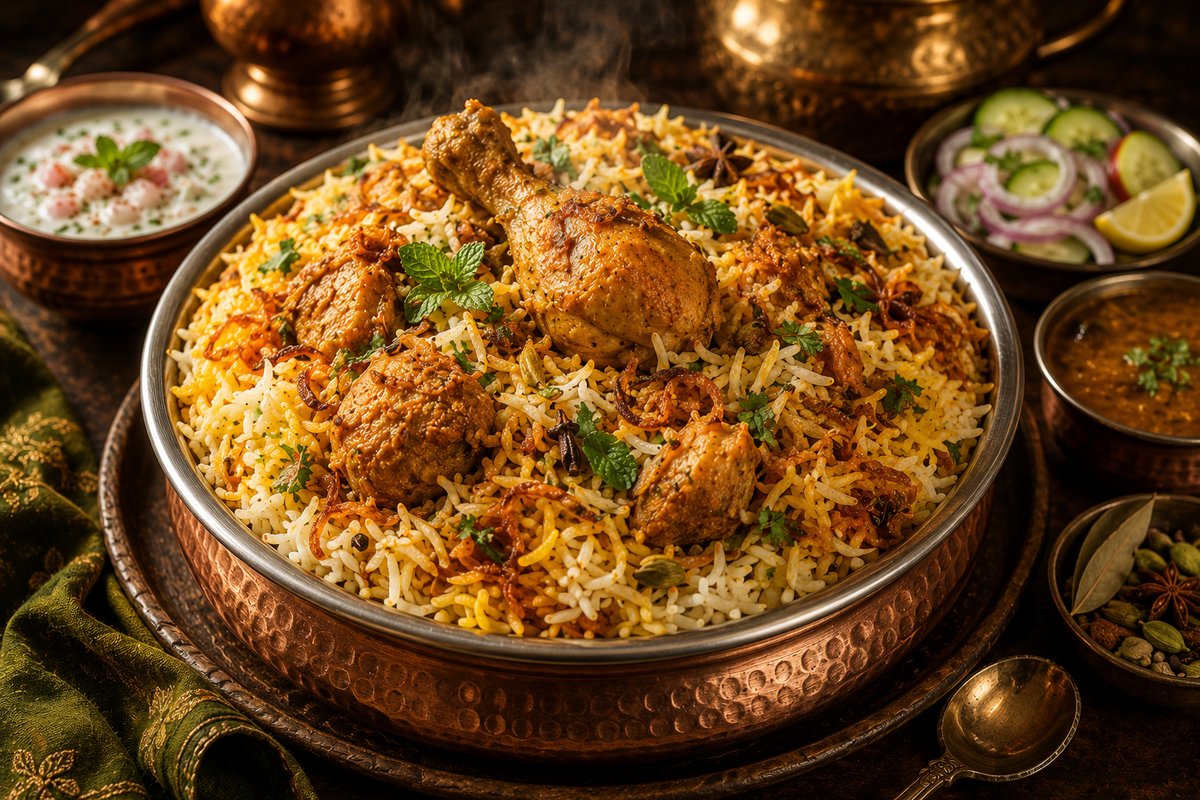
The flat, unaromatic rice problem
Why rice lacks fragrance — the volatile compound problem
Basmati rice's distinctive fragrance comes from 2-acetyl-1-pyrroline — a volatile aromatic compound produced during grain maturation and concentrated through ageing. This compound is volatile: it evaporates readily during cooking, especially if the rice is boiled rapidly with the lid off. Preserving basmati's aroma requires specific technique.
The Science
Why does ghee improve rice aroma?
2-acetyl-1-pyrroline is fat-soluble. Adding ghee to the cooking water allows the fat to dissolve and retain these volatile aroma compounds rather than letting them evaporate into the air. The fat phase carries the aroma compounds through the cooking process and releases them slowly at serving temperature — providing sustained aroma rather than a brief fragrance flash that evaporates immediately. This is why restaurant rice always smells more aromatic than water-only cooked rice.
30 second read
The Fix
How to maximise rice aroma
- Add 1 teaspoon of ghee to the cooking water — dissolves and retains volatile aromatic compounds
- Avoid rapid boiling — high heat drives off aromatic compounds before they can be absorbed
- Cook with a tight lid — traps aromatic steam rather than allowing it to escape
- Use aged basmati — significantly higher 2-acetyl-1-pyrroline content than new-season rice
- Add a cardamom pod, clove, and a small piece of cinnamon to the cooking water — whole spice aromatics absorbed during cooking