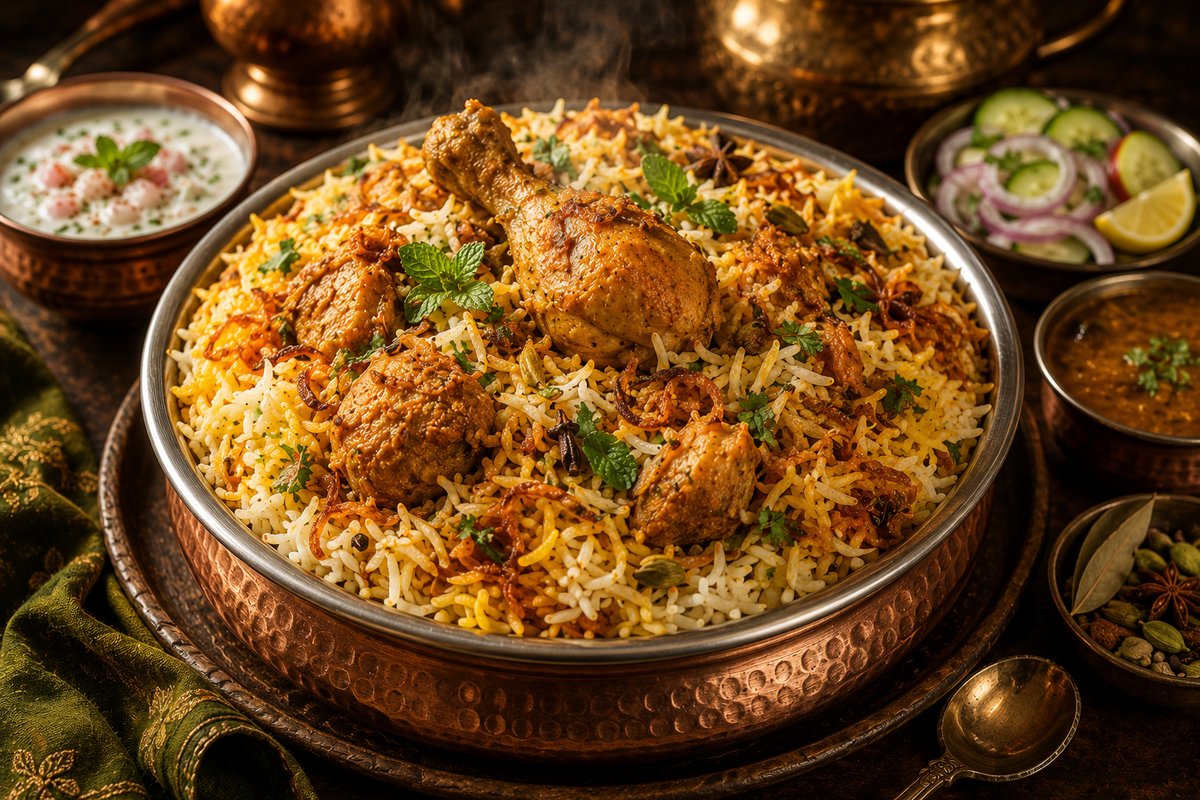
The greasy biryani problem
Why biryani becomes oily — fat sources compound
Biryani collects fat from multiple sources: the marinade oil, the cooking oil for the base, the oil from frying birista, and the finishing ghee. When each is added without consideration of the total fat load, the result is a greasy biryani where oil pools visibly in the serving dish.
The Fix
How to manage biryani fat correctly
- Drain birista well after frying — place on kitchen paper for 5 minutes before adding to biryani
- Use only 3–4 tablespoons of ghee total for layering 4-person biryani — not the 6–8 tablespoons some recipes suggest
- Marinade oil: use 2 tablespoons maximum in marinade — the cooking process adds sufficient additional fat
- Skim excess fat from the cooked meat layer before assembling biryani
- Tilt the finished biryani pot and remove visible pooled oil with a spoon before serving
The Science
Why does birista add so much oil to biryani?
Birista is deep-fried — onion that has been frying in oil until 70% of its moisture has evaporated. The remaining structure is a highly porous, oil-saturated crispy layer. When birista is added to biryani without draining, the residual oil in each onion piece migrates into the surrounding rice and meat layer during dum cooking. Poorly drained birista can add 3–4 tablespoons of oil to a biryani invisibly — appearing as inexplicable pooled oil in the finished dish.
30 second read