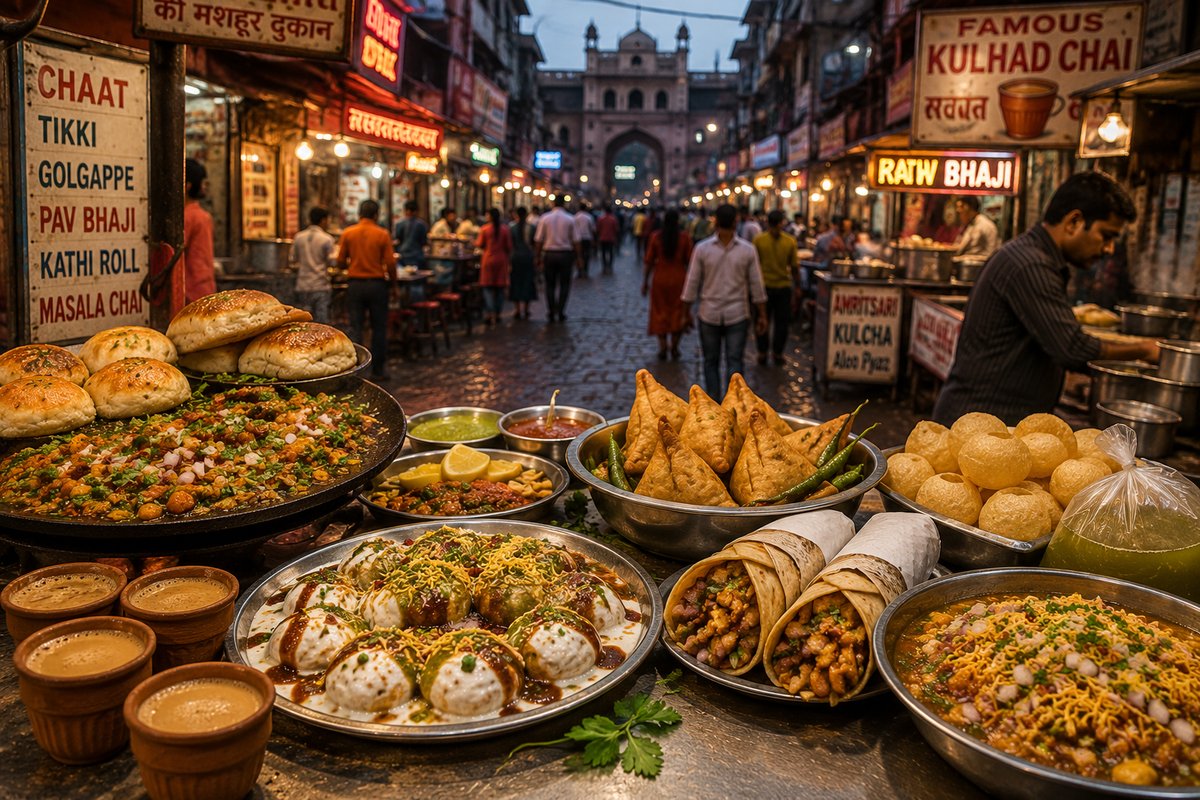
The street food gap
The street food gap — five structural differences
The flavour difference between street bhajia, samosa, and vada from a chaat stall and the same items made at home is real and structural. It is not about recipes — most street food recipes are simple and well-known. The differences are about heat intensity, oil management, batch cooking effects, and certain specific ingredients that street vendors use but home cooks rarely consider.
The Five Street Food Differences
1. High-BTU commercial stoves: street vendor stoves output 40,000–100,000 BTU vs home 8,000–18,000 BTU. Oil recovers temperature instantly between batches.
2. Continuously used oil: street vendor oil has accumulated food flavour compounds through hundreds of batches. This seasoned oil contributes complex flavour home fresh oil cannot provide.
3. Large batch effects: frying in very large quantities creates a different cooking environment — steam, flavour compounds, and batter bits all interact differently in commercial-scale frying.
4. Chaat masala and specific spice blends: street chaat masala contains amchur, black salt, and specific toasted spice ratios that home mixed masala rarely replicates.
5. Service speed: street food is consumed within 2 minutes of frying. Home food often sits for longer, losing crispiness.
2. Continuously used oil: street vendor oil has accumulated food flavour compounds through hundreds of batches. This seasoned oil contributes complex flavour home fresh oil cannot provide.
3. Large batch effects: frying in very large quantities creates a different cooking environment — steam, flavour compounds, and batter bits all interact differently in commercial-scale frying.
4. Chaat masala and specific spice blends: street chaat masala contains amchur, black salt, and specific toasted spice ratios that home mixed masala rarely replicates.
5. Service speed: street food is consumed within 2 minutes of frying. Home food often sits for longer, losing crispiness.
The Closest Home Approximation
What you can control
- Double fry everything and serve immediately
- Use a smaller, deeper karahi with more oil — approximates commercial thermal mass
- Buy quality chaat masala rather than making (or spend time getting the blend right)
- Fry in used (not degraded) oil — the third or fourth use has some flavour accumulation
- Serve immediately from the pan — every minute matters for crispiness