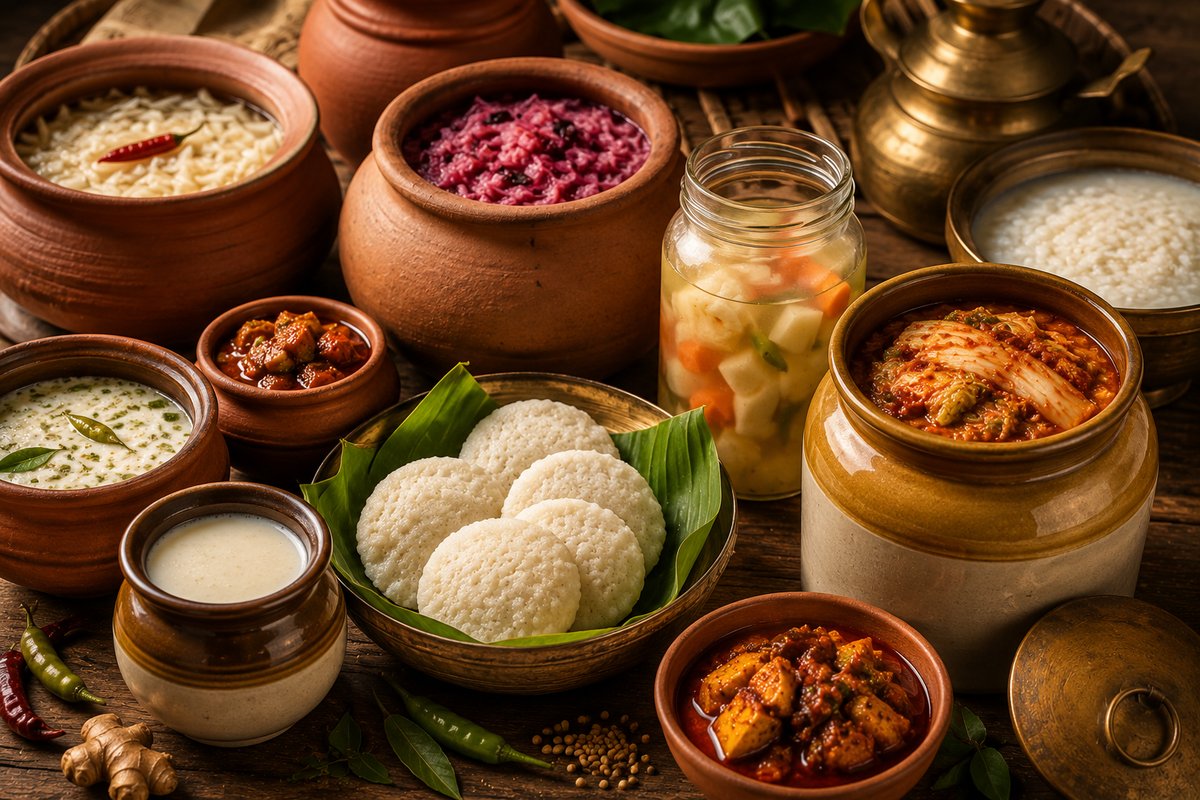
The sourness problem
Why batter is too sour — and how to reduce it
Dosa batter sourness increases continuously during fermentation and storage. By day 3 or 4, batter that was perfect on day 1 may be unpleasantly sharp. This sourness comes from accumulated lactic acid produced by Leuconostoc mesenteroides and other lactic acid bacteria — a process that continues even in the refrigerator, just much more slowly.
The Fix — Reducing batter sourness
Four methods in order of effectiveness
- Fresh batter dilution: soak and grind fresh rice, add to the sour batter at 1:1 — dilutes lactic acid directly
- Baking soda: 1/4 teaspoon per 2 cups of batter — sodium bicarbonate neutralises lactic acid chemically. Also improves texture.
- Sugar: a pinch compensates by adding sweetness that balances sourness without removing it
- Use for uthappam: thick uthappam absorbs sourness better than thin crispy dosa
- Prevention: refrigerate as soon as fermentation is complete. Use batter within 3 days of correct fermentation.
The Science
Why does baking soda reduce batter sourness?
Lactic acid (the source of batter sourness) has a pH of approximately 3.5. Sodium bicarbonate (baking soda) is alkaline with a pH of 8.3. When added to acidic batter, it reacts with lactic acid: lactic acid + sodium bicarbonate → sodium lactate + water + CO₂. This neutralisation reaction raises the batter pH, reducing perceived sourness, and the released CO₂ provides additional leavening for softer, more airy idli and dosa.
35 second read