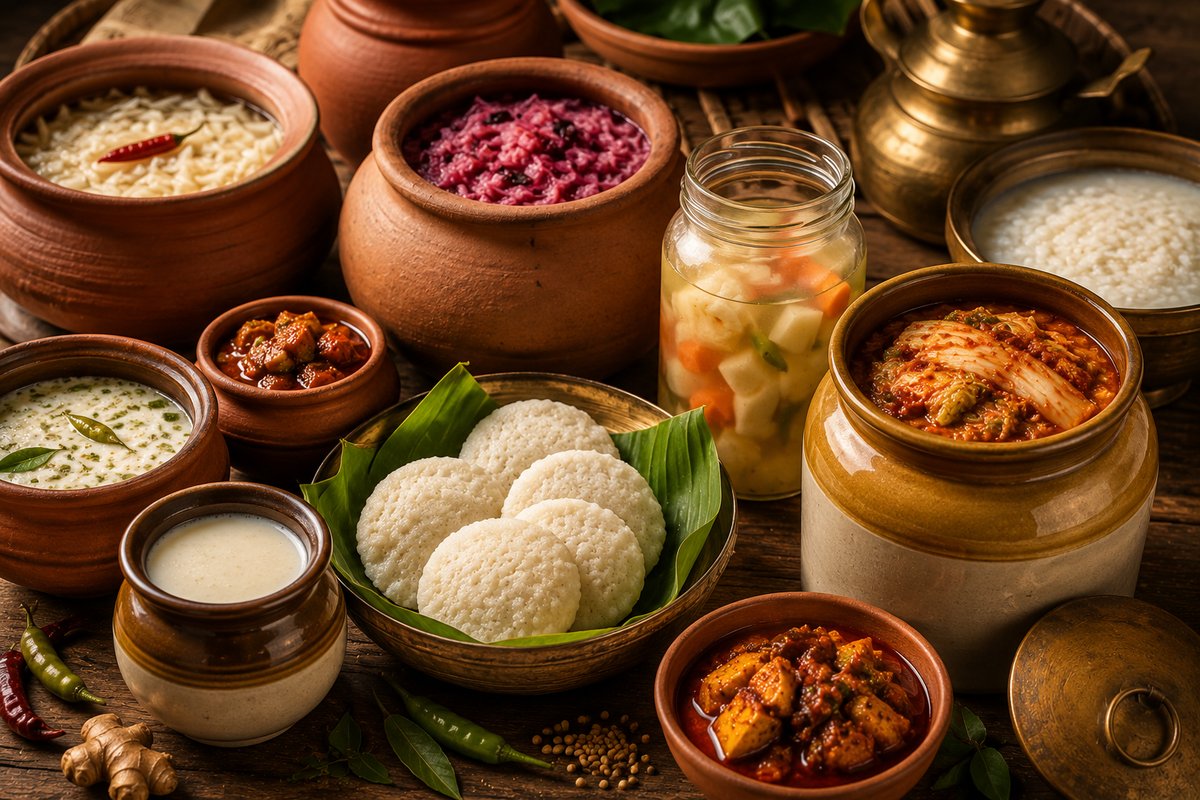
The dense, heavy idli
Why idlis are dense — the air bubble problem
Dense idli and hard idli are related but different. Hard idli is dried out — usually from over-steaming. Dense idli is compact — it never had the air bubble structure that soft idli requires. The difference matters because the fix is different: dense idli is almost always a fermentation or grinding problem, not a steaming problem.
The Science
Why does grinding temperature affect idli texture?
Urad dal generates heat during grinding due to friction. If the grinding temperature exceeds 40°C, the proteins in the urad dal begin to denature and lose their ability to form the viscoelastic network needed for airy idli. Commercial wet grinders maintain low temperature through water addition during grinding — home blenders generate significant heat. Adding ice-cold water during blending keeps temperature down and preserves protein structure for better idli texture.
35 second read
The Fix
How to get lighter idlis
- Use ice-cold water when grinding urad dal — maintains temperature and preserves protein structure
- Beat the ground urad dal vigorously with a whisk or hand mixer for 3–4 minutes — incorporates air into the protein network before fermentation
- Ensure full fermentation — the batter must have visibly risen with a dome and bubbles throughout
- Add a tablespoon of poha (flattened rice) soaked in water — provides additional starch for lighter texture
- Use whole urad dal with skin removed (black husked) rather than split dal — produces better protein network