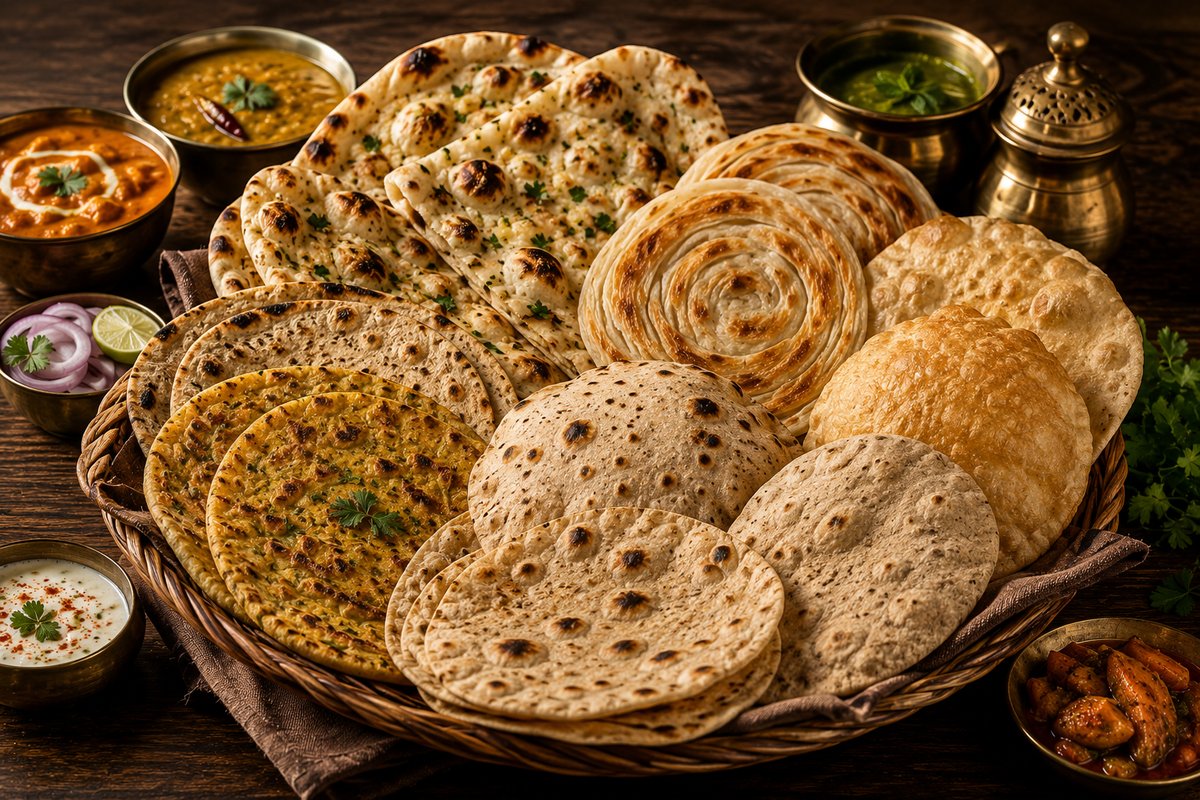
The tough paratha problem
Why paratha is tough — fat and layering
Paratha should be layers of soft, slightly flaky dough with crisp exterior from the tawa. Tough paratha has too much continuous gluten holding the layers together rather than separating them. The fat layer applied during folding is what creates separation — without sufficient fat, the dough layers bond into a solid sheet of tough bread.
The Science
Why does fat between paratha layers create tenderness?
Flour proteins (glutenin and gliadin) naturally bond with each other when layers are pressed together, creating a continuous gluten network. Fat — ghee, oil, or butter — physically interrupts this bonding by coating the protein surfaces and preventing them from linking. Each layer of fat during paratha folding creates a gluten-interrupted barrier — the layers are held together physically but cannot form continuous gluten bonds. When cooked, these fat barriers become the tender separation points of the layered texture.
35 second read
The Fix
How to make tender paratha
- Apply ghee or oil generously to the rolled dough before folding — do not be conservative with fat here
- Dust with dry flour before folding as well — combined fat and flour creates better separation
- Use the triangle fold (roll-oil-fold into triangle, roll again) for multiple layers in a simple technique
- Cook on medium heat with generous ghee on the tawa — cooking fat on the surface also creates tenderness
- Press the paratha with a spatula during cooking — forces ghee into the layers