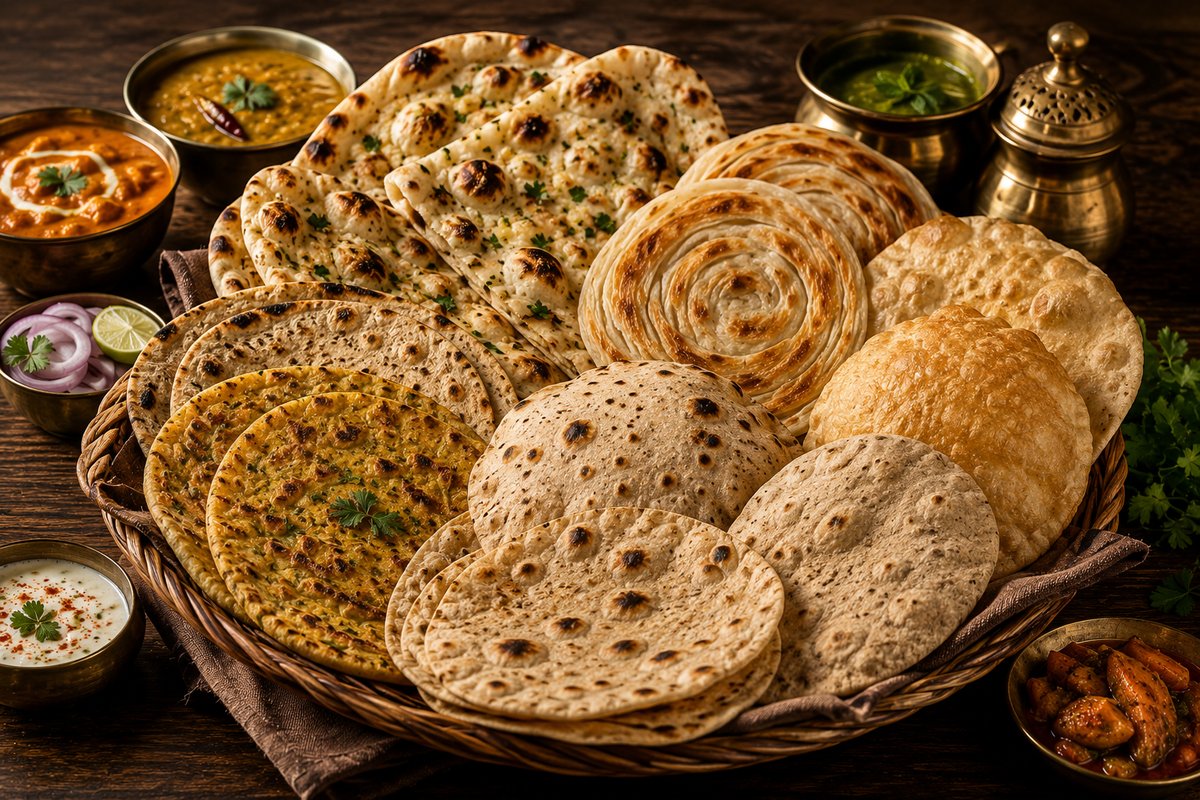
The dense naan problem
Why naan is dense — leavening and heat
Light, chewy naan requires yeast leavening, sufficient fermentation time, and extremely high heat. Restaurant naan is baked in a tandoor at 450–500°C — a home oven at 220°C produces a very different result. Understanding this gap is the key to making better home naan.
The Science
Why does high heat produce better naan?
Naan leavening gas (CO₂ from yeast) must expand rapidly before the dough surface sets rigid. At 450°C, the dough surface chars and sets in seconds while the interior expands dramatically — creating the characteristic bubbles and chewy interior of tandoor naan. At 220°C, the dough surface heats slowly, allowing CO₂ to escape gradually through the setting dough rather than being trapped in expansion bubbles. The result at low temperature is a flat, dense bread; at high temperature a light, blistered bread. The closest home approximation is a very hot cast iron pan.
35 second read
The Fix
Closest home approximation of tandoor naan
- Cast iron skillet on highest heat for 5 minutes before use — the thermal mass approximates tandoor surface temperature
- Wet one side of naan, press wet-side-down into the screaming-hot cast iron — it adheres and cooks in 90 seconds
- Broil/grill the top simultaneously with an overhead grill — 2 minutes total produces blistered, chewy naan
- Yeast: use 1 teaspoon instant yeast, rest dough 2 hours minimum
- Do not roll too thinly — 5–6mm thickness produces the characteristic thick, chewy interior