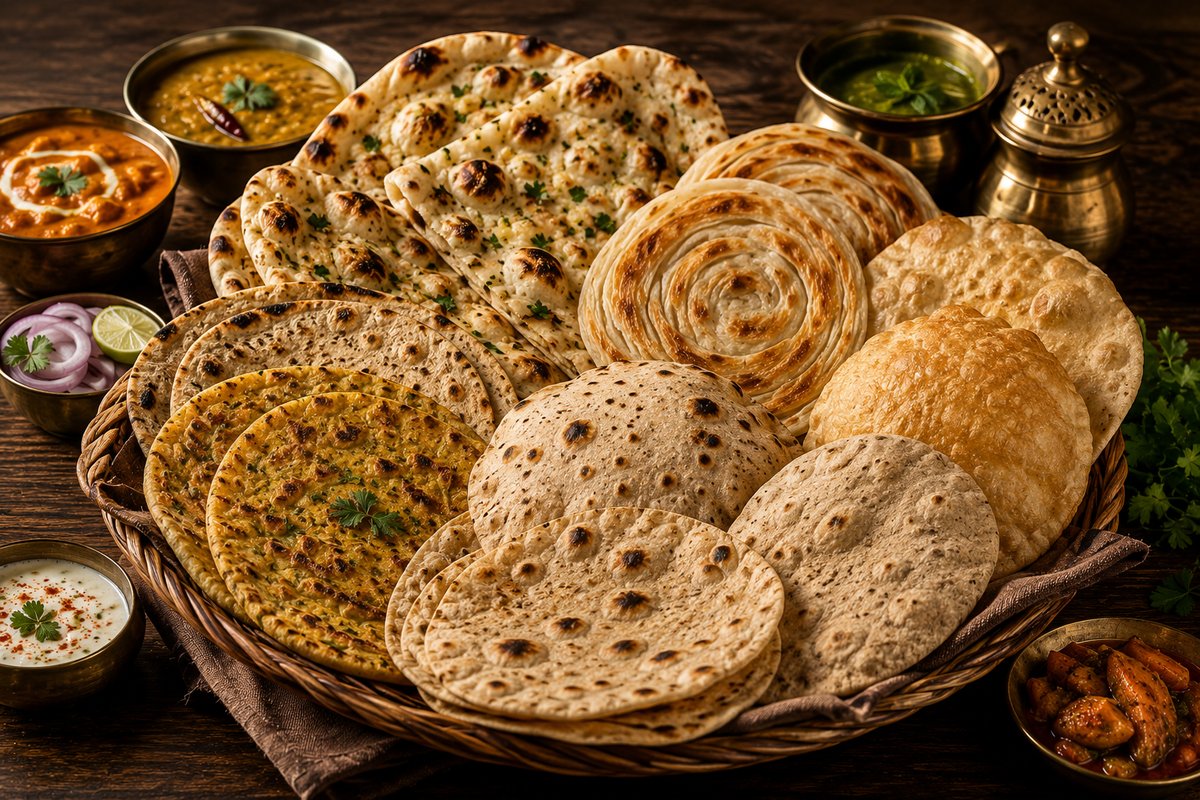
The greasy bhatura problem
Why bhatura absorbs oil — same physics as poori
Oily bhatura shares the same physics as oily poori — cold oil allows oil to penetrate the dough rather than steam pressure preventing it. However, bhatura has an additional complication: the leavening gas (CO₂ from yogurt fermentation) must also be present and active for the bhatura to puff and seal rapidly. Dense, under-fermented bhatura absorbs more oil even at correct oil temperature because it does not seal quickly.
The Fix
How to prevent oily bhatura
- Correct oil temperature: 180–190°C — test with small dough ball
- Well-rested, well-leavened dough — puffs rapidly, sealing the surface against oil
- Do not fry cold dough — bring to room temperature before frying
- Drain immediately on kitchen paper or wire rack
- Fry one at a time — bhatura is larger than poori and drops oil temperature more significantly per piece
The Science
Why does well-leavened bhatura absorb less oil?
Well-leavened bhatura contains many CO₂ bubbles throughout the dough. When the bhatura enters hot oil, these bubbles expand rapidly — creating outward pressure from inside the dough simultaneously with the outward steam pressure from the hot oil. This double outward pressure (internal CO₂ expansion + surface steam) provides superior oil exclusion compared to unleavened flatbreads. Dense, under-fermented bhatura has fewer CO₂ bubbles, providing less internal outward pressure and absorbing more oil.
30 second read