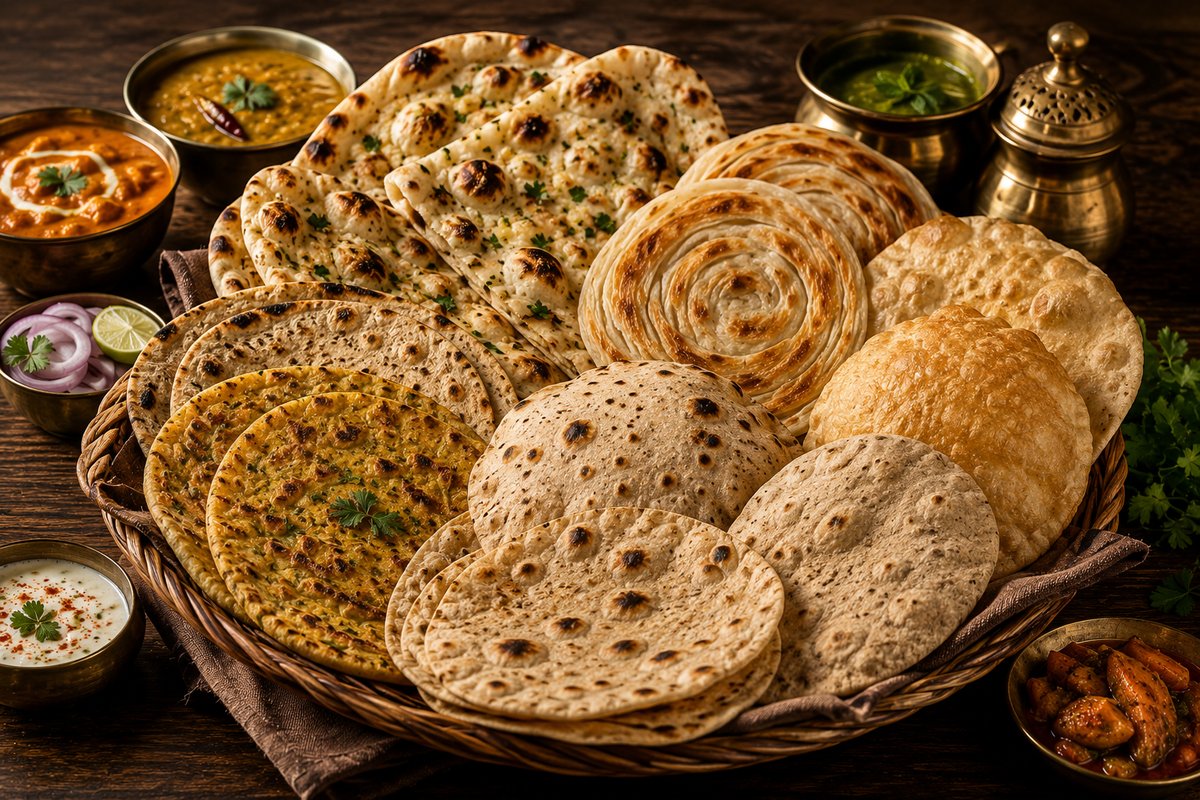
The hard poori problem
Why poori is hard — overcooking and dry dough
Hard poori has lost most of its moisture during frying — the steam that should create a soft interior has fully escaped, leaving a brittle, crunchy structure. This can come from frying too long, oil too hot, or dough that was too dry before frying.
The Fix
How to make soft poori
- Fry for only 30–45 seconds total — poori should be golden, not dark
- Correctly hydrated dough — slightly wetter poori dough produces softer results
- Add a tablespoon of semolina (sooji) to the dough — semolina produces a softer, slightly more porous texture
- Add a teaspoon of oil to the dough — fat produces tenderness from inside
- Serve immediately — poori hardens within 5–10 minutes of frying as steam escapes and the crust cools
The Science
Why does semolina produce softer poori?
Semolina (sooji/rava) contains large wheat starch granules that create a slightly porous, less dense structure than plain flour. These pores allow steam to escape more gradually during frying rather than all at once — leaving a softer interior. Semolina also absorbs oil slightly during frying, creating a less dehydrating fry environment. A small amount (1 tablespoon per cup of flour) produces noticeably softer poori without significantly affecting flavour or puffing.
25 second read