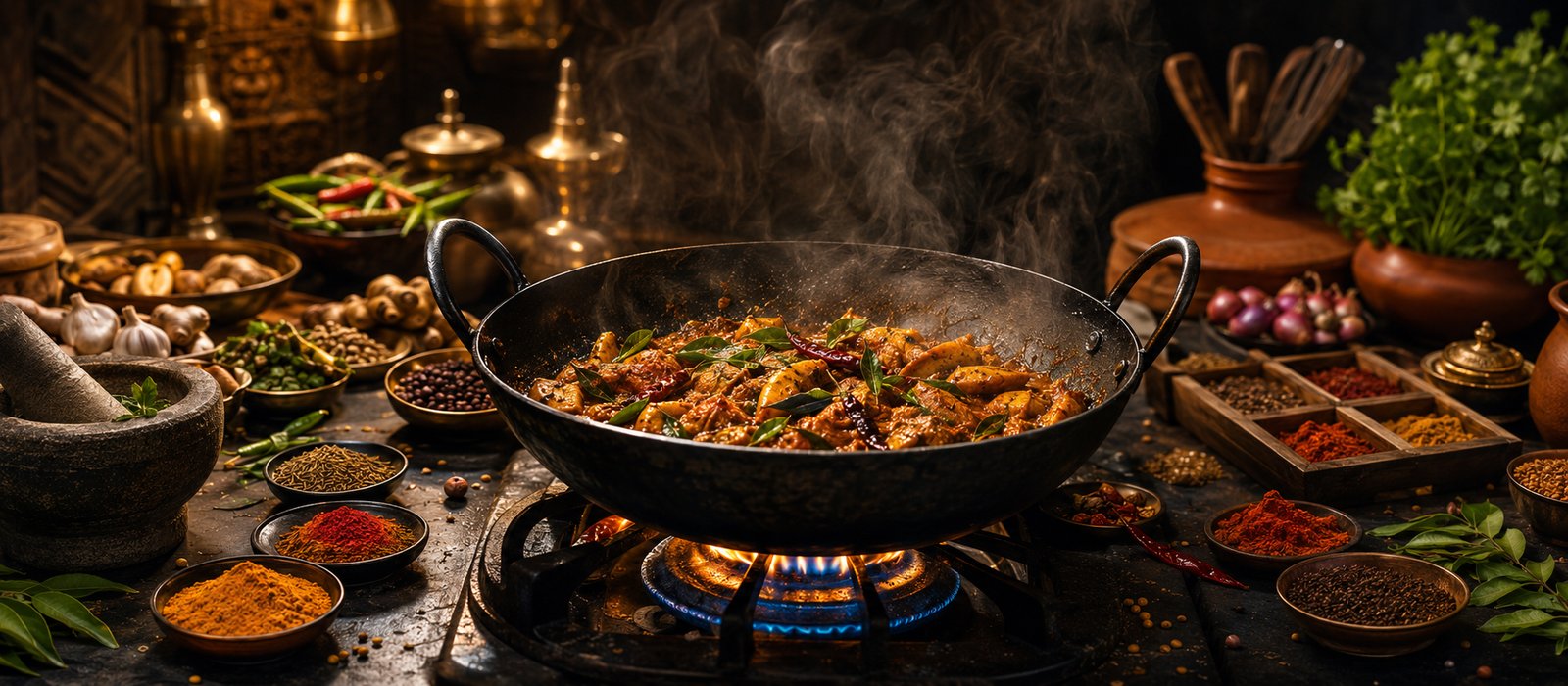
The splitting base gravy problem
Why base gravy splits — emulsion failure
The Indian restaurant base gravy — a large batch of cooked onion, tomato, and ginger-garlic that serves as the foundation for multiple dishes — splits when the oil separates from the onion-tomato emulsion, leaving pools of red-orange oil floating on top of a watery paste. This is the bhuno stage done at the wrong temperature or for the wrong duration.
The Fix
How to make stable base gravy
- Oil separation is correct and expected at the bhuno stage — the problem is it should reabsorb when you continue cooking
- After oil separates: reduce heat to medium-low and stir continuously — oil reabsorbs in 5–7 minutes
- If oil won't reabsorb: add a tablespoon of cold water, stir vigorously — the cold water shock helps re-emulsify
- Blend when cool: blending a split gravy often re-emulsifies it completely
- The correct bhuno end point: oil is evenly distributed, the paste leaves the sides of the pan cleanly, and has a glossy rather than oily-wet surface
The Science
Why does blending rescue split base gravy?
Blending creates an intense shear environment that breaks any oil droplets into very small sizes and distributes them throughout the paste. The onion, tomato, and spice compounds — particularly the pectin released from cooked onions and the starch from cashews if used — act as natural emulsifiers that stabilise these small droplets. The blender effectively re-creates the emulsified structure that failed during cooking, producing smooth, glossy base gravy from what appeared to be hopelessly split material.
25 second read