Level 2 — Technique
Fermentation Basics — Dosa and Idli Batter
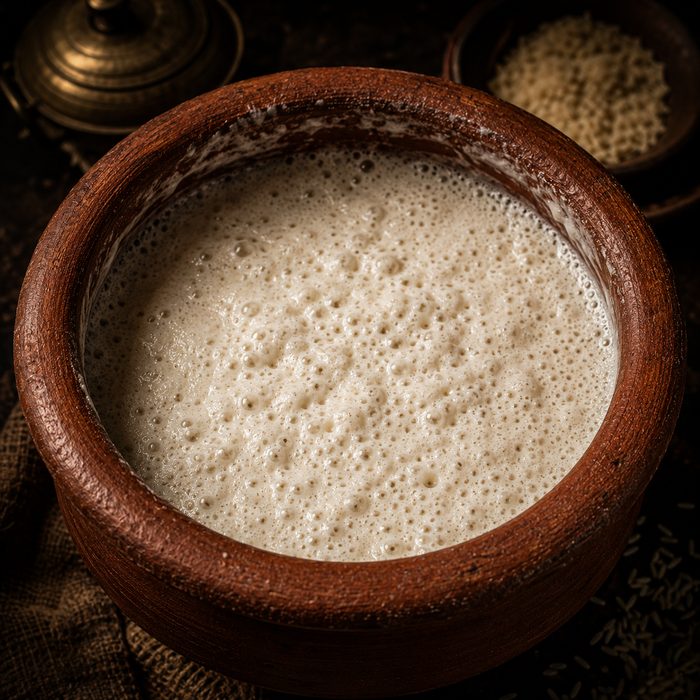
Dosa and idli are a fermentation system. The batter must ferment correctly to produce the characteristic sourness, lightness, and crispy character of good dosa. Understanding what actually happens — which bacteria work, what they produce, what conditions they need — means you can control the process.
The fermentation is carried out by Leuconostoc mesenteroides and Lactobacillus species — naturally present on rice and urad dal. They produce lactic acid (sourness) and CO2 (lift). Temperature is the key variable — too cold and bacteria are inactive; too hot and they die.
1
Use correct ratio: 3:1 rice to urad
3 parts raw rice to 1 part urad dal. Soak separately 6-8 hours.
🔬 Urad contains primary bacterial cultures and produces gas-generating fermentation. Rice provides substrate and structure.
⚠ More than 1 part urad produces over-fermented batter quickly. Less than 0.75 parts produces unreliable fermentation.
2
Grind urad first, very smooth
Grind urad with minimal water until completely smooth and light. Then grind rice coarsely.
🔬 Smooth urad paste traps CO2 bubbles that would escape from coarse paste.
3
Ferment at 28-32°C for 8-12 hours
Ideal: inside oven with just light on. In cold climates: add pinch of sugar and fenugreek seeds.
🔬 Leuconostoc most active at 20-30°C; Lactobacillus most active at 30-40°C. 28-32°C supports both simultaneously.
⚠ Over-fermented batter (more than 16-18 hours in warm conditions) becomes very sour and loses structure.
Dietary Variants
Works for every diet
🥬Vegetarian
Fully vegetarian
🥩Non-Veg
Batter is vegetarian — serve with non-veg accompaniments
🟡Jain
Fermented foods avoided by strict Jain practice — personal interpretation.
🔴Sattvic
Fermented foods controversial in sattvic practice — family tradition determines.
Recipes Using This Technique
What this unlocks