Level 2 — Technique
Whole Spice Management
Whole spices and ground spices serve different purposes — they are not interchangeable. Whole spices infuse fat or liquid with flavour before being removed. Ground spices integrate into the dish.
Whole spices release flavour compounds slowly through extended heat contact. They have a finite flavour life — releasing most volatile compounds in the first 20-30 minutes of cooking and becoming essentially inert after that.
1
Add to hot fat before all other ingredients
Whole spices always go first in tadka — before onion, before anything else. 20-30 seconds in hot fat.
🔬 The fat extraction window is brief. Adding early ensures maximum extraction before other ingredients dilute the fat.
⚠ The moment you smell spices strongly is often the moment to add next ingredient — maximum extraction has occurred.
2
Know which to remove and which to leave
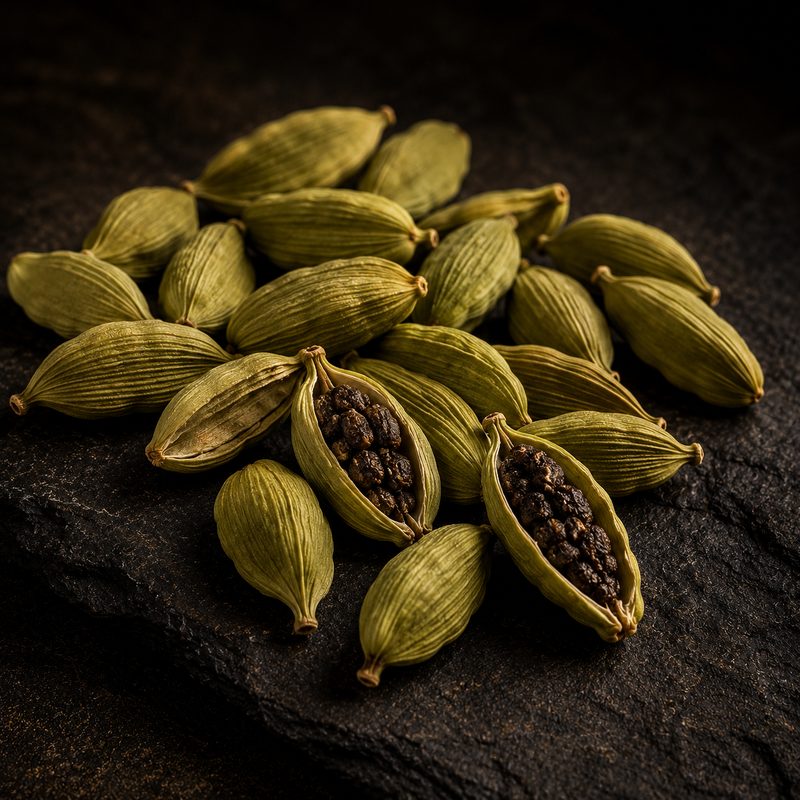
Remove: bay leaves, large cinnamon sticks, black cardamom, star anise — they become bitter. Leave: small green cardamom pods, small cloves (guests eat around them).
🔬 Large whole spices become tough and unpleasant — flavour purposes only.
3
Use spice ball for long cooking
For biryani, nihari, slow dal: put whole spices in muslin bag. Flavour releases into liquid; spices can be removed cleanly.
🔬 Practical — prevents spices distributing through dish and becoming hard to eat around.
Dietary Variants
Works for every diet
🌱Vegan
Identical — whole spices all plant-derived
🟡Jain
All standard whole spices Jain-permitted
🔴Sattvic
All standard whole spices sattvic
Recipes Using This Technique
What this unlocks