Level 1 — Foundations
How to Use a Tawa
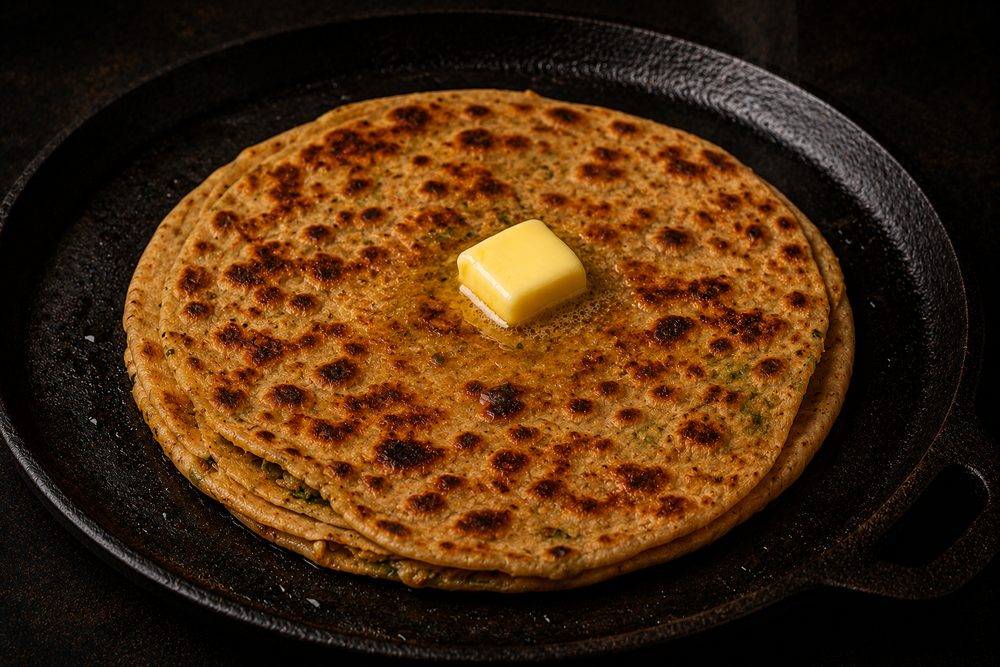
The tawa is a flat or slightly concave iron or steel pan — India's most important bread-making tool. Understanding how the tawa works explains why roti puffs, why dosa is crispy, and why the same pan used incorrectly produces tough bread. The tawa works by providing rapid, even, direct heat transfer to the flat bread surface — maximising crust formation while steam inside the bread creates the puff.
Roti puffing is a steam pressure event: when the bread is placed on the direct flame (after the tawa), the water in the dough turns to steam rapidly. If the gluten network is strong enough (correctly kneaded dough) and the heat is high enough (direct flame or very hot tawa), the steam inflates the bread dramatically. Poor dough kneading = gluten too weak to hold steam = no puff.
1
Season your tawa
New iron tawa: heat thoroughly, rub with oil, heat again, wipe. Repeat 3-4 times. This builds a non-stick surface.
🔬 Seasoning fills the microscopic pores in iron with polymerised oil — creating a surface where bread doesn't stick and heat transfers evenly.
2
Preheat fully before use
Heat tawa on medium-high for 3-4 minutes before first roti. Test with a drop of water — should sizzle and evaporate immediately.
🔬 Insufficient preheating = bread sticks and bottom burns before cooking through. Even temperature across the tawa surface requires full preheating.
3
Cook first side 30-45 seconds
Place roti, cook until small bubbles appear on top surface.
🔬 Bubbles indicate steam forming below the dough surface — the water in the dough is turning to steam and trying to escape. This is the right moment to flip.
⚠ Do not press down on roti — pressing expels the steam trying to form the puff.
4
Flip, cook second side, then direct flame
Flip to tawa for 20-30 seconds, then directly on the flame for full puff — the direct flame superheats the steam inside rapidly.
🔬 Direct flame contact at 300°C+ superheats surface steam rapidly. The pressure differential inflates the bread before the crust sets.
Dietary Variants
Works for every diet
🥬Vegetarian
Identical — all flatbreads are vegetarian
🥩Non-Veg
Identical technique — tawa also used for parathas stuffed with keema
🌱Vegan
Use oil instead of ghee for finishing — technique identical
🟡Jain
Roti is Jain-permitted. Stuffed parathas: use Jain-permitted fillings (no potato — use peas, paneer, grated cauliflower)
🔴Sattvic
Plain roti is sattvic. Parathas: avoid onion-stuffed. Use cauliflower, spinach, or plain ghee parathas.
Recipes Using This Technique
What this technique unlocks