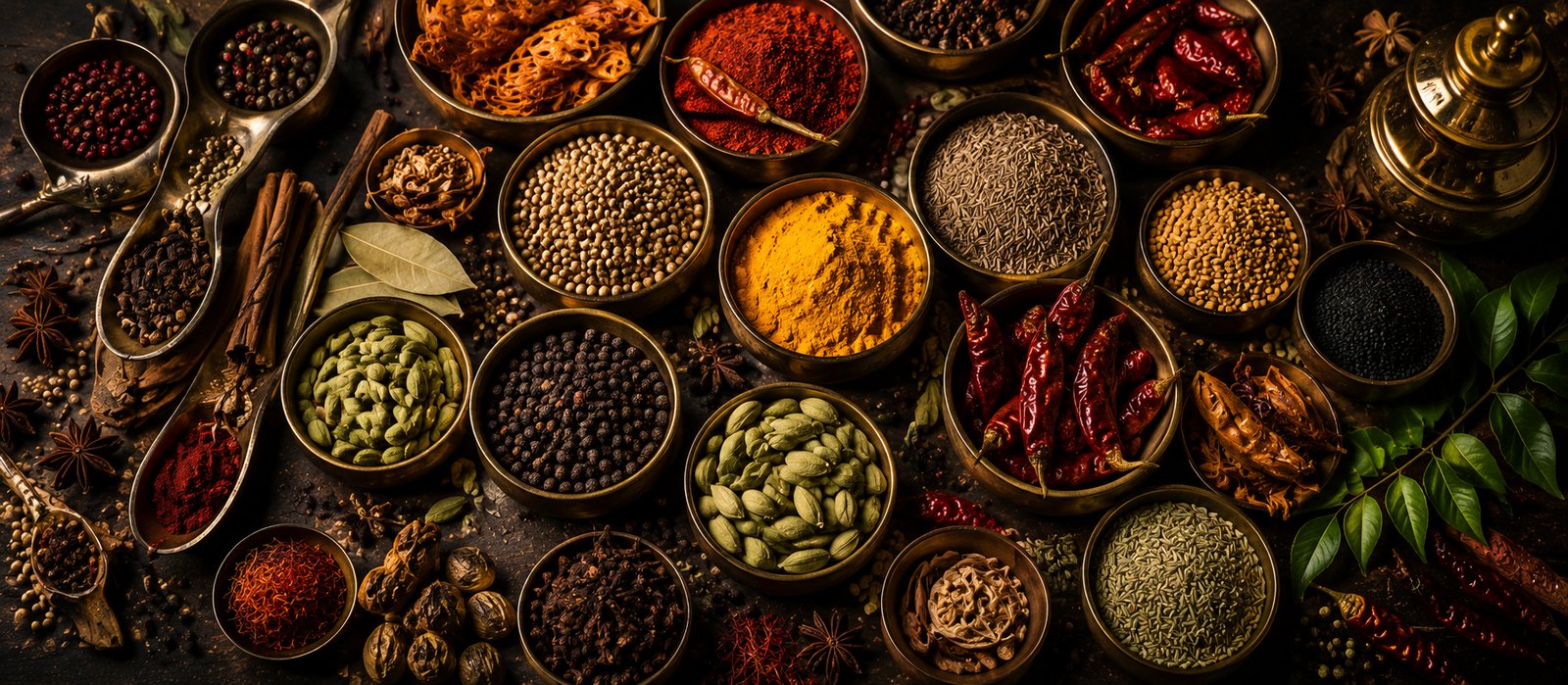
The hidden spice
Stone flower — dagad phool, the hidden spice
Stone flower (dagad phool, patthar phool) is Indian cooking's most obscure and least understood spice — and one of the most important in certain regional cuisines, particularly Chettinad, Maharashtrian, and biryani cooking. It is a lichen (a symbiotic organism of algae and fungi), not a plant spice. Its distinctive earthy, woody, slightly mossy character appears in very few cuisines globally — India's culinary tradition stands out for recognising and utilising its unique aromatic properties.
The Science
What aromatic compounds make stone flower so distinctive?
Stone flower (Parmotrema perlatum or related lichen species) contains usnic acid and orcinol compounds — lichen-specific molecules found in no other food ingredient. These compounds produce a distinctive earthy, woody, slightly mossy, almost forest-floor character. No other culinary ingredient contains usnic acid, which is why stone flower's flavour contribution is completely unique and cannot be substituted. When added to biryani or Chettinad masala, it provides a depth note that experienced cooks identify as essential but cannot name as 'stone flower'.
30 second read
Stone Flower in Indian Cooking
Where it appears and how to use it
- Chettinad masala: one of the defining spices of Chettinad cuisine — the uniquely complex South Indian cooking tradition from Tamil Nadu. Provides the earthy depth note that distinguishes Chettinad from other South Indian cuisines.
- Hyderabadi biryani: some traditional recipes include a small piece of stone flower in the spice foundation. Provides an earthy depth that distinguishes authentic Hyderabadi biryani.
- Maharashtrian goda masala: included in goda masala — the complex, sweet-spiced blend of Maharashtra.
- Quantity: a very small piece (1–2cm) per large batch of spice blend. Never used in large quantities.