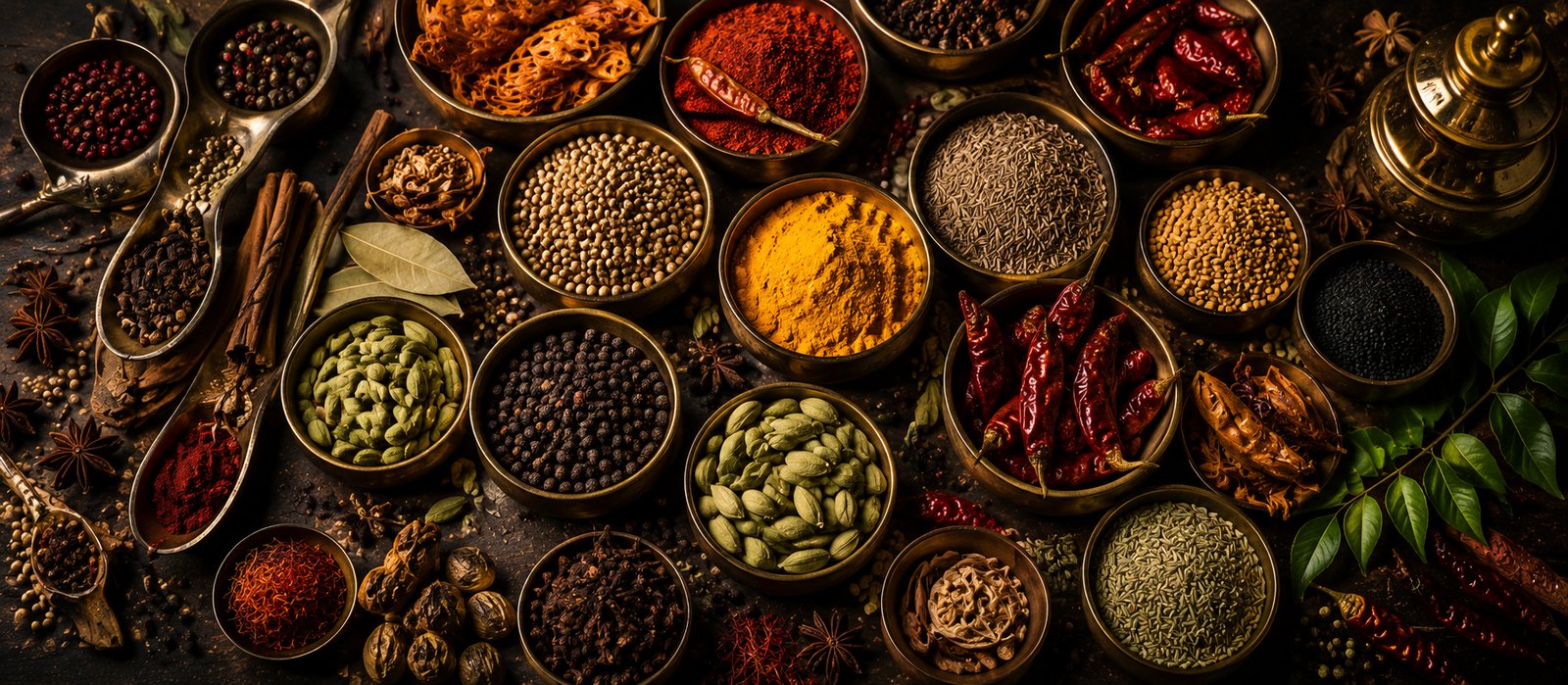
South India's foundation blend
Sambar powder — the foundation of South Indian cooking
Sambar powder is South Indian cooking's equivalent of garam masala — a complex spice blend that defines the flavour profile of the region's most important dishes. Unlike garam masala, sambar powder is added during cooking rather than at the end, and it contains roasted lentils (chana dal, urad dal) alongside spices — providing both flavour and body to the finished dish. Understanding its composition explains why South Indian sambhar has a flavour depth that cannot be replicated with generic spice blends.
The Science
Why does sambar powder contain lentils alongside spices?
Sambar powder includes dry-roasted chana dal and urad dal — not for their protein content but for the specific Maillard compounds produced when these lentils are dry-roasted to a golden brown. Roasted lentil Maillard compounds produce nutty, savoury, slightly toasted notes that provide the body and depth characteristic of authentic sambar. These lentil Maillard compounds cannot be replicated by spices alone — they occupy a specific flavour register (toasted, nutty, umami-adjacent) that makes sambar more complex than a simple spiced tamarind soup.
30 second read
Core Components of Sambar Powder
What each component contributes
- Roasted chana dal and urad dal: nutty, toasted Maillard depth. The unique element that distinguishes authentic sambar powder from commercial blends.
- Roasted coriander seeds: the dominant spice note — more coriander per unit than most Indian spice blends.
- Roasted dried red chilli (Byadagi): deep red colour plus moderate heat.
- Cumin: earthy backbone alongside coriander.
- Curry leaves (dried): the South Indian aromatic base note.
- Turmeric, pepper, hing: completing the flavour matrix with colour, back-of-throat heat, and umami.