Aroma science
Why smell is 80% of flavour
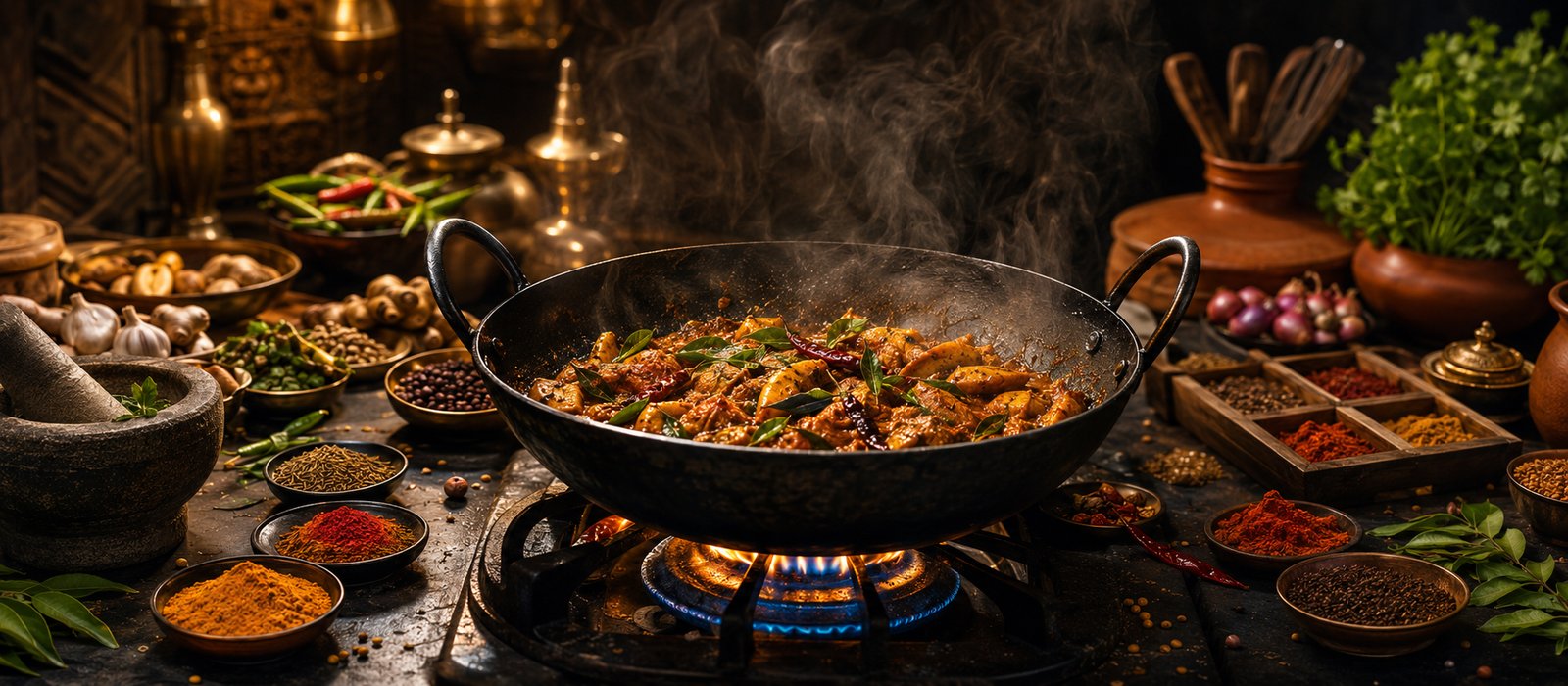
When you hold your nose and eat, food loses most of its flavour — the taste remains (sweet, sour, salty, bitter, umami) but the complexity disappears entirely. What we call "flavour" is almost entirely composed of aroma compounds detected by olfactory receptors. Indian cooking is, at its core, a sophisticated aroma delivery system.
The Science
How does aroma reach the olfactory receptors during eating?
Aroma compounds reach the nose through two pathways: orthonasal (sniffing before eating) and retronasal (during chewing and swallowing, when volatile compounds travel up the back of the throat to the nasal passage). The retronasal pathway is responsible for most flavour perception during eating. This is why hot food smells more aromatic than cold food — heat increases the vapour pressure of volatile compounds, releasing more molecules into the air and up the retronasal pathway.
30 second read
How Indian Cooking Maximises Aroma
Five techniques that deliver maximum aromatic impact
- Tadka: hot fat extracts fat-soluble aromatic terpenes from spices far more efficiently than water. These terpenes vaporise during eating and reach olfactory receptors via the retronasal pathway.
- Bhuno: high heat produces Maillard aromatic compounds (pyrazines, furans) with very high retronasal impact — the savoury complexity that fills the nasal passage.
- Fresh finishing: adding coriander, mint, and lemon off heat preserves the most volatile compounds that would evaporate during cooking. These are the front-note top aromatics.
- Serving hot: curry at 70°C releases dramatically more aroma than the same curry at 50°C.
- Freshly grinding spices: grinding immediately before use releases aromatic compounds that begin evaporating the moment grinding exposes cell contents to air.
Why Very Spicy Food Seems Less Aromatic
Capsaicin activates TRPV1 pain receptors in the mouth simultaneously with normal olfactory stimulation. The pain signal competes with and partially masks the olfactory signal — the brain prioritises the heat sensation over subtler aromatic signals. Very spicy food is not less aromatic, but its aroma is partially masked by the intensity of the capsaicin sensation. This is why extremely spicy dishes often seem to have less flavour complexity despite being heavily spiced.