The balance principle
Why balance matters more than spice
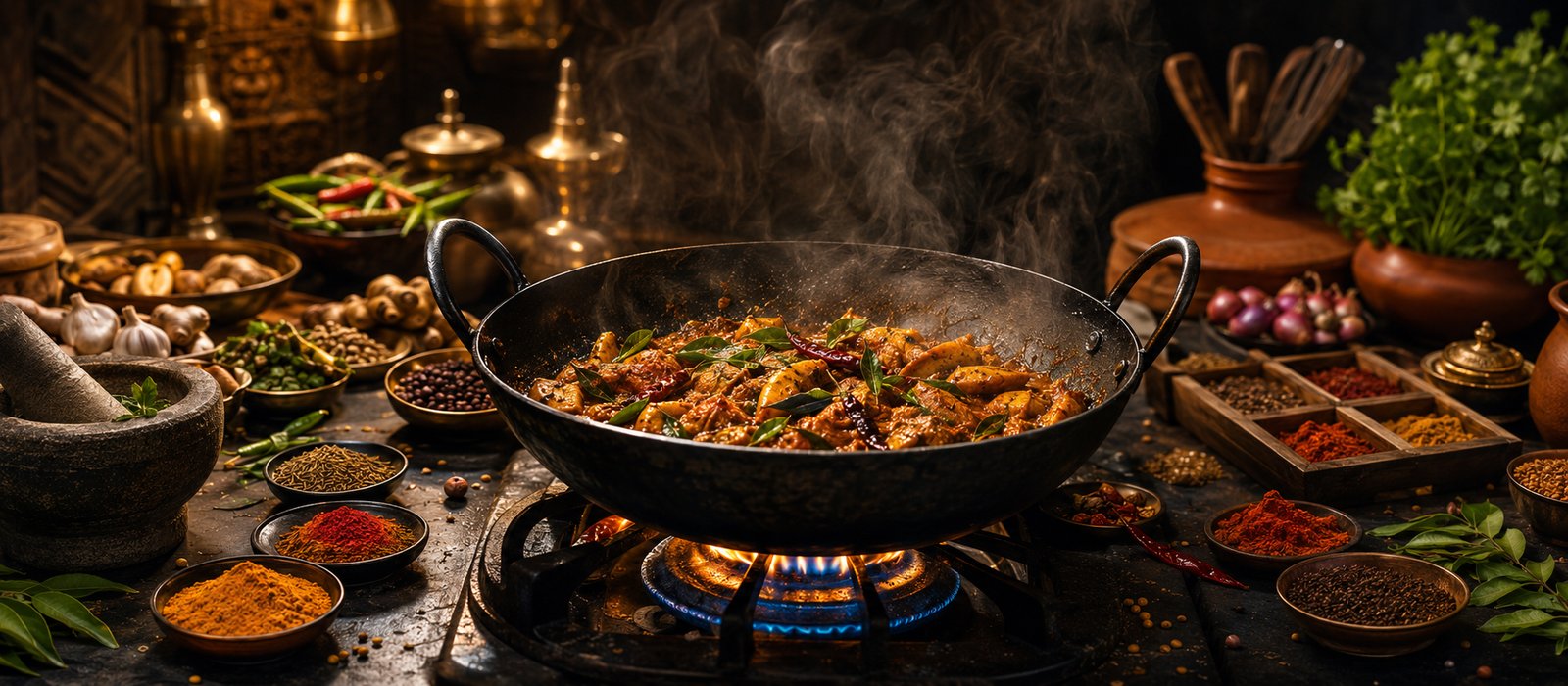
The most common misconception about Indian cooking is that more spice equals better food. Experienced Indian cooks know the opposite: the skill is in balance, not quantity. A dish with eight perfectly balanced spices will consistently outperform a dish with twenty spices added without consideration for how they interact.
Balance in Indian cooking operates on three levels simultaneously: the balance of the five tastes (sweet, sour, salty, bitter, umami), the balance of textural contrasts (smooth against crunchy, rich against light), and the balance of aromatic intensity (background base notes against volatile top notes). Mastering all three simultaneously separates exceptional Indian cooking from competent Indian cooking.
The Science
Why does taste perception depend on contrast rather than absolute intensity?
Taste receptor cells adapt rapidly to sustained stimulation — called sensory adaptation. A single flavour at constant intensity becomes progressively less perceptible over seconds. Contrast — the presence of a different flavour alongside the primary one — prevents receptor adaptation and keeps both flavours maximally perceptible. This is why salt makes sweetness more vivid, why acid makes spice more intense, and why a pinch of sugar reduces the perception of excess salt.
35 second read
The Balance Test
How to assess balance in any Indian dish
- Taste a spoonful on its own — identify what hits first, what develops mid-palate, what lingers.
- The first hit should be aromatic — if it is sharp spice or salt, acid or freshness is missing.
- The mid-palate should be rich and complex — if it is thin, fat or body is missing.
- The finish should be clean — if harsh or astringent, bitter compounds are dominating.
- Add the missing element in small increments — never add more of what is already there.
Why Restaurant Food Tastes More Balanced
Restaurant chefs taste and adjust constantly — sometimes 10–15 adjustments per dish before service. Home cooks typically taste once or twice. The difference in balance is almost entirely explained by the number of taste-and-adjust cycles, not better ingredients or secret recipes. Tasting and adjusting is the most important skill in cooking. Professional cooks adjust acid last — acid is the final calibration that brings all other flavours into focus.