🌿 Regional South India · Level 1
Kootu
Tamil Nadu's thick vegetable and lentil dry curry — coconut-spice paste binding vegetable and dal together. Drier than a curry, thicker than a dal.
Tamil Nadu's thick vegetable and lentil dry curry — coconut-spice paste binding vegetable and dal together. Drier than a curry, thicker than a dal.
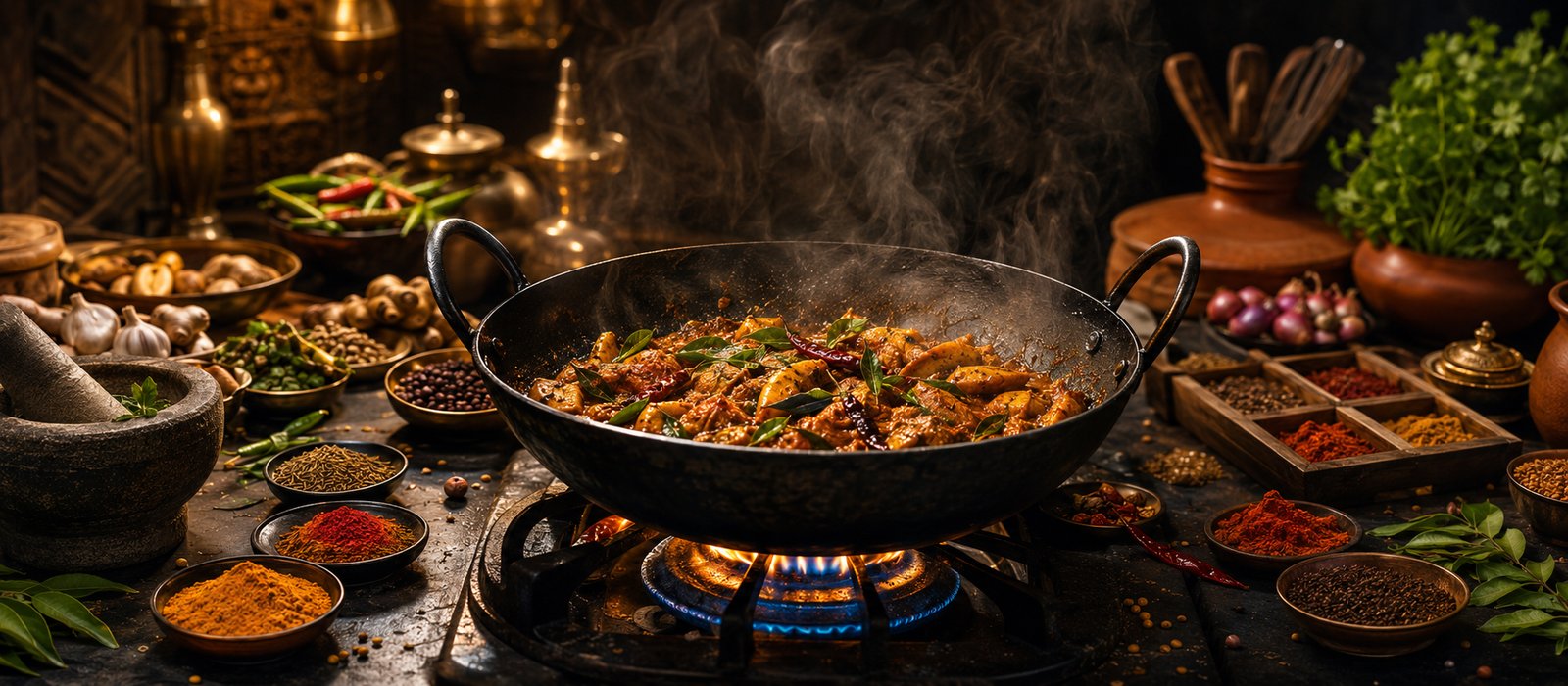
Kootu is Tamil Nadu's essential side dish — a thick preparation where a vegetable and a cooked dal are bound together by a coconut-spice paste. It is drier than a curry but wetter than a sabzi. Kootu can be made with almost any combination: raw banana and chana dal, ash gourd and moong dal, yam and toor dal. The defining element is the coconut paste — ground with pepper, cumin and dried red chilli — that ties the vegetable and dal into a unified dish. It is served daily in Tamil homes and as part of the banana leaf meal.
Grind coconut, pepper, cumin, dried red chillies and turmeric to a semi-coarse paste with a little water.
Black pepper in kootu paste serves a different function than chilli — it provides piperine, which adds sharp warmth and also acts as a bioavailability enhancer for curcumin in the turmeric. The combination of pepper and coconut fat produces a flavour profile that is distinctly Tamilian — warm but not fiery.
Boil the vegetable in salted water with turmeric until just cooked through — tender but holding shape. Do not over-soften.
The vegetable is cooked in water rather than oil because kootu's texture requires that the vegetable pieces hold their shape in the final dish. Oil-cooked vegetables release moisture back into the kootu paste, making it wet. Water-cooked and drained vegetables absorb the paste cleanly.
Add cooked dal and kootu paste to the drained vegetable. Cook on medium-low heat, stirring gently, for 5–7 minutes until the paste has dried slightly and coated everything. The mixture should be thick but moist — not sticky.
The coconut fat in the paste absorbs into both the vegetable surface and the cooked dal. The pepper and cumin compounds distribute through the fat phase, flavouring everything evenly. The 5–7 minute cooking time allows the raw coconut character to mellow into a cooked, nutty note.
Heat oil. Pop mustard seeds. Add urad dal and fry until golden — 30 seconds. Add curry leaves and dried red chillies. Pour over the kootu.
The urad dal in the tadka fries to a crispy golden brown, adding textural contrast to the thick, soft kootu. The mustard seed compounds extract into the hot oil and distribute immediately through the dish when poured over.