🌿 Regional Rajasthan · Level 2
Panchkuta
The five-ingredient desert curry — ker, sangri, kumatiya, kachri and dried amchur. Rajasthan's survival food elevated into a celebration dish.
The five-ingredient desert curry — ker, sangri, kumatiya, kachri and dried amchur. Rajasthan's survival food elevated into a celebration dish.
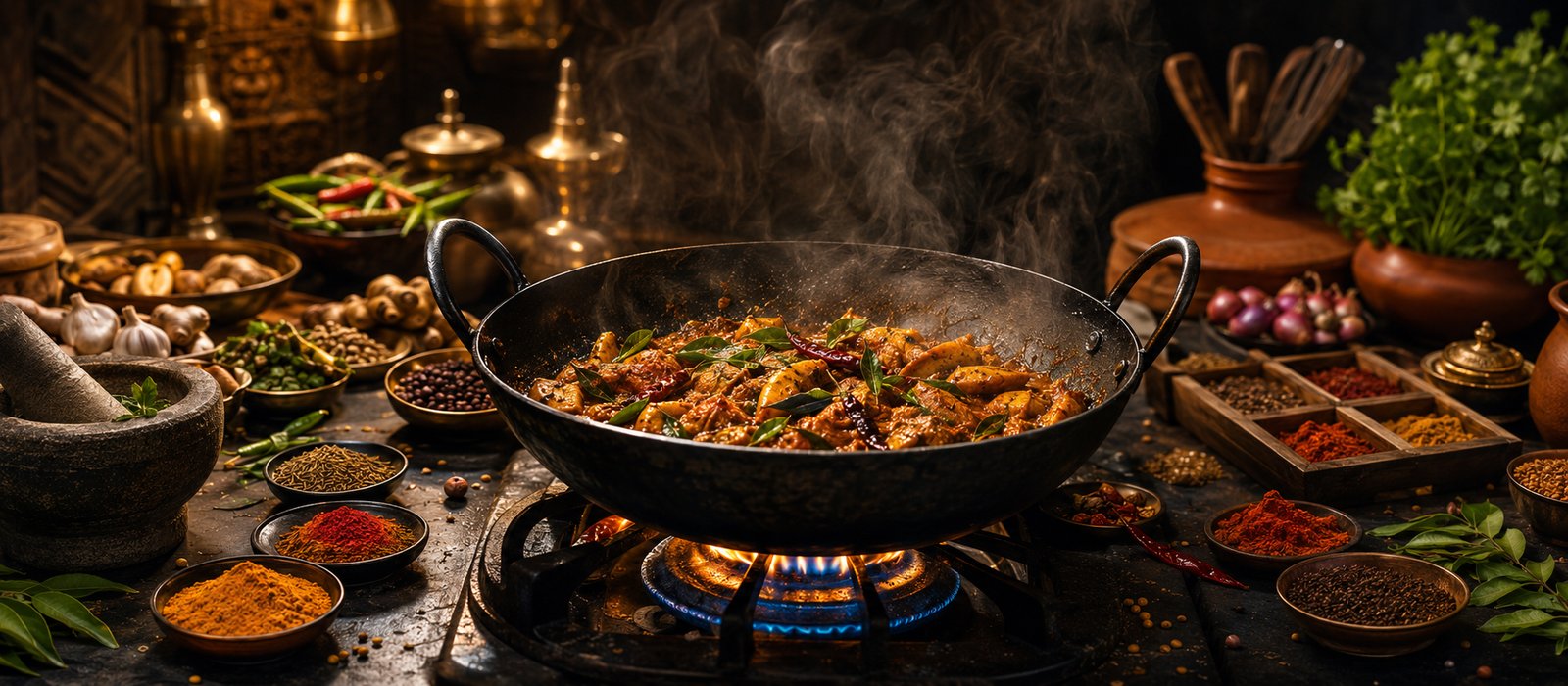
Panchkuta means five (panch) ingredients (kuta) in Rajasthani — specifically five dried desert ingredients that together form a complete curry. The ingredients are ker (dried caper berries), sangri (dried khejri beans), kumatiya (dried seeds of a desert tree), kachri (dried wild melon) and dried amchur. Every one of them can be stored for months in the desert heat. Every one of them would be considered inedible by someone who had never encountered them raw. Together, properly prepared, they produce one of the most complex and distinctive flavour profiles in Indian cooking.
Wash all five ingredients. Soak ker, sangri and kumatiya in salted warm water overnight. Soak kachri separately in plain water. Drain all and taste — if ker is still bitter, boil for 3 minutes and drain again.
Each ingredient contains different bitter compounds — glucosinolates in ker, tannins in kumatiya, cucurbit compounds in kachri. All are water-soluble and leach out during soaking. Salted water accelerates the process through osmotic pressure differential. Kachri is soaked separately because its compounds can affect the texture of the other ingredients if soaked together.
Heat mustard oil in a wide pan until it begins to smoke slightly. Remove from heat, cool for 30 seconds, then return to medium heat. Add cumin seeds and hing.
Raw mustard oil contains allyl isothiocyanate — a pungent compound that causes the sharp, eye-watering quality of raw mustard oil. Heating to smoking point breaks down this compound, mellowing the flavour significantly while retaining the distinctive Rajasthani mustard oil character. This is why Rajasthani recipes always specify heating mustard oil first.
Add all drained ingredients and all spices. Cook on medium heat, stirring every 3 minutes, for 20–25 minutes until completely dry and the spices have coated every piece. Add amchur pieces in the last 5 minutes.
The dry cooking method is essential — all five ingredients have already been rehydrated. Additional moisture during cooking would make them stew rather than fry, losing the textural definition between ingredients. The goal is each of the five ingredients distinct but unified by the same masala.