🌿 Regional Rajasthan · Level 2
Ker Sangri
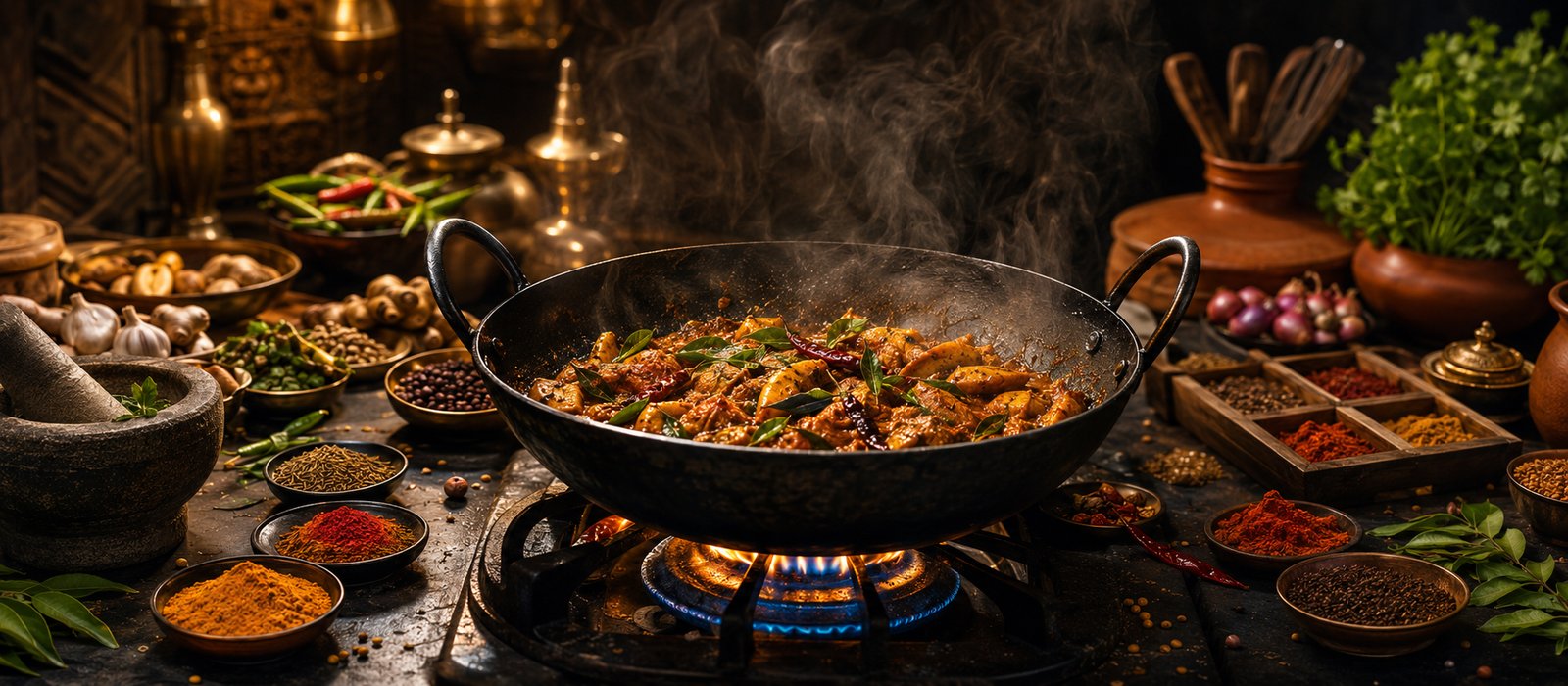
Rajasthan's desert pickle-sabzi — dried ker berries and sangri beans rehydrated and cooked with bold spices. The dish that kept Rajasthan fed through centuries of drought.
Rajasthan's desert pickle-sabzi — dried ker berries and sangri beans rehydrated and cooked with bold spices. The dish that kept Rajasthan fed through centuries of drought.
Ker sangri is perhaps the most distinctively Rajasthani dish in existence — made entirely from ingredients that can survive in a desert. Ker are the dried berries of the Capparis decidua tree (a desert caper) and sangri are the dried pods of the Prosopis cineraria (khejri) tree. Both are dried at harvest and can be stored for months, making them a year-round source of nutrition in a climate where fresh vegetables are seasonal luxuries. The dish requires rehydration of both ingredients, which also reduces their natural bitterness, followed by a dry, heavily spiced preparation.
Wash ker and sangri separately under cold water. Soak in warm salted water for at least 6 hours or overnight — they will roughly double in size. Drain and rinse. For ker specifically: boil briefly for 5 minutes and drain again if they still taste bitter. Taste before proceeding.
Ker berries contain glucosinolates and alkaloid compounds responsible for their characteristic bitterness. Water soaking leaches these water-soluble compounds out of the tissue. Warm water accelerates diffusion — at 40°C the leaching rate roughly doubles compared to cold water. The salt in the soaking water raises osmotic pressure slightly, drawing bitter compounds out more efficiently. A second boil removes residual compounds from the cell walls.
Heat oil in a wide pan on medium. Add cumin seeds and hing. Add rehydrated sangri and cook on medium heat for 8–10 minutes, stirring regularly, until slightly dried and beginning to colour.
Sangri (prosopis pods) have a slightly woody, nutty flavour that develops best with direct dry heat. They contain more structural carbohydrates than ker and take longer to become tender. Cooking them first, before ker, ensures both reach the right texture simultaneously.
Add ker berries and all dry spices. Stir well to coat. Cook on medium heat for 15–20 minutes, stirring every 3 minutes. The dish should be completely dry — no moisture pooling. If any moisture appears, increase heat briefly.
The high chilli and coriander content in Rajasthani cooking functions as both flavour and preservation — the antimicrobial compounds in chilli (capsaicin) and coriander (linalool, terpineol) historically extended shelf life. Ker sangri is often made in bulk and stored for days, the spice base preventing spoilage.
Add amchur, taste and adjust salt. Serve with bajra roti or as a side dish in a Rajasthani thali.
Amchur (dried mango powder) provides tartaric and citric acid — adding sourness without moisture, which would compromise the dry texture. It also brightens the overall flavour of a dish that can otherwise feel heavy with dried ingredients.