🌿 Regional Maharashtra · Level 1
Pithla
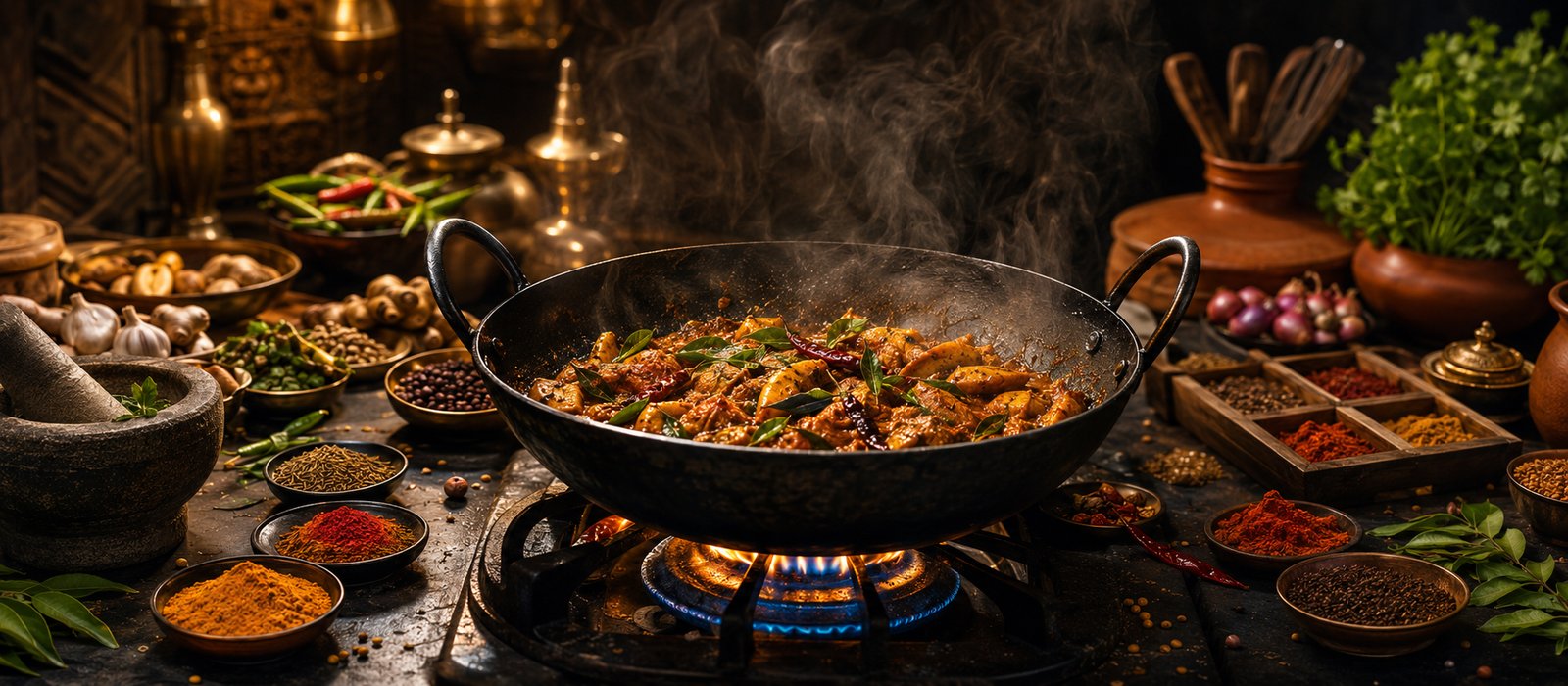
Maharashtra's everyday chickpea flour curry — thick, pourable, spiced with mustard and curry leaves. The Maharashtrian answer to dal. Ready in 20 minutes.
Maharashtra's everyday chickpea flour curry — thick, pourable, spiced with mustard and curry leaves. The Maharashtrian answer to dal. Ready in 20 minutes.
Pithla is Maharashtra's everyday chickpea flour curry — the equivalent of dal in Maharashtrian cooking. Besan is whisked into water, spiced and cooked into a thick, pourable consistency. At its simplest it requires five ingredients and fifteen minutes. It is eaten with bhakri (sorghum or millet flatbread) across rural Maharashtra and is one of those dishes that is simultaneously peasant food and genuinely excellent eating. The challenge is technique: besan must be lump-free, added to hot oil rather than cold water, and cooked to the right consistency — thick enough to coat a spoon but thin enough to pour.
Whisk besan with 1 cup of the water until completely smooth — no lumps. The slurry should be thin and pourable. Whisk vigorously for 1 minute.
Besan clumps form when dry starch granules contact water and the outer layer gelatinises before the interior is wetted. Starting with a small amount of water and whisking aggressively ensures each flour particle is individually hydrated before starch gelatinisation begins. Adding besan directly to hot water or hot oil without pre-mixing produces irreversible lumps.
Heat oil in a pan on medium-high. Add mustard seeds and wait for them to pop. Add cumin, hing, curry leaves and green chillies. Add onion and cook until softened and lightly golden — 5 minutes.
Cooking the onion in the tadka before adding besan allows the Maillard compounds and caramelised sugars to develop properly. Raw onion added with the besan slurry would steam rather than fry, producing a raw, sharp flavour in the finished pithla.
Add turmeric and chilli powder to the tadka. Immediately pour in the besan slurry plus the remaining 2 cups water, whisking constantly. Reduce heat to medium-low.
Adding the besan slurry to the hot tadka rather than cold water starts starch gelatinisation from the moment of contact, producing a more cohesive texture. The high initial temperature also kills the raw besan flavour — a common problem when besan is cooked at too-low temperature.
Cook on medium-low heat, stirring constantly, for 8–10 minutes until the pithla thickens to a pourable consistency — it should coat the back of a spoon and drop off in thick ribbons. It thickens further off the heat. Garnish with coriander.
Besan starch gelatinises at approximately 75–80°C, producing the characteristic thick, smooth texture. The pithla continues thickening as it cools — serve at the consistency where it pours easily, as it will be thicker by the time it reaches the table.