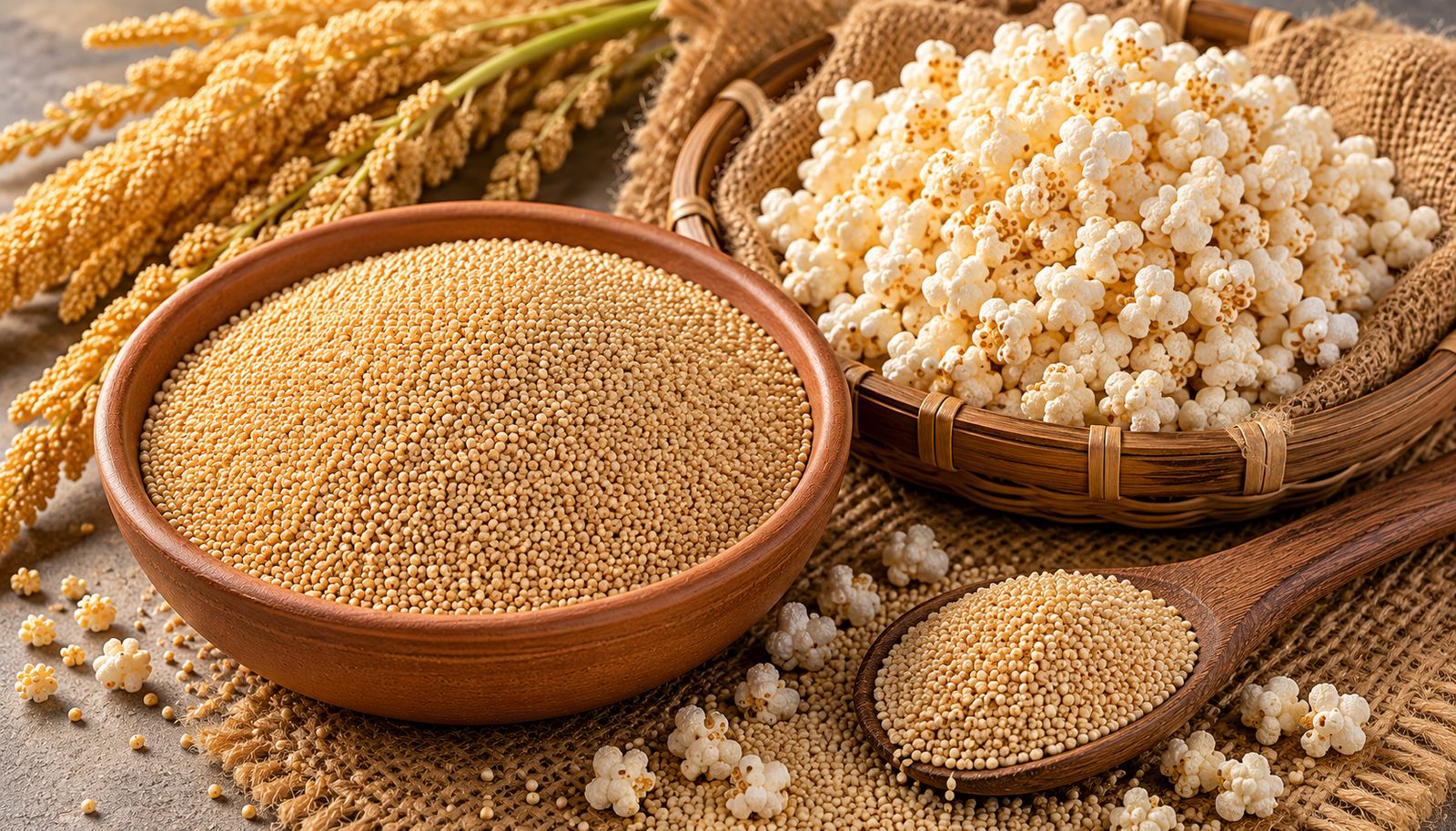
What Does Amaranth Taste Like?
Amaranth in Every Indian Language
| Language | Name | Pronunciation |
|---|---|---|
| English | Amaranth | |
| Hindi | Rajgira / Ramdana | |
| Tamil | தண்டுக்கீரை — Thandukeerai (leaves) | |
| Telugu | తోటకూర — Totakura (leaves) | |
| Malayalam | ചീര — Cheera | |
| Kannada | ಸಿಬ್ಬೆ — Sibbe | |
| Gujarati | Rajgira / Ramdana | |
| Marathi | Rajgira / Ramdana | |
| Punjabi | Rajgira / Ramdana |
What Is Amaranth?
Amaranth — rajgira (royal grain) in Hindi — is technically a pseudo-grain (from the Amaranthaceae family, not Poaceae). Tiny, cream-coloured seeds with a mildly earthy, slightly nutty flavour. Sacred significance in Hindu tradition — it is called ramdana (grain of the Lord) and is one of the primary fasting foods during Navratri and Hindu fasting occasions.
Nutritionally, amaranth is extraordinary: it is one of very few plant foods containing complete protein — all nine essential amino acids. It is also the millet with the highest calcium and iron content.
- Rajgira is the primary fasting grain for Navratri across Western India — Gujarat, Maharashtra, and Rajasthan
- Complete protein from a plant source — particularly valuable for vegetarians and vegans
- The highest calcium content of any grain except ragi
- Rajgira laddoo is one of India's most universally made festival sweets
Amaranth Through History
Amaranth is native to the Americas and was a sacred crop of the Aztecs — so important that the Spanish conquistadors destroyed amaranth crops to undermine indigenous religion. It arrived in India through post-Columbian trade routes and was adopted so completely that it now occupies a position in Hindu fasting traditions that makes it appear ancient.
The Science of Amaranth
How to Store Amaranth
How to Buy Good Amaranth
How to Use Amaranth Correctly
- Rinse before cooking
- Cook ratio: 1 cup millet to 2.5 cups water
- Bring to boil, reduce heat, cook 20–25 minutes
- Rest covered 5 minutes before serving
- Use as replacement for rice or in traditional preparations
- Toast dry in pan first for nuttier flavour
What Amaranth Pairs Well With
Dishes That Use Amaranth
Where Amaranth Matters Most
| Rajasthani Cuisine | Essential |
| Gujarati Cuisine | Common |
| South Indian Cuisine | Common |
| Jain Cooking | Common |
| Sattvic Cooking | Essential |
| Gluten-Free Cooking | Essential |
Amaranth vs Rice vs Wheat
| Feature | Amaranth | White Rice | Wheat |
|---|---|---|---|
| Glycemic Index | Low (50–70) | High (73) | Medium (68) |
| Fibre | High | Low | Medium |
| Gluten | None | None | Yes |
| Protein | ~11g/100g | ~7g/100g | ~13g/100g |
| Micronutrients | Higher overall | Lower | Moderate |