Ingredient identity
Ingredient DNA
Bajra — Pearl Millet
Pennisetum glaucum · Family: Poaceae · Genus: Pennisetum
Origin
Africa / South Asia — ancient cultivation
Category
Millet / Ancient Grain
Form
Small round or oval grains
Gluten-free
Yes
Protein
~11g per 100g dry
Fibre
High — higher than rice and wheat
Taste profile
What Does Bajra Taste Like?
Flavour Profile — Bajra
Earthiness★★★☆☆
Nuttiness★★★☆☆
Mildness★★★☆☆
Warmth★★☆☆☆
Complexity★★☆☆☆
Aroma Strength★★☆☆☆
Botanical classification
Kingdom
Plantae
Family
Poaceae
Genus
Pennisetum
Species
Pennisetum glaucum
Hindi Name
Bajra
Sanskrit Name
—
English Name
Bajra
Arabic Name
—
Names across India
Bajra in Every Indian Language
| Language | Name | Pronunciation |
|---|---|---|
| English | Pearl Millet | |
| Hindi | Bajra | |
| Tamil | கம்பு — Kambu | |
| Telugu | సజ్జ — Sajja | |
| Malayalam | കമ്പ് — Kambu | |
| Kannada | ಸಜ್ಜೆ — Sajje | |
| Gujarati | Bajra | |
| Marathi | Bajra | |
| Punjabi | Bajra |
Origin and identity
What Is Bajra?
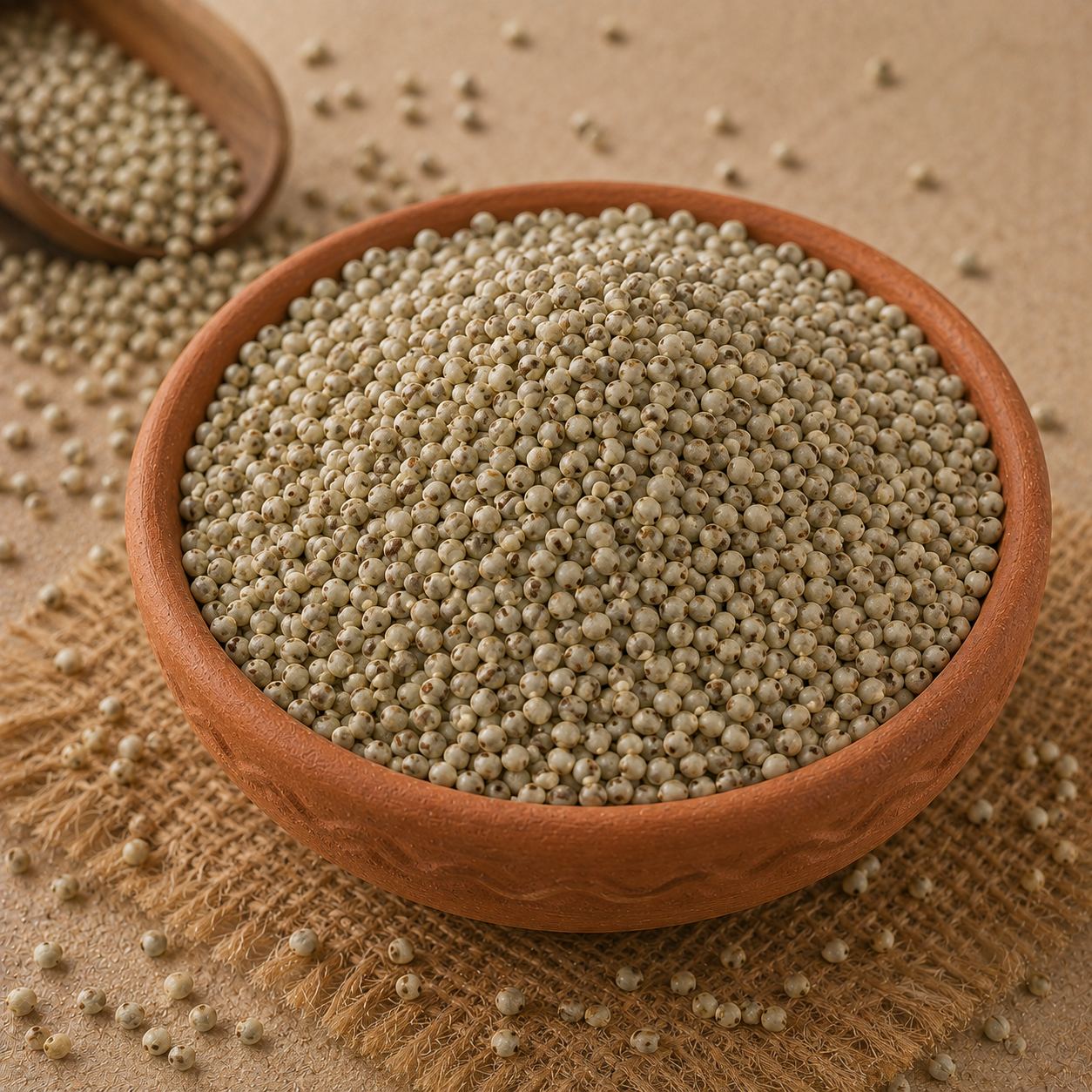
Bajra — pearl millet — is Rajasthan's winter grain staple, particularly in the Thar Desert region where it can grow in temperatures that destroy other crops. The large, round, grey-green grains produce a dense, slightly earthy flour used for bajra roti — often served with ghee, jaggery, and buttermilk in the traditional Rajasthani combination.
What Indian Cooking Loses Without Bajra
- Bajra roti with ghee and jaggery is the traditional winter meal of Rajasthan — a cultural and nutritional tradition inseparable from the region's identity
- Bajra khichdi is one of the warmest, most sustaining comfort foods of North Indian winter cooking
- The grain's iron and zinc content makes it particularly valuable for the largely vegetarian populations who eat it as a daily staple
- Urban India's growing interest in millet health benefits has driven bajra back into mainstream urban kitchens
Historical significance
Bajra Through History
Historical Record
India's Ancient Winter Grain
Pearl millet has been cultivated in India for at least 5,000 years, with origins in West Africa. It is the most heat and drought-tolerant of all cereal crops — growing in temperatures above 42°C and in soil too poor for any other grain. This extreme tolerance made it the staple of Rajasthan, Haryana, and Gujarat's driest regions throughout history.
Cooking science
The Science of Bajra
Cooking Science
Warming Properties — The Ayurvedic Perspective on Bajra
Ayurveda classifies bajra as a warming food — appropriate for winter consumption and for building body heat and strength. Modern nutritional science supports this with bajra's higher caloric density and its iron and zinc content. Iron from bajra in the presence of Vitamin C (from buttermilk or lime) has measurably higher bioavailability — the traditional combination of bajra roti with buttermilk is nutritionally validated.
Storage science
How to Store Bajra
Storage Reference
Whole grain
12–18 months
Flour
3–4 months
Key note
Store in airtight container away from moisture
Buying guide
How to Buy Good Bajra
Technique
How to Use Bajra Correctly
Using Bajra in the Kitchen
Technique, quantity, and what to avoid
- Rinse before cooking
- Cook ratio: 1 cup millet to 2.5 cups water
- Bring to boil, reduce heat, cook 20–25 minutes
- Rest covered 5 minutes before serving
- Use as replacement for rice or in traditional preparations
- Toast dry in pan first for nuttier flavour
Pairings
What Bajra Pairs Well With
Best Pairings — Bajra
Famous dishes
Dishes That Use Bajra
Key Dishes Using Bajra
Bajra Roti
Rajasthan · Dense flatbread
Primary flour
Bajra Khichdi
Rajasthan · Winter comfort food
Grain
Bajra Porridge
Gujarat · Nutritious breakfast
Grain
Kambu Koozh
Tamil Nadu · Cooling porridge
Traditional preparation
Regional use
Where Bajra Matters Most
Regional Importance
★★★★★
Rajasthan / Gujarat / Maharashtra
Traditional staple
★★★★☆
South India
Growing adoption
★★★★★
Rural India
Centuries-old staple
★★★☆☆
Urban India
Health food trend
★★★★☆
Tribal communities
Foundational food
Where Bajra Fits in Indian Cooking
| Rajasthani Cuisine | Essential |
| Gujarati Cuisine | Common |
| South Indian Cuisine | Common |
| Jain Cooking | Common |
| Sattvic Cooking | Essential |
| Gluten-Free Cooking | Essential |
Comparison
Bajra vs Rice vs Wheat
Bajra vs Rice vs Wheat
| Feature | Bajra | White Rice | Wheat |
|---|---|---|---|
| Glycemic Index | Low (50–70) | High (73) | Medium (68) |
| Fibre | High | Low | Medium |
| Gluten | None | None | Yes |
| Protein | ~11g/100g | ~7g/100g | ~13g/100g |
| Micronutrients | Higher overall | Lower | Moderate |
Nutrition
Nutrition and Key Compounds
Bajra — Honest Nutritional Picture
Culinary quantities — aromatic and flavour contribution, not macro nutrition
Bajra (dry): ~11g protein, 67g carbohydrate, 8g fibre per 100g. Very high in iron and zinc — higher than most other grains. High in B vitamins including niacin. Significant magnesium content.
Substitutions
Substitutes for Bajra
What Works and What Does Not
Good substitute
Other millets
Most millets can substitute each other with minor adjustments.
Good substitute
Quinoa (outside India)
Similar protein profile and cooking method.
People Also Search
Related Articles
Chef's notes
Practical Insight
From the Kitchen
Bajra is best introduced gradually — swap rice for millet in 25% of meals first, increasing over weeks. The nutty flavour and slightly different texture take adjustment. Toast the grain dry in a pan for 2–3 minutes before cooking for the most flavourful result.