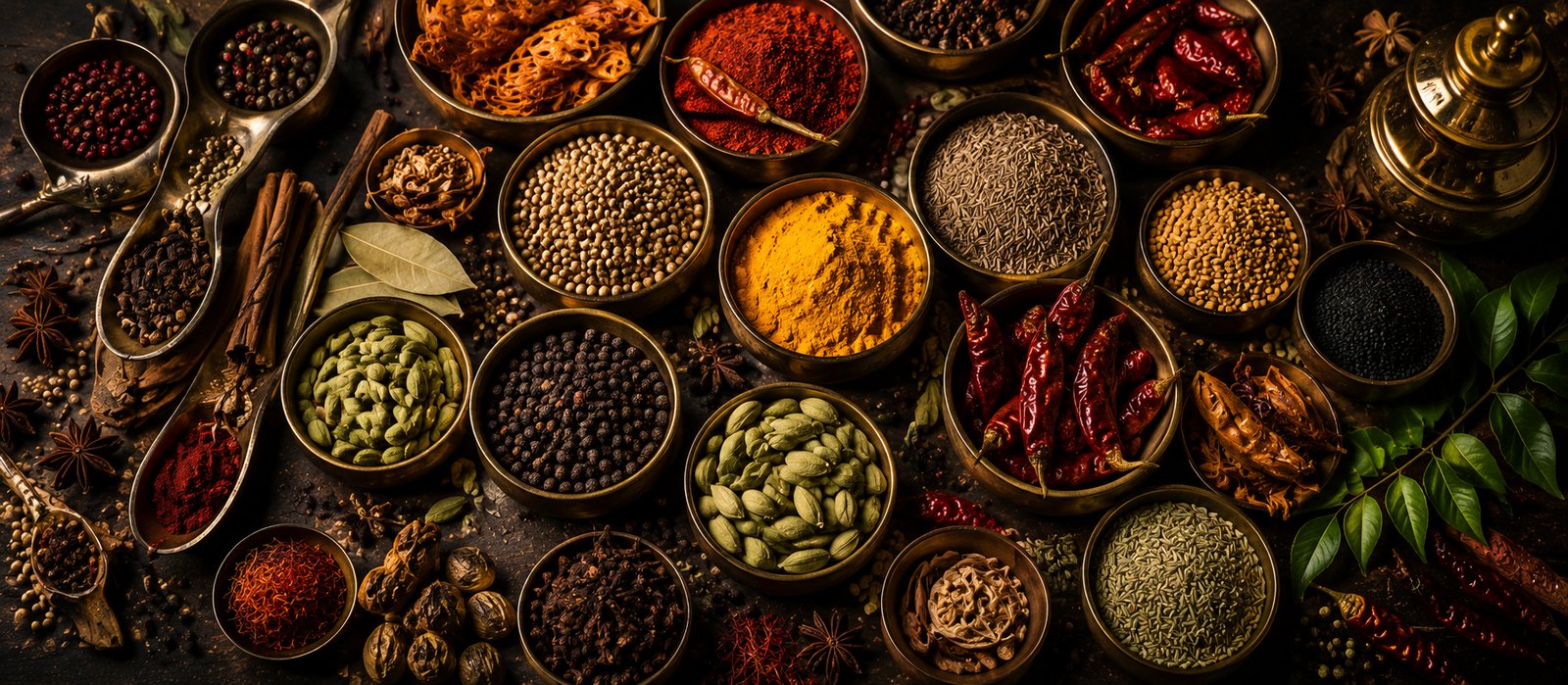
The warm spice blend
Garam masala — why the blend matters more than the recipe
Garam masala is Indian cooking's most misunderstood spice blend. Most recipes treat it as a fixed formula — as if there is one correct garam masala. In reality, garam masala recipes vary dramatically by region, family, and even dish. The critical insight is not which specific recipe to use, but understanding what garam masala is supposed to do — and why it must always be added at the end of cooking.
The Science
Why must garam masala always be added at the end of cooking?
Garam masala is a blend of aromatic spices — cardamom, cinnamon, cloves, black pepper, cumin — whose primary value is their volatile aromatic compounds (terpenes, aldehydes, and essential oils). These volatile compounds evaporate rapidly at cooking temperature. Added at the start of a 30-minute curry, most of the aromatic complexity has evaporated before the dish reaches the table. Added in the final 2 minutes or off heat, the volatile compounds reach the diner's olfactory system intact — producing the aromatic lift that defines well-made Indian food.
35 second read
Garam Masala — The Principles Behind Any Recipe
What matters regardless of which recipe you use
- Balance the warm spices: cumin and coriander are the base (neutral, earthy). Cardamom, cinnamon, and cloves are the accent spices (more assertive). The ratio should be 60% base to 40% accent.
- Fresh-ground outperforms commercial: commercial garam masala loses most volatile aromatics within 3 months. Freshly ground from dry-roasted whole spices is dramatically more aromatic.
- Add at the end: the final 2 minutes of cooking or off heat — never at the start.
- Quantity is critical: 1/2 to 1 teaspoon per dish serving 4. More produces harsh, pharmaceutical results. Less produces no aromatic impact.
- Regional variation is correct: South Indian garam masala uses more cloves and star anise. Kashmiri uses more fennel. North Indian typically uses more cardamom. All are legitimate.