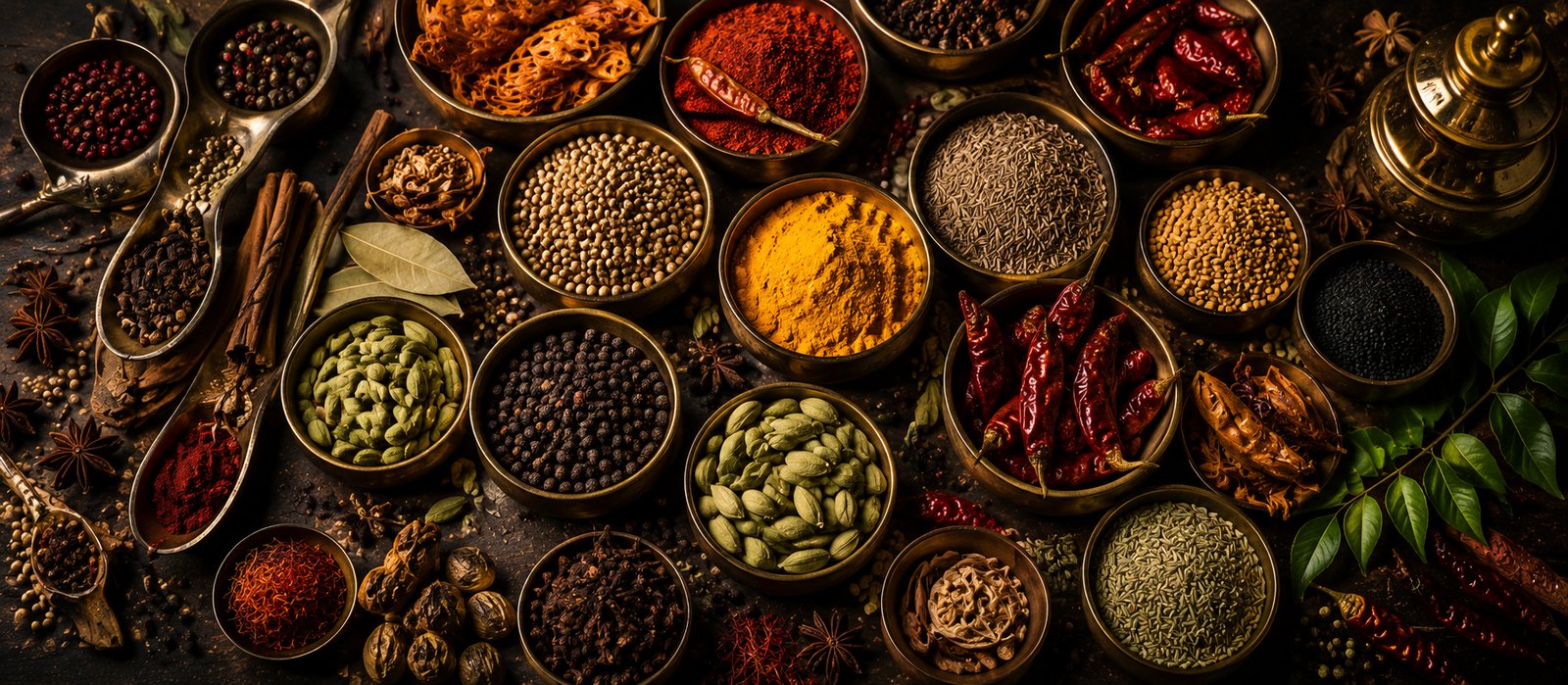
Heat and colour
Dried red chilli — heat, colour, and chemistry
Dried red chilli is the most divisive ingredient in Indian cooking — the source of heat that defines regional cuisines from the fire of Andhra Pradesh to the mild sweetness of Kashmiri cooking. Understanding the chemistry of chilli heat and colour explains why different chilli varieties produce such different results and why the choice of chilli is as important as the choice of any other spice.
The Science
Why do different chilli varieties produce different colours but different amounts of heat?
Chilli colour comes from carotenoid pigments (capsanthin and capsorubin) — these are independent of capsaicin content. Capsaicin is the compound responsible for heat, measured in Scoville Heat Units (SHU). A chilli variety can have high carotenoid content (vivid red colour) and low capsaicin (low heat) — this is Kashmiri chilli. Or high capsaicin (intense heat) and lower carotenoid content — this is Guntur or Bhut jolokia. Colour and heat are chemically independent — choosing the right variety for the intended result requires knowing both properties separately.
30 second read
Key Indian Chilli Varieties
Heat vs colour for each major variety
- Kashmiri chilli: vivid orange-red colour, low heat (~1,000–2,000 SHU). Use for colour-forward dishes (butter chicken, tandoori). The standard choice when colour is needed without heat.
- Byadagi chilli: deep red colour, mild heat (~15,000 SHU). Karnataka's primary chilli — used in South Indian dishes where deep colour and mild heat are wanted.
- Guntur chilli: moderate colour, very high heat (~30,000–50,000 SHU). Andhra Pradesh's primary chilli — the source of the region's legendary heat.
- Deghi mirch: a blend of Kashmiri and standard red chilli — provides more colour than standard chilli with moderate heat. The standard 'red chilli powder' in North Indian cooking.